What to Pack for Gravel Cycling in South Africa: Heat, Dust and Long Days
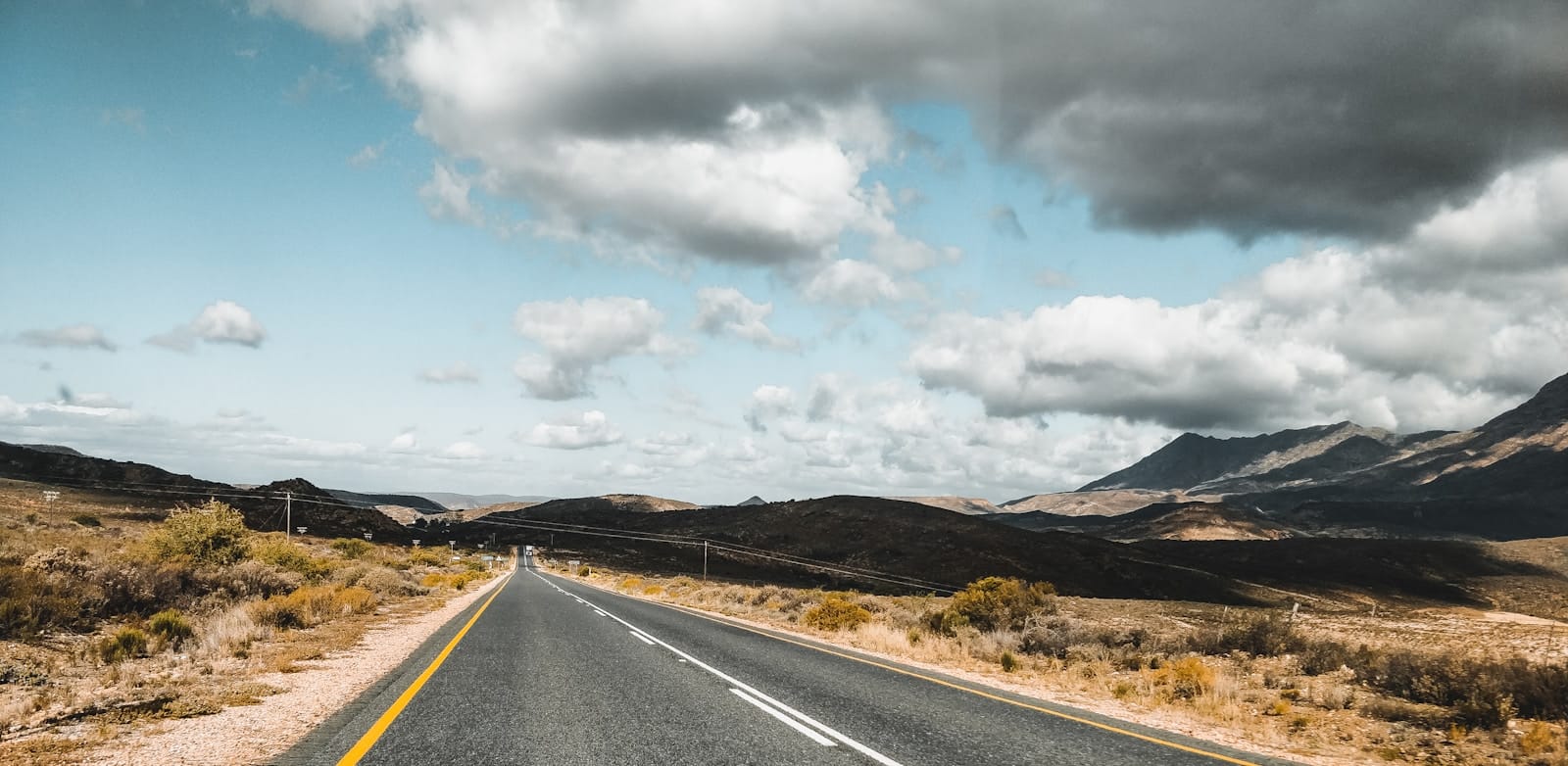
The dust gets into the chain first, then the sunglasses, then everything else. By the second afternoon on the Klein Karoo farm roads it has settled into the creases of your bar tape and turned the backs of your legs the colour of the road, and you stop noticing. What you do keep noticing, all week, is the sun — which arrives earlier and harder than a rider who trained through a Northern European spring is calibrated for, and which does not much care that you are only four hours into a stage.
Packing for gravel cycling in South Africa is a different exercise from packing for the Alps or Scotland, and the reason is not simply that it is warmer. It is that three specific things — heat, dust and thorns — do most of the damage here, and each of them has a straightforward answer if you know to prepare for it. Our general packing list for a multi-day gravel tour covers the universal kit properly. This piece is about the Western Cape specifically: what changes, what matters more here than anywhere else on our programme, and what you can leave at home with a clear conscience.
The three things that actually go wrong
Nine days, seven riding stages, up to 84% gravel, and three landscapes — Cape Winelands, Klein Karoo, Overberg. Across all of it, the failures we see cluster into three categories, and none of them are about fitness.
Punctures from thorns. This is the big one. The Cape farm roads carry thorns and sharp stone in a way that Alpine forestry roads simply do not, and a tubed setup will find them, usually somewhere with a great deal of sky and no shade. Tubeless is strongly recommended on every tour we run; on the South Africa Gravel route it is the closest thing we have to a requirement.
Sun exposure over consecutive days. Not sunburn on day one — sunburn on day one is a rookie problem and most experienced riders avoid it. The problem is cumulative exposure across seven stages, which quietly erodes sleep, appetite and mood in a way that reads as fatigue rather than as sun. Riders who protect properly from the first morning ride better on day six.
The temperature swing. November and December are early summer in the Western Cape: warm days, and cooler evenings once you are into the hills. Prince Albert sits at the foot of the Swartberg and drops away in the evening. A rider packed purely for heat is genuinely cold on a guesthouse veranda at nine o’clock, and cold again at the top of a pass in the morning.
Everything below follows from those three.
Tyres and wheels: the decision that matters most
Get this right and most of the week’s mechanical risk disappears.
- Tubeless, with fresh sealant. Not sealant that has been in there since last autumn. Top it up or replace it in the fortnight before you fly.
- 38 mm minimum, wider genuinely better. This is our floor across every tour, and South Africa is where the extra width earns the most — both for thorn resistance and for the corrugation on the Rooiberg.
- A plug kit, and know how to use it before you land. A thorn hole that sealant does not close is a thirty-second repair with a plug and a ten-minute repair without one.
- A spare tube as the fallback. Tubeless does not mean tubeless-forever. Carry one, and carry a valve core tool.
The general trade-offs — casing, tread, pressure, width — are covered properly in our guide to gravel bike tyres for touring. The South Africa-specific version of that advice is short: go wider than your instinct, run a little softer than your instinct, and prioritise a tougher casing over a fast-rolling one. You are not racing, and the corrugated sections on the Rooiberg day will find any tyre run thin and hard.
Gearing: the Swartberg does not negotiate
The Swartberg Pass is the defining day of the tour — nearly 1,000 metres of climbing over 15 km, at gradients up to 15%, on a Victorian-era gravel road still in its original condition. The asphalt runs out five kilometres after Prince Albert and does not come back.
The day after is harder. Calitzdorp to Riversdale is the longest, toughest stage of the week: the Rooiberg Pass, twelve kilometres of corrugated gravel at over 10%, and then Garcia’s Pass before the descent. On the Adventure route that day is 100 km with 1,300 m of climbing; on the Explorer route it is 115 km with 1,510 m.
Fit a low gear of around 0.9 before you travel. On a loose 15% ramp with a bike you are not carrying luggage on, the difference between adequate gearing and racing gearing is whether you ride the pass or push it. This is a February decision, not a week-before decision, and it is the single cheapest performance upgrade available to you.
Sun and dust: the kit you use every stage
This is the category riders most often under-pack and most reliably regret.
- High-factor sunscreen, and more of it than you think. Reapply at the lunch van. The support vehicle meets the group at lunch on most riding days, which makes it the natural checkpoint.
- A peaked cap or visor under the helmet. Cheap, weightless, and it saves your nose and ears across seven stages.
- Proper sunglasses — plus a spare clear or low-light lens. The dust on a fast descent is the reason for the spare, not the light. Riding a dusty descent squinting through a dark lens in shade is how people put a wheel where it should not go.
- A light neck buff. Sun protection on the neck, dust filter on the road behind another rider, and it weighs nothing.
- Lip balm with sun protection. Small, and you will use it daily.
- Electrolytes. PurePower energy powder is included and refilled free at the van, but if you cramp on salt loss specifically, bring what works for you.
On the dust side, two small practical items: a rag or old sock in your bag for wiping the chain at the hotel, and a small bottle of chain lube. The support vehicle carries tools and spares and the guides will help with repairs, but a chain you have wiped and re-lubed on the third evening runs measurably better on the fourth day.
Layers: the swing nobody plans for
Pack for two climates in the same day. The list is short:
- A packable wind or rain shell — light, compressible, worth carrying every stage.
- Arm warmers for early starts and pass descents.
- A light thermal or long-sleeve base for the Karoo evenings.
- Lightweight gloves, mainly for descending comfort on corrugation.
That is genuinely it. This is not Scotland, and it is not the Alps, where a 5–25°C swing inside a single day is routine. But Prince Albert and the high Karoo are dry, high and open, and dry air sheds heat fast after sunset.
Off the bike: less than you would guess
Towels and toiletries are provided at the hotels, which removes a surprising amount of bulk from most riders’ bags.
What to bring instead:
- Comfortable walking shoes. Prince Albert, Swellendam and Greyton are all worth an evening on foot, and Swellendam gets two nights because the rest day sits there.
- Something smart-casual. There is a dinner at a local vineyard near Riversdale, and the closing dinner in Franschhoek at the end of the week. Nothing formal, but bring one thing you have not ridden in.
- Swim kit. There is a pool at Laborie, a pool at the Swellendam hotel, and you will want both.
- A power bank and the right plug adaptor. South Africa uses its own large three-pin standard as well as the common European types at most guesthouses; bring a universal adaptor rather than assuming.
Because your bag moves hotel to hotel in the support van and you collect it at reception each evening, there is no penalty for a slightly heavier off-bike bag. There is a penalty for a heavier on-bike load, and there is no reason to carry one.
The bike itself, and getting it there
Rental for a full touring week is not readily available in South Africa, so plan on bringing your own bike as checked baggage. A proper hard case is worth the investment — it survives the handling, and it gives you somewhere to put the travel clothes you do not want in your riding bag. Our guide to flying with a gravel bike covers the airline side in detail.
A gravel bike, mechanical or e-assist, or a light MTB with suitable tyres and gearing. Road bikes and hybrids are not suitable for this route. Have the bike freshly serviced before you travel, and bring the three spares a support van genuinely cannot stock for ten different bikes: a spare rear derailleur hanger, a quick link for your chain, and a set of brake pads for your specific callipers. The van carries tools, general spares and a spare bike, and the guides do the mechanical work with parts charged at cost — but a hanger is bike-specific, and a bent one on the Rooiberg is otherwise the end of your day.
Riders on e-assist bikes: charging happens at the hotels, which works fine, but bring the charger and the right adaptor and plan around a full charge overnight rather than a top-up at lunch.
What you can leave at home
- A second pair of shoes for the bike. One pair, worn on the plane.
- Heavy winter kit. Even the coolest Karoo evening does not need a proper jacket.
- A full toolkit. The van has it. Carry the personal spares listed above and a multitool, not a workshop.
- Multiple books’ worth of nutrition. Energy powder is included and refilled free at the van; bars and chews are available to buy. Bring your specific favourites if you are fussy, not a week’s supply.
- A lock. Bikes are stored securely at the hotels each night.
What the week looks like, practically
Nine days, eight hotel nights, seven riding stages and a rest day in Swellendam. You sleep in Paarl, Prince Albert, Calitzdorp, Riversdale, Swellendam twice, Greyton and Franschhoek — 480 to 660 kilometres depending on which route option you take each morning, and 5,500 to 8,000 metres of climbing across the week.
Included: hand-picked hotels, luggage transfer hotel to hotel every stage, an English-speaking guide, GPS routes for Garmin, Wahoo and Komoot, a daily evening briefing with maps and elevation profiles, a support vehicle carrying spares, a spare bike and a clothing bag, mechanic help from the crew with parts at cost, eight breakfasts and four dinners, complimentary PurePower energy powder, a Gravel-Adventure jersey, a shared photo album, and lifetime RIDERS-network membership. You book your own flights to Cape Town, and the airport shuttle brings everyone to Paarl by midday on day one. The full mechanics are on how it works.
If the people and places side of the route interests you more than the kit, our piece on the farms and small towns along South Africa’s gravel roads covers that ground, and gravel cycling in South Africa is the broad route guide.
The short version
Wide tubeless tyres with fresh sealant and a plug kit. A low gear around 0.9. Sun protection you actually reapply, and a spare clear lens for the dusty descents. One compressible warm layer for the Karoo evenings. Walking shoes and one smart-casual thing for the vineyard dinner. A hanger, a quick link and brake pads. Everything else, the van is carrying.
We ride the Swartberg on the third day of the South Africa Gravel week — guided or self-guided, with your bag already waiting in Calitzdorp by the time you get there.
Questions riders ask
What is the weather actually like on the South Africa Gravel tour?
The November and December departures fall in early summer in the Western Cape — warm to hot days, and noticeably cooler evenings once you are up in the hills, particularly around Prince Albert and the Karoo. The late-February departure sits at the other end of summer and runs hotter still on the Karoo stages. In both cases the swing between a midday gravel road and a Karoo evening on a guesthouse veranda is bigger than most Northern European riders expect.
Do I need tubeless tyres for South Africa?
We strongly recommend it, and South Africa is the tour where that recommendation is least negotiable. The farm roads carry thorns and sharp stone, and a tubed setup will find them. Minimum 38 mm across all our tours, wider is better here, and bring sealant plus a plug kit rather than relying on finding either locally mid-route.
Can I hire a gravel bike in South Africa instead of flying with mine?
Rental for a full touring week is not readily available in South Africa, so we recommend bringing your own bike as checked baggage. A good hard case makes the journey considerably less stressful, and it doubles as the thing you leave your travel clothes in. Get in touch if you would like guidance on the flight side of it.
What do I need for the evenings and the dinners?
Something smart-casual is enough. The week starts at Laborie, a wine estate outside Paarl, and ends in Franschhoek, with a vineyard dinner near Riversdale in between — none of it demands a jacket, but nor do you want to arrive at the closing dinner in the only shirt you rode in. Comfortable walking shoes matter more than most riders expect, because the towns are worth walking.
How much of my own kit do I actually need to carry on the bike?
Very little. Your bag travels to the next hotel in the support van and the van meets the group at lunch on most riding days, where you can change kit and refill the energy drink for free. Two bottles, a packable layer, sun protection and your own repair kit is the working load for a stage.
Planning a gravel week of your own?