From the Karoo, through the Garden Route to Franschhoek and the Winelands.
About this tour
South Africa Gravel crosses the Western Cape from the vineyards outside Cape Town into the Klein Karoo and back through the Overberg to Franschhoek — seven riding stages, 480 to 660 kilometres, through one of the most celebrated gravel cycling landscapes in the world. Mountain passes, semi-desert, wine roads and indigenous forest, on up to 84% gravel.
The first days follow the Cape Winelands on dirt farm roads before the route heads east to the Karoo and the defining climb of the tour — the Swartberg Pass, nearly a thousand metres on a Victorian-era gravel road still in its original condition. From there the character changes completely: wider skies, longer distances between villages, the drier Overberg, and a different rhythm to the day.
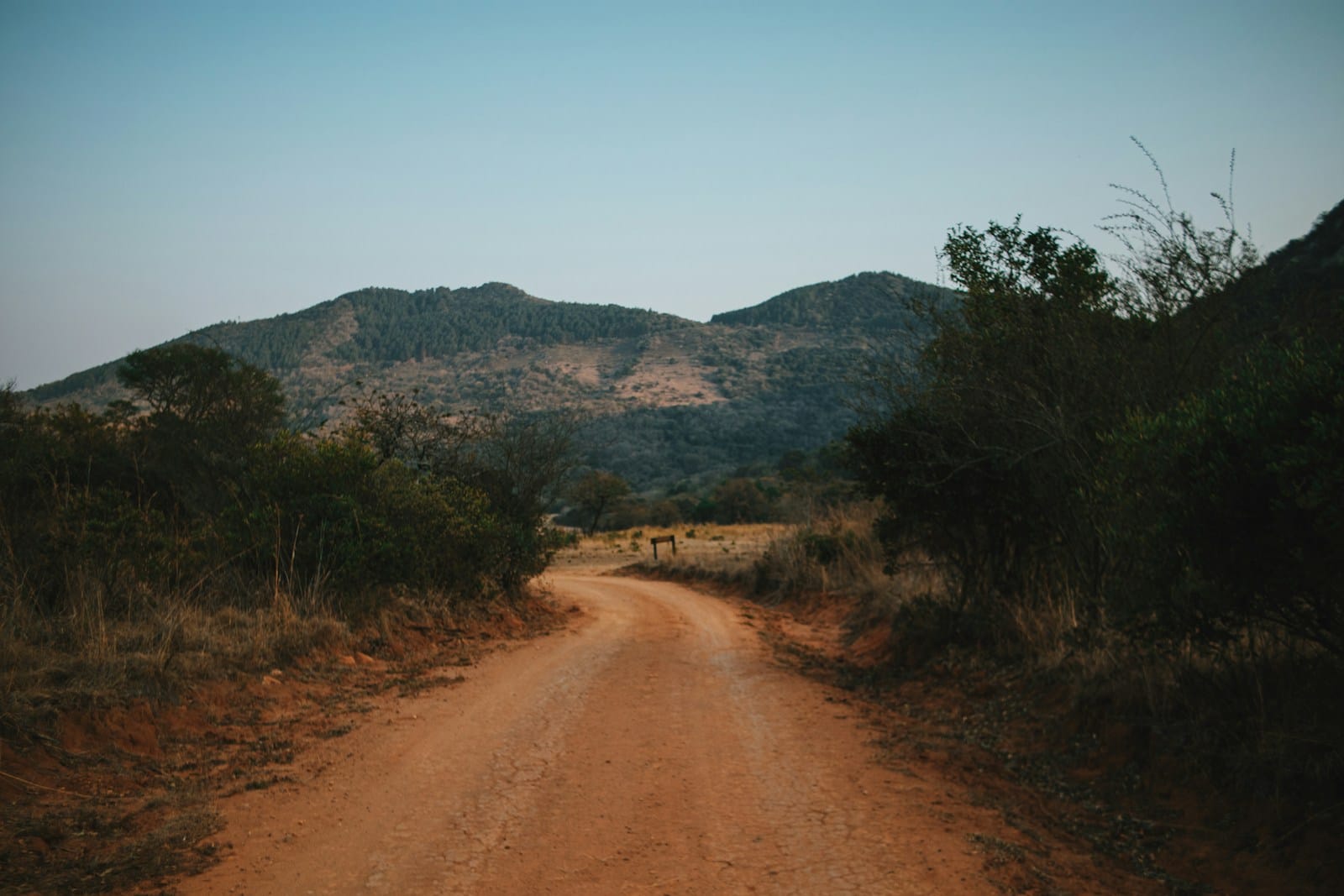
South Africa draws gravel riders from across the world — and the reason is clear the moment you leave Paarl. Vineyard roads, mountain passes, the edge of the Karoo, long gravel tracks with almost no traffic. A gravel destination unlike any other.
Route overview
480–660 km · 5,500–8,000 m total · Paarl → Franschhoek (Western Cape)
What you get
Klein Karoo desert, indigenous forest and Indian Ocean coast, and the wine valleys of the Western Cape — three landscapes, nine days.
Eight nights from Cape Winelands farm guesthouses to Karoo boutique hotels, each chosen for location and food.
The tour's defining day — nearly 1,000 m of climbing on a Victorian-era gravel road still in its original condition. The view from the top stops you.
Day by day
Individual arrival into Cape Town, with an airport shuttle to Paarl for everyone by midday. Our base is Laborie — a five-star wine estate below Paarl Mountain with more than 300 years of winemaking heritage, its rooms spread through the vineyards, a wellness spa with hydrotherapy pools and saunas, two restaurants and a cellar of Cap Classique to taste. Bike assembly or hire fitting, an optional afternoon ride, spa or pool, then a welcome meeting at 17:00 and group dinner. Arrive a day early to add a second, unhurried night on the estate before the tour begins.
A warm-up up Paarl Mountain, an iconic hill topped by two giant granite domes — challenging gradients and a 360° view — before the afternoon shuttle east from Paarl to Prince Albert.
After 5 km the asphalt ends. The Swartberg Pass climbs nearly 1,000 m over 15 km at up to 15%, with a view that stops you, and an equally dramatic descent. Red gravel through semi-desert. 84% gravel.
The longest, hardest day: Rooiberg Pass (12 km of corrugated gravel over 10%) and then Garcia's Pass before the descent to Riversdale. A village café for a mid-route pause; dinner at a local vineyard.
Back on gravel after 6 km, rolling 40 km along the Langeberg range — challenging but beautiful. Lunch at a family-run guesthouse. 73% gravel.
Two nights at a beautiful hotel with pool and gin bar, cafés within walking distance. Keep moving with easy MTB trails or a 90 km gravel loop with a river-ferry crossing; massage available.
Across Stormvleiport with lunch in the open, then a constantly rolling final 30 km to Greyton — old and beautiful, where we stay in the former post house. 72% gravel.
The most manageable stage: past Theewaterskloofdam and over the Franschhoek Pass — a descent that needs focus, as baboons tend to hold the road — then 27 km of tarmac into Franschhoek, where we spend the final night back in the Winelands.
After breakfast, travel onward or home. The head guide offers an optional MTB ride for anyone who wants wider tyres on the local trails before flying.
How we ride
Follow the guide across the passes and long descents. The support vehicle is positioned at key points, navigation and logistics are handled — you focus on the riding.
Load the day's route and set off when you're ready — you control the breaks and stops. The crew is positioned along the route and meets you at the hotel each evening.
Every tour is run in English — guiding, daily briefings, route notes and all documents are in English.
What's included
Common questions
The Standard route suits riders comfortable with 3–5 hours in the saddle over consecutive days, at home on a gravel bike. The Explorer route adds distance and climbing (5–7 hour days) and the confidence to navigate independently. Some days are long with big passes — a solid base helps.
A gravel bike (mechanical or e-assist), or a light MTB with suitable tyres and gearing — road bikes and hybrids aren't suitable. Minimum 38 mm tyres (wider is better), tubeless strongly recommended for the thorny farm roads and sharp-stone sections, and a low gear around 0.9 for the passes. Have it freshly serviced before you travel.
Rental for touring isn't readily available in South Africa, so we recommend bringing your own bike as checked baggage — a good hard case makes the trip more straightforward. Get in touch if you'd like guidance.
Both, daily. An English-speaking guide leads each day, and GPS files (Garmin, Wahoo, Komoot) let you ride at your own pace. The support vehicle follows the route regardless.
The support vehicle carries tools, spares and a spare bike, and the guides help with repairs — you only pay for parts. On the longer Explorer stages you may be further from the vehicle, so be able to handle a puncture or chain issue yourself.
Most of our riders are 45–65. The daily route choice, the mid-tour rest day and the option of the support vehicle let you calibrate it to how you feel. Cycling fitness and multi-day experience matter more than age.
Yes — many riders come solo. Groups are up to 10 per guide and typically international. Accommodation is a shared double room by default; a single-room supplement is available.
Before you go
Fly to Cape Town (CPT) — one-stop connections run daily via several airlines from Northern Europe. The airport shuttle is organised for arrivals by midday on day 1; if you arrive on the first day, land by 08:00 to join the intro ride.
Bring a gravel bike (mechanical or e-assist) or a light MTB with suitable tyres and gearing — road bikes and hybrids aren't suitable. Minimum 38 mm tyres (40–45 mm better), tubeless strongly recommended, and a low gear around 0.9 for the steeper climbs. Have it freshly serviced before you travel and carry a spare tube. Rental can be arranged through a local partner — ask when you book.
Comprehensive travel and accident insurance — including medical cover and repatriation — is required and not included. Take out cover that includes cycling before you travel; ask us if you'd like a recommendation.
November–December is early summer in the Cape — warm days, cooler hill evenings. A light packable layer earns its place, and tubeless tyres handle the thorny farm roads. Towels and toiletries are provided; bring comfortable walking shoes and something smart-casual for dinner.
Intermediate — challenging. This tour is graded Explore & Adventure. You don't need to race, but you should be comfortable riding back-to-back days on mixed terrain. A good benchmark is 70–80 km with 1,000–1,200 m of climbing with energy to spare. See our levels page, or get in touch if you're unsure.
When to go
| Dates | Availability | Price per person |
|---|---|---|
| 2026 | ||
| 21 – 30 Nov 2026 | Open | From €3,695 |
| 2027 | ||
| 27 Feb – 7 Mar 2027 | Open | From €3,695 |
| 4 – 12 Dec 2027 | Open | From €3,695 |
Per person, shared room. Single supplement on request. A deposit secures your place; the balance is due 60 days before departure.
Private & group tours
A cycling club, a group of friends or colleagues — we can arrange a private departure on dates that suit you, same route and same support, just your own group. We also run fully custom private tours for smaller groups.
Also worth considering
Stay in the loop
New routes, trip reports and quiet-season departure alerts — before anyone else. No spam, just the good gravel.
Thanks — you're on the list.