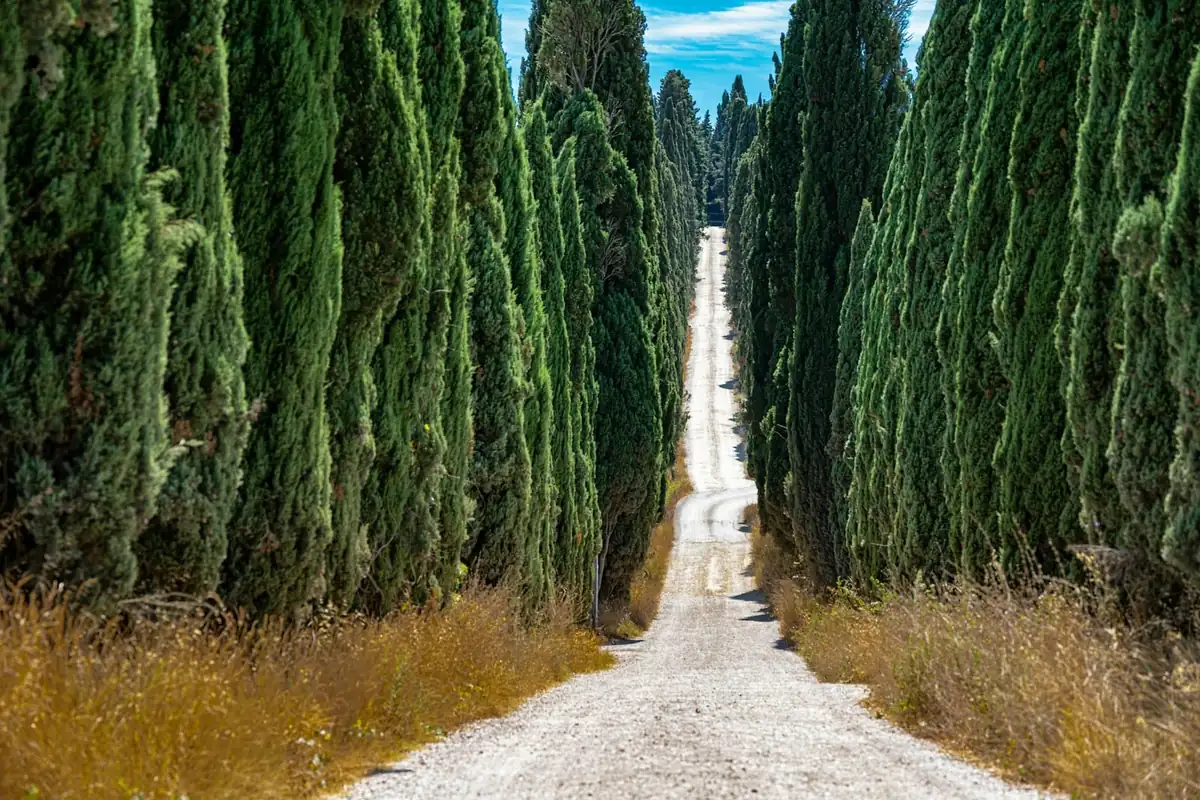
Cape Gravel: Cycling South Africa's Western Cape
The asphalt ends five kilometres out of Prince Albert, and the Swartberg begins. Ahead, a thin red line of gravel switchbacks up a wall of folded rock that looks, from the bottom, like it has no business carrying a road at all. This one was hand-built in the 1880s and it hasn’t fundamentally changed since — the same drystone retaining walls, the same dry-packed surface, the same audacious line cut into the mountainside by a road engineer and a few hundred labourers with no machinery to speak of. You climb nearly a thousand metres over fifteen kilometres, the Klein Karoo falling away behind you, semi-desert giving way to bare stone and then to a saddle where the wind comes through and the view, quite genuinely, stops you. Then you point the bike down the far side, where the gravel is just as old and the drop is just as committing, and you understand why riders fly to the bottom of Africa to spend a week on dirt.
That climb is one day of nine. This guide is the long version of the whole week — what Cape gravel cycling is actually like, the route landscape by landscape, the season that makes the Southern hemisphere such a clever place to ride when Europe is dark, the bike and kit that suit it, and how to ride the whole traverse of South Africa’s Western Cape supported, with the logistics carried for you. It’s written for riders who already know their way around a gravel bike and a long day in the saddle, and who are deciding where to spend a precious week of it.
Why the Western Cape is one of the best gravel cycling destinations in Africa
South Africa draws gravel riders from across the world, and the reason becomes obvious the moment you leave the vineyards behind. The Western Cape has three things that rarely come together in one place: a vast network of firm, fast farm gravel; real mountain passes built before the motor car; and an emptiness that means you can ride for hours on dirt without meeting a vehicle. Add three completely distinct landscapes within a few days’ ride of each other and you have a destination that does in one week what most regions can’t do at all.
Start with the surface. The Cape’s dirt roads are mostly red laterite and graded farm gravel — firm, well-drained and predictable, the kind of surface you can carry real pace on rather than fight. There are rougher, corrugated sections on the passes and thorny, sharp-stoned stretches across the farm country, but the dominant feeling is of a road that lets you settle into a rhythm and look around. This is gravel for distance and for landscape, not a technical battle with every metre.
Then the passes. The Swartberg is the headline, but it isn’t alone. The Western Cape is laced with Victorian-era mountain passes — the Rooiberg, Garcia’s Pass, the Franschhoek Pass — many of them still gravel, several built by the same generation of nineteenth-century engineers who cut roads through this folded, dramatic geology to link the coast with the interior. Riding them is part history, part mountain day. The gradients are honest (the Swartberg touches 15%), the surfaces are original, and the views from the top are the kind you remember years later.
And the scale. The Klein Karoo is semi-desert — wide skies, long distances between villages, a dry clarity to the light that photographers chase. You can ride an entire stage out here and tick off almost no tarmac and almost no traffic. After the busier, prettier Winelands, the Karoo comes as a quiet shock: enormous country, a small figure crossing it, the road running on toward a horizon that takes its time arriving. For a rider who has spent years chasing exactly that feeling on busier trails closer to home, the Cape delivers it in abundance.
What sets it apart from the well-known European gravel regions — the Alps, Tuscany, the Pyrenees — is the variety packed into nine days. You ride wine-farm dirt roads under the mountains of the Winelands, then start again deep in the desert of the Klein Karoo, climb a colonial-era pass into bare rock, and finish through the green, rolling Overberg back to Franschhoek. Three landscapes, one clean arc, on up to 84% gravel. Few weeks anywhere change this much under your wheels.
The route, landscape by landscape
The trip begins and ends in the Winelands, but the riding does not run there in one continuous line. After a warm-up day in the wine country, the group transfers by bus to Prince Albert, on the northern edge of the Klein Karoo, and the tour proper begins there — straight into the week’s defining day over the Swartberg Pass. From the Karoo the route then works back west and south through the Langeberg and the Overberg, easing as it goes, to finish over the Franschhoek Pass at Franschhoek. Seven riding stages, 480 to 660 km, with a rest day in Swellendam. Here is how it unfolds.
The Cape Winelands — Paarl and the warm-up
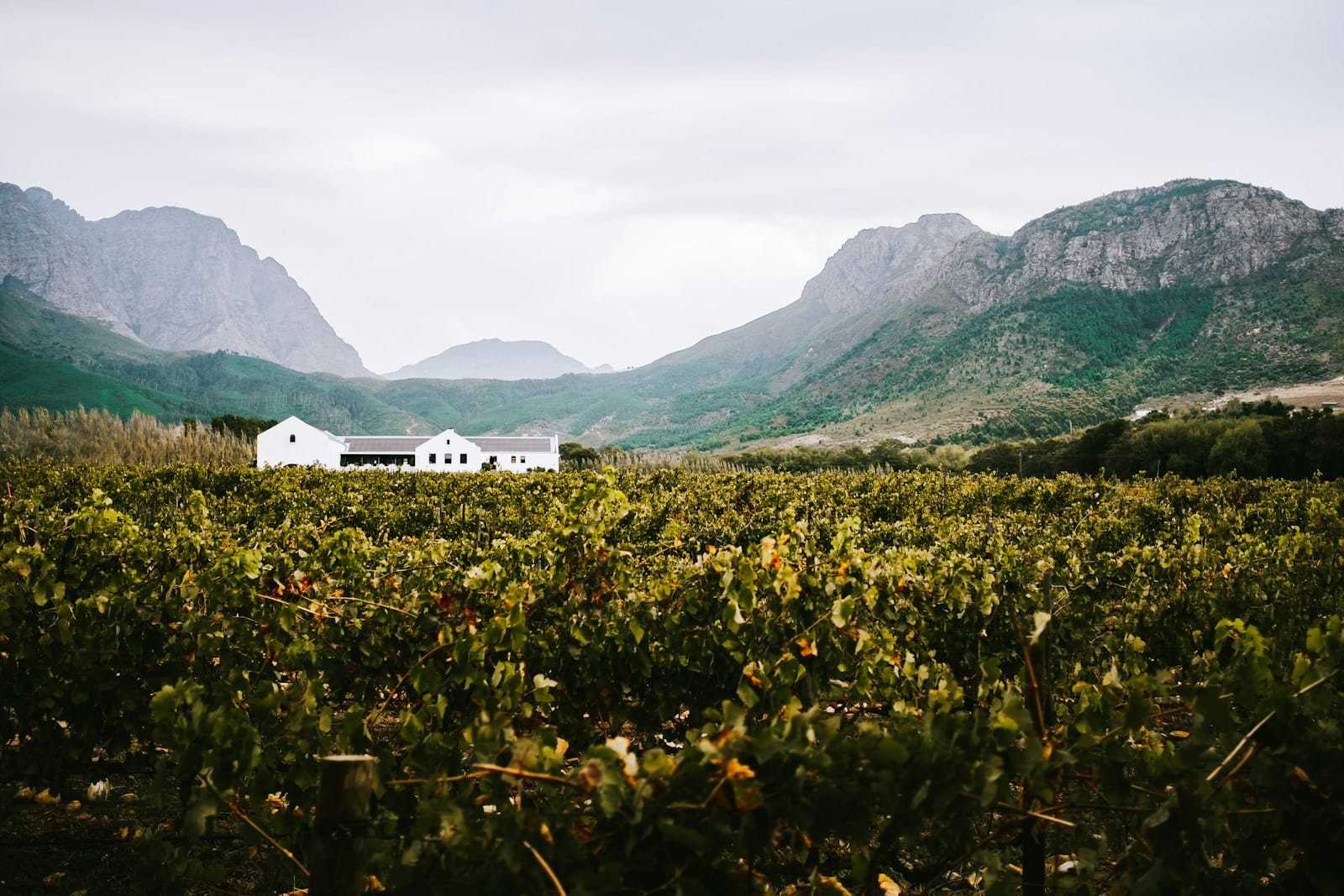
The first riding day is an introduction in the best sense: a warm-up up Paarl Mountain, an iconic hill topped by two giant granite domes, with challenging gradients and a 360° view over the wine valleys. It’s a chance to feel the surfaces under your tyres and find the legs before a bus transfer carries the group east to Prince Albert, in the Klein Karoo, where the tour proper begins. The Winelands are the soft, cultivated face of the Western Cape — vineyards climbing the lower slopes, oak-lined lanes, farm dirt roads winding between estates — and they make a deceptively gentle opening to a week that is about to get a lot bigger.
The Klein Karoo and the Swartberg Pass — the defining day
From Prince Albert the route turns serious. After five kilometres the asphalt ends and the Swartberg Pass begins: nearly 1,000 m of climbing over 15 km at up to 15%, on that original 1880s gravel road, with a view from the top that genuinely stops you and an equally dramatic descent on the far side. The surrounding country is red gravel through semi-desert — this is the 84% gravel day, the one most riders have circled on the itinerary before they arrive. It is a mountain day in every sense except the altitude: a long, sustained climb on a historic surface, exposed and committing, rewarded by one of the great descents in African gravel.
Calitzdorp to Riversdale — the longest, hardest stage
The day after the Swartberg is, on paper, the toughest of the week: Rooiberg Pass — twelve kilometres of corrugated gravel at over 10% — and then Garcia’s Pass before the long descent to Riversdale. It’s the stage that asks the most of your endurance and your pacing, with a village café for a mid-route pause and dinner at a local vineyard at the end. Back-to-back big passes on consecutive days is exactly why the week rewards a real base of long days; ride this one within yourself and the reward is some of the most spectacular and remote riding of the trip.
The Langeberg and the Overberg — Riversdale to Swellendam
Back on gravel after six kilometres, the route rolls forty kilometres along the Langeberg range — challenging but beautiful, with lunch at a family-run guesthouse — into Swellendam, one of the oldest towns in the country and the site of the week’s rest day. Two nights here, at a hotel with a pool and a gin bar and cafés within walking distance, is a deliberate piece of route design. A mid-tour rest day on a traverse like this is the difference between arriving at the finish strong and arriving merely relieved. If you can’t sit still, there are easy MTB trails or a 90 km gravel loop with a river-ferry crossing; if you can, there’s a massage and a long lunch.
Swellendam to Greyton — the rolling Overberg
The penultimate riding day crosses Stormvleiport with lunch in the open, then a constantly rolling final thirty kilometres into Greyton — an old and beautiful village where the group stays in the former post house. This is the green, pastoral heart of the Overberg: wheat country and grazing land, the Riviersonderend mountains to the north, the surface still 72% gravel. After the desert and the passes, the Overberg feels almost soft — rolling rather than savage, the kind of riding where you settle into a rhythm and let the kilometres come.
Greyton to Franschhoek — the Franschhoek Pass finale
The last stage is the most manageable: past Theewaterskloofdam and over the Franschhoek Pass, a descent that needs focus — the baboons tend to hold the road — and then twenty-seven kilometres of tarmac back to the start hotel in the Winelands. There is a real symmetry to finishing where you began, with the whole arc of the week behind you: vineyards, desert, three Victorian passes, the Karoo emptiness, the green Overberg, and now the Winelands again. A closing dinner marks the end of it, and it is well earned.
The terrain: what the Cape gravel actually demands
For a rider used to gravel at home, the Cape surfaces will feel familiar in type but big in scale and reach. Expect a mix:
- Firm red farm gravel — well-drained laterite and graded dirt, the stuff you can carry pace on for long stretches across the Winelands and the Overberg.
- Corrugated pass gravel — the Rooiberg and parts of the Swartberg are washboarded and loose in places; not technical in the mountain-bike sense, but they ask for a relaxed grip and a little tyre.
- Sharp-stone and thorny farm sections — the reason tubeless is strongly recommended; the Karoo in particular will find an unprotected tube.
- Sustained pass climbs — the Swartberg’s near-1,000 m, the Rooiberg’s twelve kilometres at over 10%, Garcia’s and the Franschhoek; the week’s 5,500–8,000 m of total ascent adds up across seven stages.
None of it is beyond a confident gravel rider, but it earns its intermediate-to-challenging grade honestly. What it rewards is endurance, sensible pacing on the passes, and the patience to keep turning the pedals across a long, exposed Karoo stage when the road runs straight to the horizon. This is a connoisseur’s terrain rather than a beginner’s, which is exactly why it suits the riders who tend to come with us.
When to go: the Southern-hemisphere season
This is one of the cleverest things about Cape gravel for a Northern-European rider: the season is upside down. Our departures run in the Southern-hemisphere summer — late November to early December, and late February to early March — which is precisely when Europe is at its darkest and wettest. While home is mud and short days, the Cape gravel is dry, firm and fast under a high African sun.
- Late November to early December is early Cape summer: warm, settling days, long light, the farm roads at their driest and firmest. This departure runs in both 2026 (21–30 Nov) and 2027 (4–12 Dec).
- Late February to early March is late summer — still warm, the landscape a little more burnished, the same dry, fast gravel. This departure runs in 2027 (27 Feb – 7 Mar).
A word on the heat and the hills, honestly. The Cape days are warm and the sun is strong, so you ride covered, hydrated and sensibly paced; up on the passes and in the hill evenings the temperature drops and a light packable layer earns its place in the day bag. The support van meets the group most days at lunch, where you can change kit and refill your PurePower energy drink free of charge — energy bars and chews are available to buy — so you ride each stage carrying only what you need for the next stretch.
How hard is it, really?
Across the week: 480–660 km and 5,500–8,000 m of climbing, over seven riding stages with a rest day in Swellendam. The range matters, because every stage runs as two route options and you choose your day on the day.
- The Adventure route runs roughly 80–100 km a day with 600–1,300 m of climbing per stage — the fuller line, with the big passes and the longer distances.
- The Explorer route adds distance and climbing, with 5–7 hour days and the confidence to navigate independently — for riders who want the most out of the week.
Two things make it manageable regardless of how you’re feeling on the day. First, the two route options mean a couple riding at different speeds, or a group with mixed legs, can share the same week and the same hotel each night without anyone being held back or left behind. Second, the rest day in Swellendam is placed exactly where the legs need it, after the two hardest pass days and before the run home. And the support vehicle is on the route throughout: if a day turns out longer than your legs wanted, the van is there. You are never committing to “finish or bust” in the middle of the Karoo.
If you can ride 80–100 km on gravel at home over consecutive days and still enjoy your dinner, you’ll be at home here. Our tour levels explain the two paces in more detail, and if you’re weighing whether your endurance base is ready, the honest answer is that the week rewards multi-day experience over raw speed.
Bike and kit for Cape gravel
You don’t need anything exotic, but a few choices make the week far more comfortable on these particular surfaces:
- Tyres: a minimum of 38 mm, and wider is genuinely better here. Run them tubeless — this is the one piece of kit advice that isn’t optional. The Karoo farm roads carry thorns and the passes carry sharp stone, and both will end an inner tube’s day in short order. A file-to-medium tread copes with everything from fast farm gravel to loose, corrugated pass.
- Gearing: bring low gears. A ratio of around 0.9 is very welcome on the Swartberg’s sustained 15% and the Rooiberg’s twelve kilometres at over 10%. The passes are long as well as steep.
- Bike type: a gravel bike, mechanical or e-assist, or a light MTB with suitable tyres and gearing. Road bikes and hybrids aren’t suitable for this terrain.
- Service it before you fly: have the bike freshly serviced at home, because rental for touring isn’t readily available in South Africa. Most riders bring their own bike as checked baggage, and a good hard case makes the whole trip more straightforward. Get in touch if you’d like guidance on packing or shipping.
- For the day bag: sun protection, real hydration capacity, a light packable layer for the cooler hill evenings, and a basic roadside kit — the support vehicle carries a full tool kit and a spare bike, with mechanic help on hand and spare parts only at cost.
We cover the broader picture in our packing guide for a multi-day gravel tour; the Cape-specific note is simply: tubeless tyres, low gears, and respect for the sun.
Guided or self-guided across the Western Cape
This route can be ridden either way, and the support is identical. The choice comes down to how you like to navigate and how sociable you want the week to be.
On a guided tour, you ride with the group — a maximum of ten riders per guide — and an English-speaking guide leads each stage and handles the navigation, so you’re not handed the route file and left to plot your own line. In the Karoo, where junctions on a farm road can look identical in every direction, and on the passes, where it’s nice simply to ride and look around, having someone who knows the line is a genuine comfort. It’s also the more sociable way to do it and the easiest if this is your first supported traverse.
On a self-guided tour, you take the full GPS route for Garmin, Wahoo and Komoot and ride at your own pace, not tied to a group. You still get the same hotels, the same daily luggage transfer and the same support vehicle following the route — you just navigate yourself, which experienced, independent riders often prefer. On the longer Explorer stages you may be further from the vehicle, so be able to handle a puncture or a chain issue yourself. Either way, how our tours work walks through the support in detail.
What a supported Western Cape week includes
The point of riding this as a supported tour is that you carry the riding and we carry everything else. Concretely, on the South Africa Gravel tour:
- You ride point to point and sleep somewhere characterful each night — eight hotel nights, from Cape Winelands farm guesthouses to Karoo boutique hotels, each chosen for its location and its food. Accommodation is a shared double room by default, with a single-room supplement available.
- Your luggage travels in the support van between hotels, every stage; you ride with only a day bag and collect your main bag at the hotel each evening.
- The support vehicle is on the route through the day for a mechanical, a spare or a lift, carrying spare parts, a spare bike and a clothing bag, with mechanic help from the crew (spare parts only at cost).
- The van meets the group most days at lunch, where you can change kit and refill the PurePower energy drink free of charge — energy bars and chews are available to buy.
- An experienced English-speaking guide leads each day, with a daily evening briefing showing the next day’s maps and elevation profiles.
- Food included: eight breakfasts and four dinners, among them the closing dinner in the Winelands; lunches, drinks and dinners on free evenings are your own.
- You take home a Gravel-Adventure jersey, a shared online photo album, and lifetime membership of the RIDERS network.
The price is from €3,695 for the nine days. You arrange your own flights to Cape Town (CPT) — one-stop connections run daily from Northern Europe — plus lunches, drinks, and the travel and accident insurance that’s required to ride with us. An airport shuttle is organised for arrivals by midday on day one. A €500-per-rider deposit secures a place; the balance is due 60 days before departure. The full day-by-day and the exact 2026–2027 departures are on the South Africa Gravel tour page, and how our tours work explains the supported model in detail.
The country you’re riding through
Part of what makes a Cape traverse more than a fitness exercise is the country itself. The Winelands at either end are among the oldest wine regions outside Europe — Franschhoek was settled by Huguenot refugees in the late seventeenth century, and the valley still carries their names and their vines. The Swartberg Pass you climb on day three is a national monument, an engineering feat of the 1880s that has barely changed in nearly a century and a half; riding it is as much a piece of history under your wheels as the military roads of Scotland or the colonial passes of the Pyrenees. The Klein Karoo is a semi-desert with its own strange ecology — succulents, ostrich farms, a clarity of light and a quality of silence you don’t forget. And the Overberg at the end is some of the country’s richest farmland, rolling green between the mountains and the southern coast.
None of this is a history lecture from the saddle; it’s simply the depth that turns a good week of riding into a memorable one. The accommodation is part of it too — the wine-farm guesthouses and Karoo boutique hotels are chosen for character and for the dinner table as much as for the bed, and after a long day on the gravel, arriving somewhere genuinely good, with your bag already waiting, is no small thing.
Who rides the Cape traverse
This is not a beginner’s trip, and we don’t pretend otherwise. It suits experienced riders comfortable with long days on mixed surfaces who value the quality of a route over the noise of an event — people who pace themselves intelligently and would far rather travel thoughtfully across a great landscape than sprint through it. The Cape week rewards exactly that: endurance over raw speed on the long Karoo stages, judgement over bravado on the passes, the patience to keep a steady rhythm when the road runs straight to the horizon.
It works beautifully for couples and friends riding at different speeds, thanks to the two route options and the shared hotel each night — you ride your own day and meet for dinner. It works for the solo rider who wants the structure and company of a small, international group without organising anything; plenty of riders come alone. And it works for clubs and groups of friends who want a shared objective with the logistics taken off their hands.
If you’re weighing whether a supported tour is right for you at all — versus going self-supported, or versus a guided road trip — our guide to choosing a supported gravel tour lays out the honest trade-offs, and our companion piece on gravel cycling in South Africa goes deeper on what the riding itself feels like out on the red roads.
What you’ll remember
Ask a rider what stays with them from the Cape, and it’s rarely a single thing. It’s the asphalt running out at Prince Albert and the Swartberg rising in front of them. It’s the view from the saddle of the pass, and the descent on the far side. It’s a long, straight Karoo stage where the horizon never quite arrives and the silence is total. It’s the gin bar in Swellendam on the rest day, the baboons holding the Franschhoek Pass, the closing dinner back in the Winelands with the whole arc of the week behind them. Three landscapes, three Victorian passes, up to 84% gravel, drawn into a single clean line across the bottom of Africa.
Ride the Western Cape with us
If a full Cape traverse is on your list, this is the route — Winelands to Karoo to Overberg and back to Franschhoek, over the Swartberg and three more historic passes, on some of the quietest, best gravel anywhere. We run it guided or self-guided, with the hotels, the luggage transfer, the support vehicle and the airport shuttle all handled, so you arrive at the start with nothing to think about but the riding.
The full day-by-day, the 2026 and 2027 departure dates and exactly what’s included are on the South Africa Gravel tour page. If you’re weighing it against another route, how our tours work explains the supported model, and our other destination guides in the Journal cover the rest of the calendar. Come and ride the Western Cape with us — we’ll carry the rest.
Questions riders ask
What makes the Western Cape one of the best gravel cycling destinations in Africa?
Three things: the surface, the scale and the quiet. The Cape's farm roads are firm red gravel that carries pace, the passes are real mountain climbs on original Victorian-era roads, and you can ride a whole day on dirt with almost no traffic. Our route crosses three distinct landscapes — the Cape Winelands, the Klein Karoo and the Overberg — in nine days, on up to 84% gravel. Few destinations pack that much variety and emptiness into a single week.
How hard is the South Africa gravel bike tour, and how fit do I need to be?
It's graded intermediate to challenging: 480–660 km and 5,500–8,000 m of climbing across seven riding stages, with a rest day in Swellendam. The Adventure route runs roughly 80–100 km a day; the longer Explorer route adds distance and climbing with 5–7 hour days. The defining day is the Swartberg Pass — nearly 1,000 m of climbing over 15 km at up to 15%. You don't need to be fast, but you need a solid endurance base and to be comfortable on a gravel bike over consecutive big days.
When is the best time of year for Cape gravel cycling?
Our departures run in the Southern-hemisphere season — late November to early December (early Cape summer) and late February to early March (late summer). Expect warm days and cooler evenings up in the hills. It's the antipodal season to Europe, which is part of the appeal: while Northern Europe is dark and wet, the Cape gravel is dry, firm and fast. November–December departs in 2026 and 2027; a February–March departure runs in 2027.
What bike and tyres should I bring for South African gravel?
A gravel bike, or a light MTB with suitable gearing — road bikes and hybrids aren't suitable. Run a minimum of 38 mm tyres (wider is better) and go tubeless: the farm roads carry thorns and sharp stone that will find an inner tube. Bring a low gear of around 0.9 for the passes, and have the bike freshly serviced before you fly. Rental for touring isn't readily available in South Africa, so most riders bring their own bike in a hard case.
Can I ride it guided or self-guided, and can I come on my own?
Both, every day. An English-speaking guide leads each stage, and the full GPS route for Garmin, Wahoo and Komoot lets you ride at your own pace — the support vehicle follows the route regardless. Plenty of riders come solo; groups run up to 10 per guide and are typically international. Accommodation is a shared double room by default, with a single-room supplement available on request.
How do I get to the start, and what's included once I'm there?
Fly to Cape Town (CPT) — one-stop connections run daily from Northern Europe. An airport shuttle is organised for arrivals by midday on day one. From there it's fully supported: eight hotel nights, eight breakfasts and four dinners, daily luggage transfer in the support van, a support vehicle with spares and a spare bike on the route, GPS files, a Gravel-Adventure jersey and lifetime membership of the RIDERS network. You arrange your own flights, lunches, drinks and travel insurance.
Planning a gravel week of your own?