How to Choose a Supported Gravel Tour: Finding the Right Adventure for Your Skills and Goals
The idea of a gravel tour appeals to most riders. The question is: what kind of tour makes sense for you? The answer depends on experience, time, physical capacity, and what you want from the ride.
There is no universal “best” gravel tour. A 350 km Portuguese coast route with 2,500 m of climbing is completely different from an 800 km Alpine traverse with 13,500 m of vertical. What matters is honest assessment: of yourself, your fitness, and what you actually want to get out of the experience.
“The best gravel tour is the one that matches your ability and your ambition. Not your Instagram fantasy, but your actual legs and your real schedule.”
Here’s what to consider when you’re evaluating whether to join a gravel tour, and how to pick one that will actually serve you.
Guided vs. Self-Guided
This is the first decision. A guided tour includes expert riders leading the way, giving you permission to follow rather than navigate. A self-guided tour gives you GPS files, accommodation bookings, and luggage transport — but you navigate and set the pace.
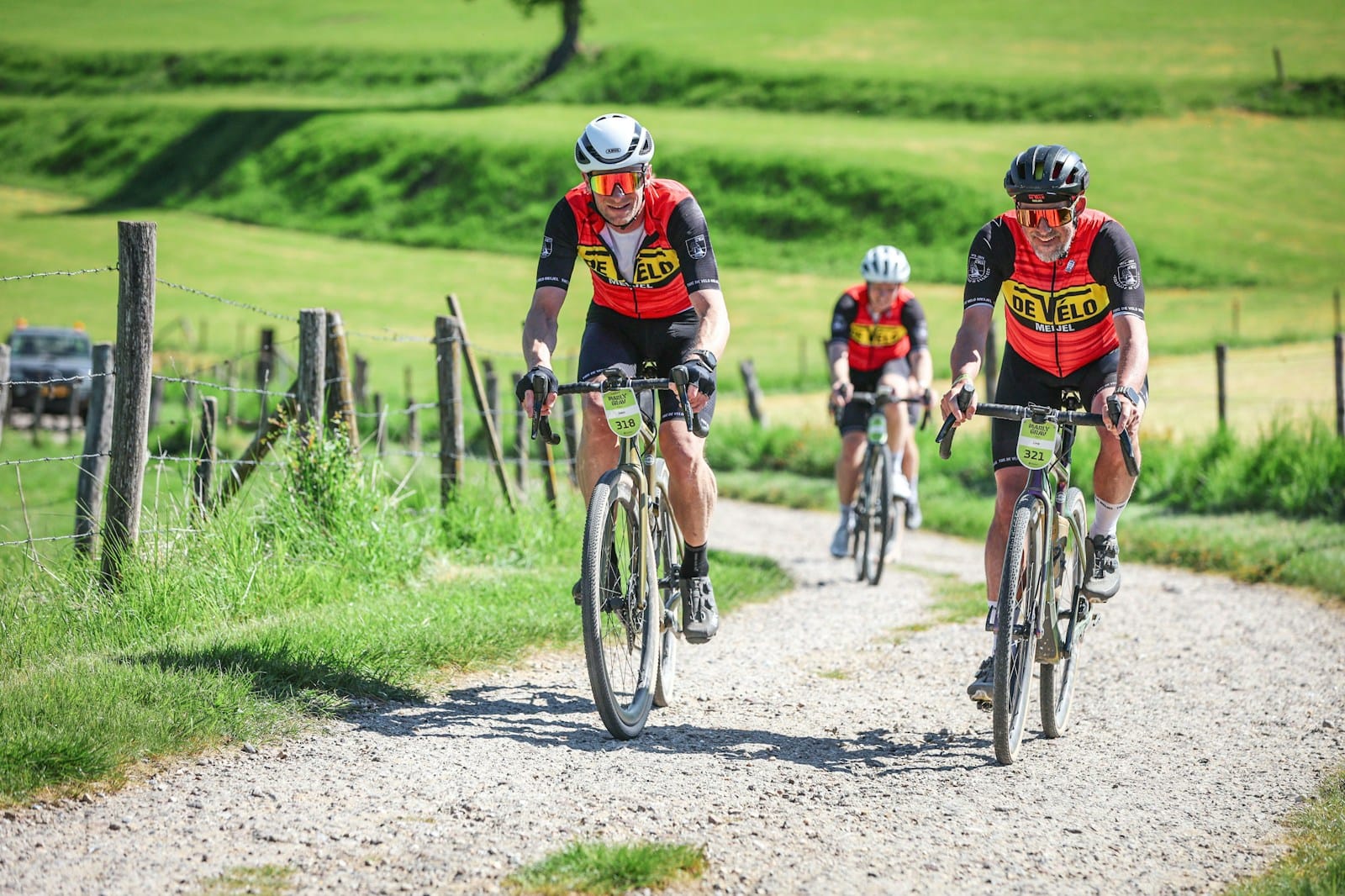
Guided tours suit riders who want to focus on riding, not route-finding. Experienced guides know the terrain, know how to ride it, and can adjust pace and route based on group fitness. They also provide camaraderie and momentum that sustains you on hard days. On our guided tours we keep it to a maximum of 10 riders per guide, and because the guide leads the navigation, you ride with the group rather than following a route of your own.
Self-guided tours suit independent riders who prefer autonomy. You ride your own pace, take breaks when you want, and navigate using GPS. You also need to be comfortable with wayfinding and the mental load of navigation. This works well for experienced gravel cyclists who have ridden multi-day tours before.
Either way the support is the same: your luggage travels in the van and you collect it at the hotel, and the van meets the group most days at lunch — a chance to change kit, refill your energy drink free of charge (energy bars and chews available to buy). If you’re weighing your options, our tours come in both guided and self-guided formats, and how our tours work walks through the day-to-day in full.
Questions riders ask
What fitness level do I need for a gravel tour?
It depends on the tour. Shorter European tours (300–350 km, under 3,000 m elevation) suit recreational riders with some long-ride experience. Alpine and longer tours (400+ km, 10,000+ m elevation) need stronger fitness and gravel-specific training. Honestly assess your longest comfortable day-ride distance and elevation capacity. Tours are designed with mixed-ability groups — guides adjust pace accordingly.
What does "fully supported" actually include?
Fully supported means: luggage transport between hotels, experienced guides on the road, support vehicle following (for mechanical help, water, emergency), pre-booked accommodation, and tested logistics. You pack once, ride all day, and your luggage is waiting at the next hotel. Support vehicle handles flats, breakdowns, and carry spares and supplies. This removes a lot of the logistical worry and lets you focus on riding.
How do you train for a multi-day gravel tour?
Start 16–20 weeks out. Build base fitness over 8–10 weeks with long steady rides (aim for 80–120 km on gravel or mixed terrain). Add intensity over 6–8 weeks: intervals, hill repeats, and sustained efforts. Taper for 2–4 weeks before the tour. Mix gravel and road riding. Do long back-to-back rides on weekends to simulate multi-day fatigue. Recovery and sleep matter more than total hours. Consistency beats intensity.
Planning a gravel week of your own?