When to Go: the Best Time of Year for a Gravel Tour
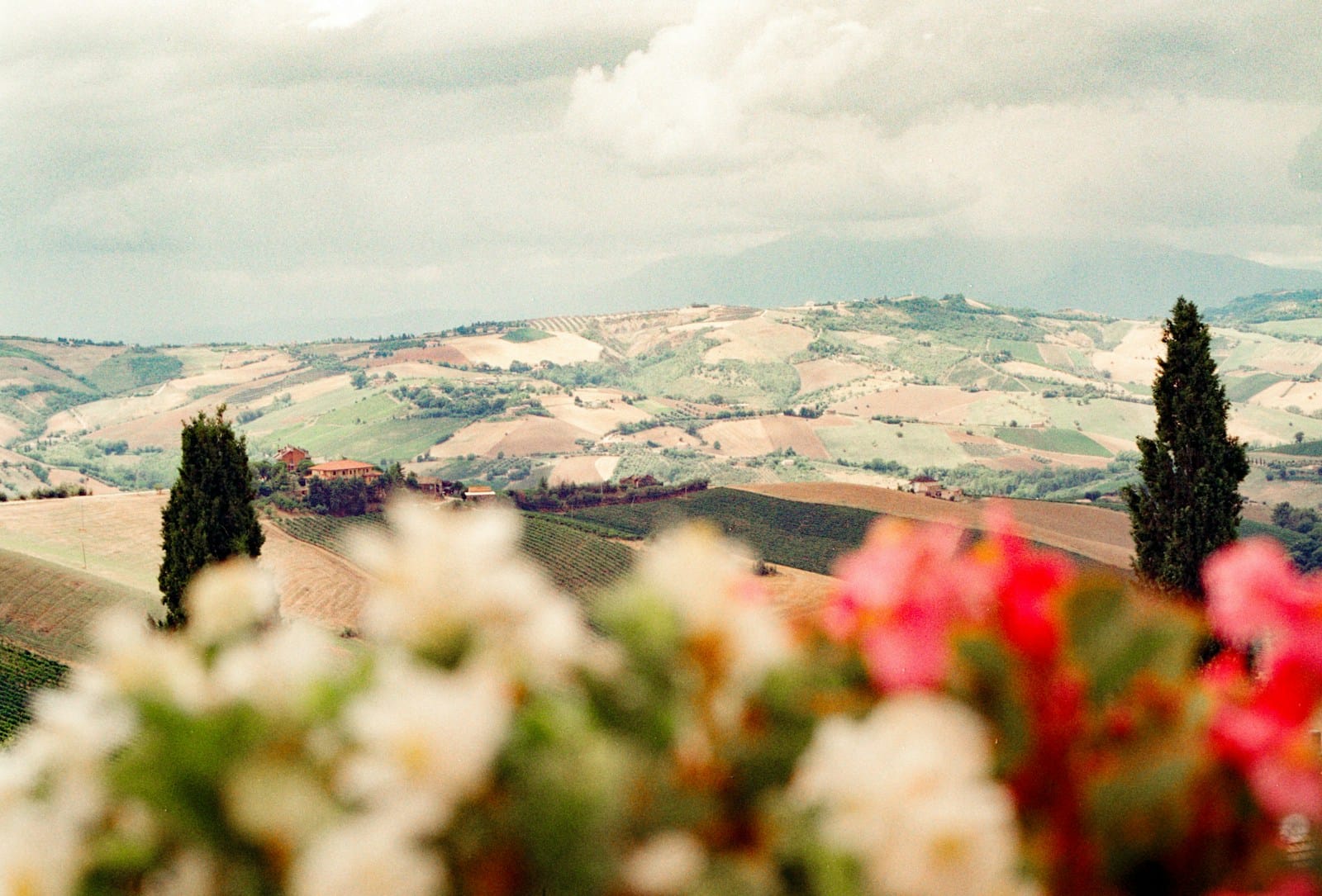
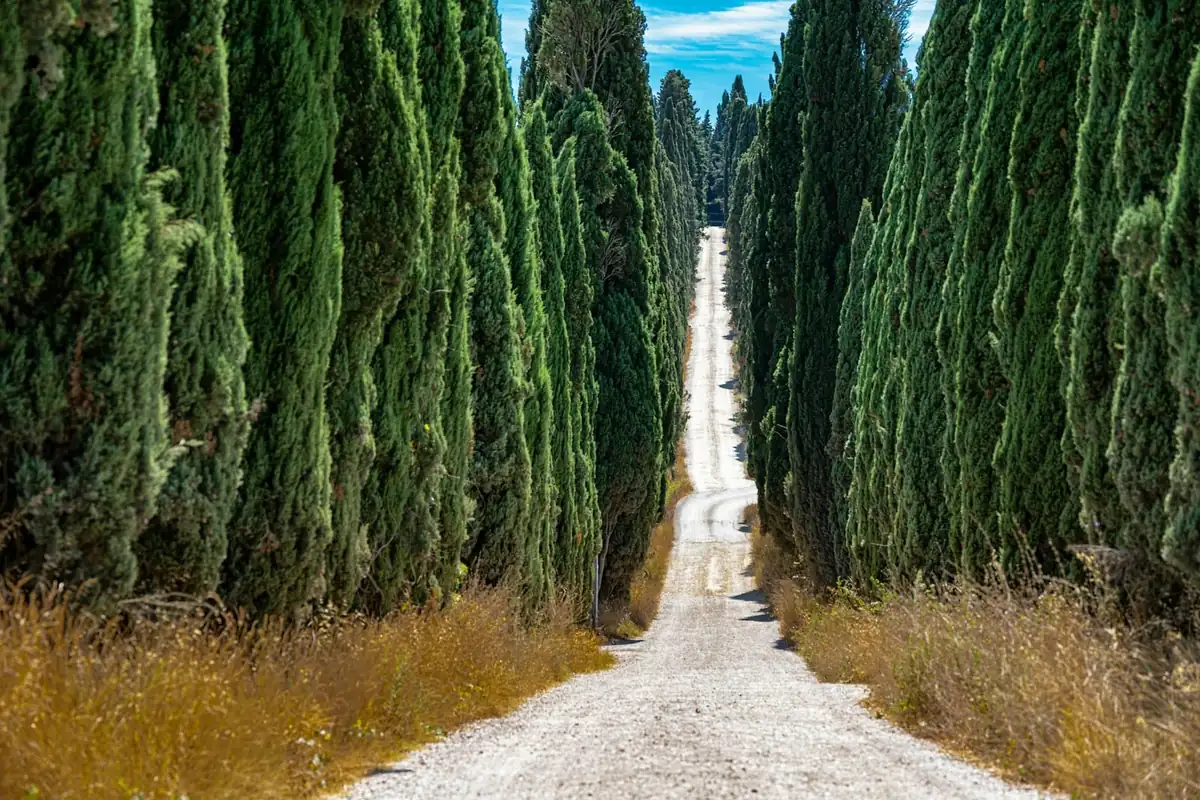
There is a particular morning in early September in Tuscany when the light does something you spend the rest of the year trying to describe to people. It comes in low across the Crete Senesi, catches the white of the Strade Bianche, and turns the bare clay hills the colour of old gold. The air is warm but not yet hot. The summer dust has packed the gravel down hard and fast. The August crowds have gone home. You roll out of an agriturismo after a long breakfast, and for the first hour you do not see another soul. That morning is not luck. It is the calendar.
This is a guide to getting the calendar right. The single biggest decision in planning a gravel tour — bigger than which bike, bigger even than which country — is when. The best gravel cycling in Europe is not a place you go; it is a place you go at the right time of year. The Stelvio that is glorious in July is shut under snow in May. The Algarve that is a furnace in August is perfect in October. Cyprus that is unbearable in July is one of the loveliest spring rides anywhere. Get the month right and a route gives you its best self: firm trails, kind light, long enough days, empty roads. Get it wrong and the same route can be a slog.
We design our calendar around this. Every one of our tours has a departure window chosen for one reason — that is when the route rides well. We scout and test each one before it goes on sale, and we set the dates around the weather, the daylight, the trail conditions and, where it matters, the midges and the crowds. What follows is the reasoning laid out month by month, so you can match the week you can travel to the destination that suits it. If you are still deciding where rather than when, our round-up of the best gravel cycling destinations in Europe is the companion piece; this one is about timing.
The short version: a gravel calendar
Here is the whole year on one page, before we get into the reasons.
- April — Cyprus. Spring in the Troodos: wildflowers high up, cool mountain air, warm coastal evenings. The Trans Cyprus Gravel runs once, late April into early May.
- June — Tuscany (early summer) and the Alps open. Tuscany has a June departure with fresh green hills; the Trans Alp opens its season in late June once the high passes clear.
- July — the Alps and Scotland. Peak alpine daylight, and the warmest Highland riding of the year. The Scotland Highlands Gravel runs a late-July departure.
- August — the Alps. High summer in the mountains, long days, the Stelvio at its best on the Explorer route.
- September — Tuscany, the Pyrenees and Scotland. The strongest single month in the programme: golden light, stable air, firm tracks. Tuscany, the Trans Pyrenees and the second Scotland departure all land here.
- October — the Algarve. Summer heat gone, crowds gone, the light turning golden in the afternoons. The Trans Algarve Gravel runs in early October.
- November–December and February–March — South Africa. The southern-hemisphere summer: while Europe is dark and wet, the Western Cape is warm and dry. South Africa Gravel runs across this window.
Spread like that, the seven routes give you a reason to ride almost any month of the year — and a way to escape the worst of the European winter entirely. Now the detail.
Spring — Cyprus, the overlooked April ride
Spring is the quietest season in most people’s cycling year and one of the best, and Cyprus is the route built around it. The Trans Cyprus Gravel runs a single departure, 24 April to 1 May, and the timing is the entire idea.
Why April. Cyprus has a short, perfect window. By high summer the island is too hot to ride well; in winter the high Troodos can hold snow. Late April threads the needle. At sea level around Larnaca and Paphos the days are warm and the evenings are made for sitting outside. Up in the Troodos, where the route climbs toward 2,000 metres through cedar and pine, the air stays cool and clean — cool enough that a packable layer and warm gloves earn their place on the descents. The wildflowers are out across the upper stages. It is, quietly, one of the best spring gravel cycling holidays in the Mediterranean, and almost nobody knows the roads are there.
The trail conditions. Spring gravel in Cyprus is firm and dry on the limestone tracks, with the white-earth roads near Stavrovouni Monastery at their cleanest before the summer dust. The forest roads through the Troodos cedar zone are well-graded and connect villages that see almost no through traffic, so you have them to yourself. There is real climbing — the route gains 5,500 to 8,000 metres over the week across five stages — but no technical difficulty; it rewards a steady cadence and good gearing.
Daylight and weather. Late-April daylight is long enough that the moderate daily distances (300 to 375 km across the week) never feel rushed. You ride into cool mornings, climb into clean mountain air, and come down to warm coastal evenings. The temperature swing between the coast and the high Troodos is the thing to plan kit around — warm at the bottom, genuinely cool at the top.
Who it suits. Riders who want to start their season somewhere special before the European summer routes open, and who like the idea of a coast-to-coast crossing — Larnaca to Paphos — on gravel roads few maps even mark. With a single departure each year, this is one to plan ahead for.
Early summer — Tuscany green, and the Alps coming clear
By June the high European routes are waking up. Two things happen: Tuscany gets an early-summer departure with a different character to its more famous September one, and the Alps open as soon as the passes clear.
Tuscany in June. The Tuscany Gravel tour runs a 4–11 June departure in 2027 alongside its September dates, and the two ride differently. June Tuscany is greener and fresher — the hills still hold the spring’s colour, the vines are in full leaf, and the heat has not yet settled in. The Strade Bianche are firm and fast; the white limestone and clay roads of Chianti are at their best before the deep dry of high summer. Days are long, which matters on a route where the Explorer line can run 5 to 6 hours, and the queen stage across the Crete Senesi into Brunello country still climbs hard but in kinder temperatures than August would give. If you want the texture of Tuscan gravel — cypress alleys, hilltop towns, vineyard lanes — with a touch more green and a little less heat, June is the one.
The Alps opening. The Trans Alp Gravel opens its season with a late-June departure (27 June – 4 July), and this is the earliest the route can sensibly run. The reason is snow. The crossing climbs from Füssen over the spine of the Alps to Lake Garda, and the high sections — the Reschensee, the long alpine plateaux, and the Stelvio Pass on the Explorer route — need to be reliably clear. By late June they are. The trade-off in the earliest departure is that high-alpine weather is at its most changeable in early summer: you can get 5°C on a pass and 25°C in the valley on the same stage, so a packable shell, arm warmers and gloves live in the day bag every single day. What you gain is the freshest mountain air of the season and snow still bright on the peaks above the gravel.
High summer — the Alps and Scotland
July and August are the heart of the high-mountain and high-latitude season. This is when daylight is longest, the passes are open, and the routes that depend on big, settled mountain weather are at their most reliable.
The Alps in July and August
The Trans Alp runs its core departures in mid-July (18–25 July) and late August (22–29 August), and high summer is when this route is exactly what it promises to be: a high-mountain crossing through four countries — Germany, Austria, Switzerland and Italy — with 8,000 to 10,500 metres of cumulative climbing and the Stelvio waiting on day four for Explorer riders.
Daylight. The long July and August days are a genuine asset here. The Explorer stages can run 5 to 6 hours with up to 2,000 metres of climbing, and a 125-km day over the Stelvio needs a generous window of light. High summer gives you that with room to spare, and time to enjoy the rest day in Merano — thermal baths, café culture — without watching the clock.
Weather. Settled high-summer weather is the most reliable the Alps get, but “reliable” in the mountains still means changeable. Afternoon storms build over big climbs; valley floors bake while passes stay cool. The kit discipline is the same all summer: shell, arm warmers, thermal and gloves carried every stage, and serious sunscreen — altitude burns faster than people expect.
July versus August. They ride similarly. July gives the absolute longest daylight; late August can bring slightly more settled air as the high-summer heat eases, and the first hint of autumn light at altitude. If you want the longest days, take July; for a fractionally calmer atmosphere, August.
Scotland in late July
The Scotland Highlands Gravel runs a late-July departure (29 July – 5 Aug), and this is the warmest, longest-daylight version of a Highland traverse. The route crosses the country coast to coast — Fort William on the Atlantic to Montrose on the North Sea — over General Wade’s old military roads, estate tracks and empty moorland, 520 to 540 km with 5,100 to 6,500 metres of climbing.
Why late July. Scotland’s riding season is short, and high summer maximises both daylight and the chance of warm, dry moorland. The long northern evenings are remarkable — light well into the night — which takes any pressure off the longer Explorer stages of 100 to 120 km. The Highlands do not perform for anyone; the appeal is the vast, indifferent emptiness of the place, and summer gives you the best odds of riding it in good conditions.
A word on midges. It would be dishonest not to mention them. Highland midges peak in the still, damp warmth of high summer, and they are at their worst at dawn and dusk near standing water — around the hotel in the evening, not out on the bike. On the move, and often up on exposed, breezy moorland, you barely notice them. They are a feature of a Scottish summer, managed with a little repellent and the simple fact that you are usually riding. If midges are a real worry for you, the September departure (below) sidesteps them almost entirely. Either way, pack for four seasons in a day: a proper waterproof, warm layers and gloves earn their place even in July, and tubeless tyres handle the wet estate tracks.
Early autumn — the strongest month in the programme
If we had to name the best single month for gravel cycling across our European routes, it would be September. The air is stable, the light is long and low, the summer-baked trails are at their firmest, and the crowds have already gone. Three of our routes land here, and each is at its peak.
Tuscany in September
Tuscany runs 4–11 September (and again in early September 2027), and this is the Tuscany of everyone’s imagination. The September light across the Crete Senesi is the thing photographers chase. The Strade Bianche are dry, firm and fast after the long summer — the iconic Chianti sections at their best. The grape harvest is on, the agriturismi are in full swing, and the evening temperatures have eased back from the August heat into something perfect for a long dinner outside. There can still be 10 to 12°C in the hills first thing, so a light layer earns its place, but the riding window is generous and the conditions are about as good as gravel gets.
This is also one of our most approachable routes to come to as a first supported tour: the Adventure line runs gentler valley routes alongside the longer Explorer one, and rental bikes are easy to arrange locally through our partner in Pisa. We wrote more about the riding itself in our guide to gravel cycling in Tuscany.
The Pyrenees in September
The Trans Pyrenees Gravel — our longest and most demanding route — runs 4–14 September, and the timing is not negotiable. This is a full Atlantic-to-Mediterranean crossing of the entire Pyrenean arc: San Sebastián to the Bay of Roses, 780 km over eight stages, with a colossal 17,000 to 20,000 metres of cumulative climbing.
Why September, specifically. A route this high needs the high cols clear and the weather settled, and it needs them clear for eleven days, not one. September is the window when the summer heat has eased into stable mountain weather but before the autumn changes arrive in the high Pyrenees. The early Basque stages — green, wet, technical — are kinder in September than in the heat of August, and the high central section through Ordesa and the Noguera Ribagorzana valley rides in clean, stable air. This is a single Explorer-level tour: 5 to 7 hour days, 1,500 to 3,000 metres of climbing per stage, day after day. September’s stable weather is what makes that sustainable. If you want the full story, we covered the route in cycling the Pyrenees on gravel.
Scotland in September — our pick
Scotland runs a second departure 13–20 September, and if you asked us privately which of the two Highland dates to take, this is the one. The reasons are specific.
The light. Late-summer Highland light is extraordinary — low, golden, long across the moorland. The colours start to turn in the hills, the heather lingers, and Glen Builg on the wild middle stage looks like something you will be explaining to people for years.
The trails. By mid-September the estate tracks and military roads have had a full summer to dry and pack down. After a wet season they are at their firmest and most predictable, which on a 520-km traverse matters more than almost anything.
The midges. This is the clincher for many riders. By mid-September the first cold nights have largely seen the midges off, so the evenings around the remote Highland hotels are far more comfortable than in July. You give up a little daylight compared with the high-summer date, but the days are still long enough for the route, and what you gain in light quality, trail firmness and midge-free evenings more than makes up for it. For us, September is the connoisseur’s Highland month.
Autumn — the Algarve in October
October belongs to the Algarve. The Trans Algarve Gravel runs 3–10 October (and again in early October 2027), and the month is chosen as carefully as any in the programme.
Why October. Southern Portugal in summer is too hot for the kind of riding this route does — long days in the interior hills, climbing through the Serra de Monchique. By October the heat has broken. The days are warm and the riding is comfortable, while the hills can be cool first thing (10 to 12°C), so a light packable layer earns its place. Crucially, the summer crowds that fill the Algarve coast through August have gone home, which means quiet roads, easy hotels and relaxed logistics through Faro. The light turns golden in the afternoons — the kind of low autumn sun that makes the cork-oak forest and citrus groves glow.
The trail conditions. Autumn gravel in the Algarve is dry and dusty but settled — the long summer has baked and packed the Via Algarviana tracks down hard. Tubeless tyres handle the dry, dusty trails and cork-forest paths well. This is one of our shorter routes in daily distance — five stages, 300 to 350 km — which makes for an unhurried week, time to enjoy the thermal spa rest day at Caldas de Monchique and the long evenings.
Who it suits. Riders who want an autumn gravel cycling holiday with real character but manageable days — the shorter stages and the mid-tour rest day make this one of our more approachable tours, and a good first hotel-to-hotel week. It finishes at Cabo de São Vicente, the south-western tip of Europe, with the Atlantic wind and the sense of having crossed southern Portugal coast to coast. More on the riding in gravel cycling in Portugal’s Algarve.
The southern window — South Africa, November to March
The last piece of the calendar is the cleverest, because it solves the problem of the European winter. When the home roads go dark and wet, the Western Cape is in high summer. South Africa Gravel runs across the southern-hemisphere season, with departures in late November (21–30 Nov), early December (4–12 Dec) and late February into March (27 Feb – 7 Mar).
Why the timing works. South Africa sits in the southern hemisphere, so its summer falls during the northern winter — which makes this a genuine winter-escape gravel destination. The route crosses three landscapes in nine days: the Cape Winelands, the Klein Karoo and the Overberg, on up to 84% gravel, over the Victorian-era Swartberg Pass with its near-1,000-metre climb on an original gravel road. It is one of the great gravel landscapes anywhere, and you ride it while Europe shivers.
November–December versus February–March. The two windows ride slightly differently. Late November and early December are early summer in the Cape: warm days, cooler hill evenings, the vines green and the light fresh. Late February into March is settled late summer — by then the season has stabilised into long, dry, dependable conditions, the Karoo at its most characterful. Both give you warm days and cool evenings; a light packable layer earns its place either way, and tubeless tyres handle the thorny farm roads. There is real heat to plan for on the big Karoo days, which is exactly why the route runs in the southern summer rather than its scorching peak.
Who it suits. Strong riders looking to keep their season alive through the European winter, or to bookend it — a December departure to round off the year, or a late-February one to start the next. The passes are serious (Swartberg, Rooiberg, Garcia’s) and some days are long, but the daily route choice and the support van let you calibrate it. More on the country in gravel cycling in South Africa.
How season shapes the riding — the four things that actually change
Step back from the individual destinations and the same four variables drive every one of these decisions. It is worth understanding them in their own right, because they are how we choose dates, and how you should weigh a trip.
Weather and temperature. It is rarely about avoiding rain — gravel handles weather, and our kit advice (a packable shell on every route, gloves and a warm layer carried even in summer) assumes it. It is about avoiding the extremes that make a route unpleasant: the August furnace in the Algarve and Cyprus, the snow on the Stelvio in spring, the unsettled high-Pyrenean weather outside the September window. We pick the month where the temperature works with the riding.
Daylight. Long days are not a luxury on a route with 5 to 7 hour Explorer stages — they are what makes the day relaxed rather than rushed. It is why the Alps and Scotland run in high summer, and why the shorter-day routes like the Algarve sit comfortably in October even as daylight shortens.
Trail conditions. Gravel changes through the year. Spring can be greener and occasionally tacky after rain. High summer bakes the tracks dry and fast. Autumn is often the firmest, most predictable surface of all — a full summer of sun and traffic has packed everything down. It is a quiet reason September and October are such strong gravel months.
Crowds and logistics. On the actual trails you are rarely sharing the gravel with anyone, in any month. Where the season shows up is in the towns, the hotels and the airports. The Algarve in October and Tuscany in September both trade the August crush for quiet roads and easy logistics — and a calmer off-bike half of the week.
What a supported week includes, whatever the season
Whichever month you choose, the way we run the week is the same — and it is built so the season is something you experience rather than something you have to manage alone.
You ride point to point, hotel to hotel, sleeping in a different place each night while your luggage travels in the support van and waits at the next hotel (you collect your bag there — it is not delivered to the room). The van is on the route through the day for a spare, a mechanical or a lift, and it meets the group most days at lunch, where you can change kit and refill the PurePower energy drink for free; energy bars and chews are available to buy. Every tour carries the same support: an experienced English-speaking guide, a support vehicle with spares, a spare bike and a clothing bag, and mechanic help from the crew, with parts only at cost.
You can ride two ways. Guided means an experienced guide navigates and you ride with the group — a maximum of 10 riders per guide (8–10 on the Trans Pyrenees) — so you are never handed a route file and left to it. Self-guided gives you the full GPS route for Garmin, Wahoo or Komoot, at your own pace, not tied to a group — with the same hotels, luggage transfer and support. Most riders mix the two. And every route runs at two daily pace options — a steadier Explore line and a fuller Adventure or Explorer one — with a genuine mid-week rest day built in, so a group riding at different speeds shares the same week and the same hotel each night. For the full picture, see how it works.
Booking is simple: a €500-per-rider deposit secures a place, with the balance due 60 days before departure (tours within 60 days are paid in full). You arrange your own flights; we handle everything else. The detail that matters most for this guide is the one we started with — the dates are fixed around the season, because that is when each route rides at its best.
Choosing your month
So how should you actually decide? Start from whichever constraint is hardest for you.
If you can only travel in a particular month, the calendar above points you straight at the destination that suits it — April to Cyprus, June or September to Tuscany, summer to the Alps or Scotland, September to the Pyrenees, October to the Algarve, the northern winter to South Africa.
If you can travel any time but want a specific destination, take the date the route runs and trust that it is chosen for a reason — the Stelvio clear of snow, the Pyrenean cols open for eleven days, the Highland midges faded, the Algarve heat broken.
And if you simply want the best possible gravel week, period, our quiet answer is early autumn: September across Tuscany, the Pyrenees and Scotland, October in the Algarve. Stable air, firm tracks, golden light, empty roads. It is the season we would choose for ourselves.
Whenever you can go, there is a route on the calendar built for that exact week. Tell us the month you have, and we will tell you which of these you should be riding — and whether the guided group or the self-guided GPS route fits how you like to travel. Have a look at the full list of tours, find the season that matches your year, and we will take it from there.
Questions riders ask
When is the best time of year for gravel cycling in Europe?
It depends on the destination, which is the whole point of spreading our calendar across the year. Cyprus rides best in spring (late April), when the Troodos is cool and the coast is warm. The Alps and Scotland are high-summer and early-autumn routes (late June to mid-September), when the high passes are clear and the daylight is long. Tuscany and the Pyrenees are classic September riding — golden light, stable temperatures, firm tracks. The Algarve comes into its own in October, once the summer heat and crowds have gone. And for the southern-hemisphere summer, South Africa runs from late November into March. There is no single best month for gravel in Europe; there is a best destination for the month you can travel.
Is spring or autumn better for a gravel cycling holiday?
Both are excellent, and they suit different destinations rather than competing head to head. Spring (April) is the right window for Cyprus, where the wildflowers are out high in the Troodos and the heat has not yet arrived. Autumn is the stronger season across more of our programme: September for Tuscany, the Pyrenees and the second Scotland departure, October for the Algarve. Autumn tends to bring the most stable air, the best light for the long evenings, and trails that have dried and settled over summer — with the crowds already gone. If you can only ride one shoulder season, autumn opens more of the map.
When is the best time to ride gravel in Scotland, and what about the midges?
Late July to mid-September. We run two Highlands departures: late July, for the longest daylight and the warmest moorland riding, and mid-September, which is our pick — the light turns golden, the estate tracks have dried, the first colour comes into the hills and, crucially, the midges have largely faded after the first cold nights. Midges peak in the still, damp warmth of high summer and are at their worst at dawn and dusk near standing water; on the bike, moving and often up on exposed moorland, you rarely notice them. The September departure sidesteps them almost entirely.
Why is South Africa a winter-escape gravel destination?
Because the Western Cape sits in the southern hemisphere, its summer falls during the northern winter. We run South Africa Gravel from late November into early March — late November and early December for the long, warm early-summer days, and late February into March for stable, settled late-summer conditions. For a Northern European rider it is a genuine escape: while the home roads are dark and wet, the Karoo is dry, the Winelands are warm, and you are riding up to 84% gravel over the Swartberg Pass under a high summer sky.
Will the high passes be clear of snow on the Alps and Pyrenees tours?
Yes — the departure dates are chosen for exactly that. The Trans Alp runs from late June through August, by which point the high passes, including the Stelvio on the Explorer route, are reliably clear and the long alpine days are at their best. The Trans Pyrenees runs in early September, when the high cols across the full Atlantic-to-Mediterranean arc are open and the summer heat has eased into stable mountain weather. We scout and test every route before it goes on sale, and we set the calendar around the window when the mountains actually ride well, not around when it is convenient to sell a trip.
How do crowds and trail conditions change through the season?
On the kind of gravel we ride — old military roads, drove routes, cork-oak tracks, Victorian passes — you are rarely sharing the trail with anyone regardless of month. Where season matters most is in the towns, the hotels and the airports. The Algarve in October and Tuscany in September both trade the August heat and holiday crush for quiet roads and easier logistics. Trail surfaces also settle through the year: spring can be greener and occasionally tacky after rain, high summer is dry and fast, and autumn is often the firmest, most predictable gravel of all, once summer has baked and packed the tracks down.
Planning a gravel week of your own?