Training for the Alps: Building Climbing Legs for 10,000 Metres of Gravel
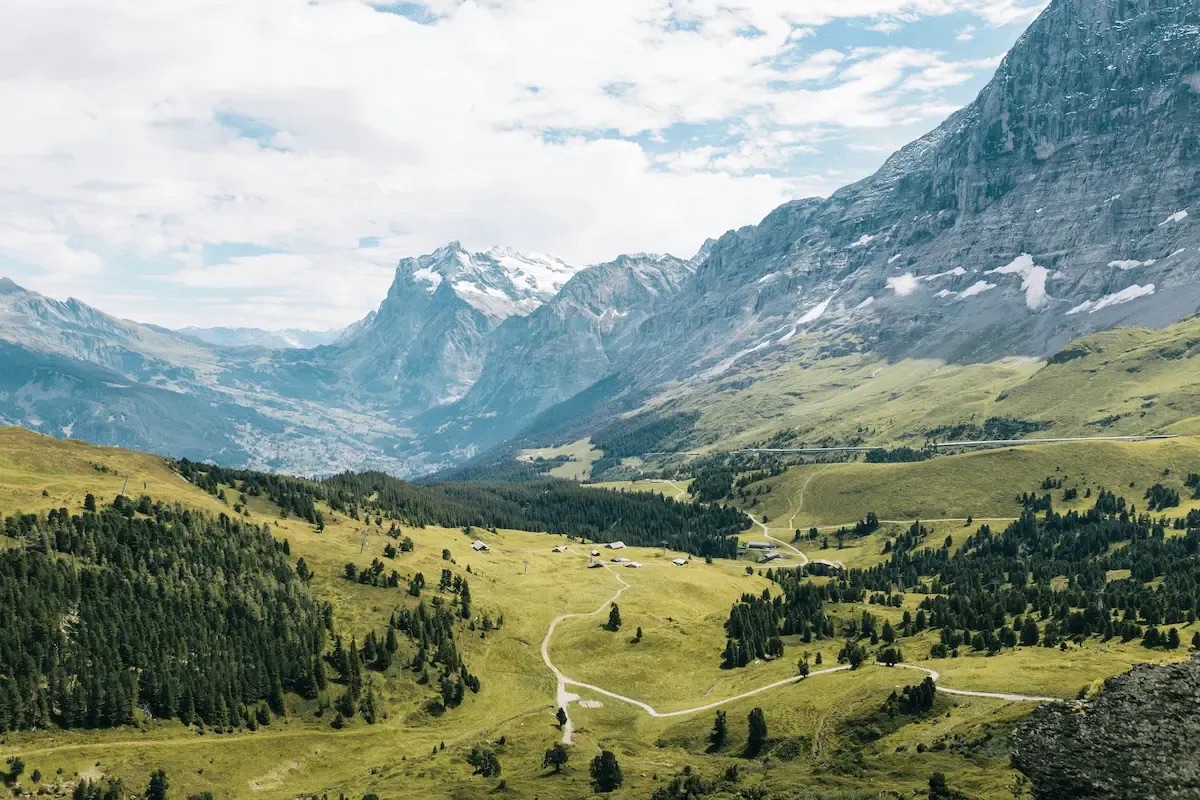
The Reschenpass is not, in isolation, a difficult climb. It is long and steady and entirely rideable, and on a fresh set of legs in March you would enjoy it without much comment. The difficulty is that you arrive at it on the fourth morning of a week, having already climbed something close to five thousand metres, with the Stelvio possibly still to come that same day — and this is the point at which training for the Alps stops being about climbing and starts being about the day after the day after.
That is the honest shape of the problem. Trans Alp Gravel is eight days, five riding stages and 8,000 to 10,500 metres of ascent across 380 to 440 kilometres — one of the shortest routes we run by distance and one of the densest by climbing. Nobody fails this week on a single climb. They fail it, when they fail it, on the accumulation.
Our general guide to training for a multi-day gravel tour covers the broad build. This piece is climbing-specific and Alps-specific: what the individual stages actually ask, and how to arrive able to enjoy day six.
What the week actually demands
The numbers, stage by stage, so you can train against something real rather than against a total:
- Day 2 — Füssen to Imst: 78 km, 1,700 m. Cycle paths, forest roads, gravel and quiet asphalt. Long rideable climbs. The gentlest introduction the week offers, and still a substantial day.
- Day 3 — Imst to Nauders: 75 km, 1,980 m. The biggest single climbing day on the Adventure route, building steadily to the three-country corner.
- Day 4 — Nauders to Merano: 90 km with 1,000 m, or 125 km with 2,200 m on the Explorer route, which adds the Stelvio Pass. Then a long descent into South Tyrol.
- Day 5 — Rest day in Merano.
- Day 6 — Merano to Tuenno: 71 km, 1,900 m. Trentino, on tired legs, and the day people most often underestimate.
- Day 7 — Tuenno to Riva del Garda: 88 km, 1,400 m. The final stage, through the Brenta towards the lake.
Read that list carefully and two things stand out.
Days two and three come before any rest. Nearly 3,700 metres of climbing in the first two riding days, on legs that travelled from home two days earlier. This is where over-eager riders spend the week’s budget.
Day six is 1,900 metres, and it comes after the rest day. People plan for the Stelvio and forget Trentino. The rest day in Merano genuinely restores you, but not to day-one condition, and day six asks nearly as much as day three did.
The four qualities to build
Alpine gravel climbing asks for four distinct things, and a training plan that only develops one of them produces a rider who is strong on Monday and finished by Thursday.
1. Sustained climbing endurance, measured in hours
Alpine passes take an hour to two hours of continuous, unbroken climbing. That is a completely different demand from the twenty-minute climbs most riders have access to at home, and the physiology follows accordingly — it is an endurance quality, not a strength quality.
Train it with duration at effort, not with repeats. If you have a long climb, ride it repeatedly in one session. If you do not, use sustained tempo blocks of 30 to 45 minutes — into a headwind, on a shallow drag, or indoors — and build until you can string three of them into a ride without the last one falling apart. What you want by the end is the confidence that a ninety-minute climb is simply a long thing rather than an event.
2. Consecutive-day recovery
This is the one that actually decides your week, and it is the most commonly skipped.
The mechanism is simple: you cannot train the ability to ride hard on five consecutive days by riding hard on one day per week. From about week four of your build, put a medium ride — two to three hours, steady, with some climbing — the day after every long ride. Not a recovery spin. An actual ride, on tired legs, which is precisely the point.
Six to eight weeks out, escalate this into a peak block: three consecutive days with real climbing in each. Long, medium, long. Do it twice, a fortnight apart. Those two weekends will tell you more about how your Trans Alp week will go than any single metric your head unit produces.
3. Descending, as a load rather than a skill
An alpine descent is forty minutes of concentration, braking, line choice and vibration, on gravel and switchbacks, often at the end of a stage. It is genuinely tiring, and riders who train exclusively uphill arrive with the legs for the passes and no tolerance for what comes after them.
The day-four descent into South Tyrol is long. The final descent through the Sarca gorge into Riva is longer still. Spend real time descending gravel in training — hands, forearms, neck and lower back all need the conditioning, and the skill compounds with it.
4. Fuelling under sustained load
Five to six hours in the saddle on the Explorer stages, at altitude, with the appetite suppression that altitude brings. The support van meets the group at lunch on most days, where you can change kit and refill the energy drink for free, and bars and chews are available to buy. But your in-stage fuelling is your own problem and needs rehearsing in training rather than debuting on the Reschenpass.
Practise eating on your long rides at the rate you intend to use. Our guide to fuelling a multi-day gravel tour covers the detail; the alpine-specific note is that you will want more than you feel like eating, particularly on day four.
Gearing: the training decision disguised as an equipment decision
We recommend a low gear of around 0.9 — roughly a 34-tooth chainring with a 36-tooth sprocket, or lower. Minimum 38 mm tyres, wider is better, tubeless strongly recommended for the alpine passes.
The reason this belongs in a training article rather than a kit article is that gearing changes what your training needs to achieve. On appropriate gearing, an alpine pass is a sustained aerobic effort and you train it aerobically. On road-race gearing, the same pass becomes a series of strength efforts at low cadence, which is a harder thing to survive five days running and a harder thing to prepare for.
Fit the gearing you intend to travel with in the first weeks of your build, and train on it. Do not train on a compact and travel on a sub-compact, or the other way round.
A sixteen-week shape
Adjust to your own base, but this is the structure we would suggest.
Weeks 1–4: base. Consistent volume, mostly steady. Four rides a week if you can, three if you cannot. Get comfortable with four-hour rides. Fit your tour gearing.
Weeks 5–8: introduce the second day. Long Saturday, medium Sunday, every weekend. Add one sustained-climbing session midweek — the tempo blocks described above. Volume climbing gently.
Weeks 9–12: specificity. Take your long ride onto gravel, on the bike you will travel with, with real climbing in it. Two peak weekends of three consecutive riding days. This is the hardest block and the one that matters most.
Weeks 13–14: consolidate. Maintain, do not add. If something is going to hurt, it will announce itself here, and there is still time to deal with it.
Weeks 15–16: taper. Volume down by roughly half, keep some intensity so the legs stay sharp. Travel rested.
The final principle is worth stating plainly: arrive slightly under-trained and fully rested rather than fully trained and tired. The tour is itself a significant training load. Nobody has ever had a bad week because they did one fewer interval session in June.
If you live somewhere flat
Two adaptations, and they work.
Replace gradient with duration at effort — the pass is asking for sustained output over an hour, and a long headwind drag or an indoor block delivers the same demand. And treat descending as the gap in your preparation rather than climbing, because it is: a flat-country rider is usually better prepared for the up than for the forty minutes that follow it. Get onto real descents where you can, even if it means travelling to find them.
Choosing your day four honestly
The single decision that most changes your week is whether to take the Explorer route on day four and ride the Stelvio.
- Adventure route: 90 km, 1,000 m. A moderate day with a long descent into Merano, arriving with something in reserve for the rest day.
- Explorer route: 125 km, 2,200 m, including the Stelvio Pass.
You do not choose this in advance. You choose it at breakfast on day four, having already ridden two stages and roughly 3,700 metres, which is the correct amount of information to have. The levels page sets out what each option asks in general terms, and our piece on the Stelvio covers the climb itself.
Riders who train the consecutive days properly tend to take the Explorer route. Riders who trained big single days tend to arrive at that breakfast already tired, and take the Adventure route, and enjoy their week perfectly well — but they did not have the choice they thought they were training for.
What the week gives you back
Five riding stages, a genuine rest day in Merano placed immediately after the hardest one, hotel-to-hotel luggage transfer, a support vehicle on the road every day, English-speaking guides at a maximum of ten riders per guide, GPS routes for Garmin, Wahoo and Komoot, daily briefings, mechanic help with parts at cost, seven breakfasts and six dinners, a gala dinner in Riva del Garda and a chartered bus back to Füssen at the end. Our night-by-night look at the week covers how it fits together, and how it works covers the booking mechanics.
Train the second day, not the first. Fit the cassette in February. Climb for an hour at a time rather than ten minutes at a time. Then arrive rested, and let day four sort itself out over breakfast in Nauders with two countries visible from the hotel door.
Questions riders ask
How much climbing is on the Trans Alp Gravel tour?
Between 8,000 and 10,500 metres across the week, depending on which route option you take each morning. The individual stages carry roughly 1,700 m, 1,980 m, 1,000 m or 2,200 m, 1,900 m and 1,400 m — five riding stages with a rest day in Merano in the middle. The variation sits almost entirely on day four, where the Explorer route adds the Stelvio Pass.
What fitness do I need for the Stelvio option on day four?
The Explorer route on that stage is 125 km with 2,200 m of climbing, against 90 km and 1,000 m on the Adventure route. Realistically you want to be comfortable with five to six hour days, capable of a sustained 90-minute climb without falling apart, and confident navigating loose gravel independently — because at that distance you may be a long way from the support vehicle.
How long before the tour should I start training?
Sixteen weeks is a comfortable build for a rider with an existing base; twelve is workable; eight is tight but not hopeless if you are already riding regularly. What matters more than total weeks is whether the plan includes consecutive-day riding. A rider with ten weeks of back-to-back days will handle the week better than a rider with twenty weeks of long Saturdays.
Can I train for alpine climbing if I live somewhere flat?
Yes, with two adjustments. Replace long climbs with sustained tempo blocks of 30–45 minutes at climbing effort — into a headwind, on a drag, or indoors — because the physiological demand is duration at effort rather than gradient. And spend real time on the descents when you get there: an hour of alpine descending is a skill and concentration load that flat-country riders genuinely feel.
Does an e-gravel bike change the training requirement?
It lowers it substantially but does not remove it. E-assist bikes are welcome on Trans Alp and charging works at the hotels. Riders who bring one generally use it to take the Explorer route rather than to make the Adventure route easier, and they still spend five hours in the saddle. Descending, handling and the cumulative fatigue of five consecutive days are unchanged.
Planning a gravel week of your own?