Hotel to Hotel Across the Alps: A Night-by-Night Look at the Week
The bag is the thing that gives it away. On the second evening in Imst you walk into a hotel lobby in cycling kit, faintly salt-stained, and your bag is simply there — the same bag you left in a Bavarian corridor that morning, having spent its day on the valley road while you spent yours on a forest track two hundred metres above it. Somebody drove it here. Somebody parked it against a wall. You pick it up, you go upstairs, and in twenty minutes you are a person in clean clothes looking for a beer rather than a cyclist with logistics to solve.
Do that six times in eight days and the Alps start to read differently. Not as a series of climbs strung together by a GPS file, but as a genuine crossing — north to south, Bavaria to Lake Garda, sleeping in a different valley each night and never once carrying what you need to sleep there.
This is what the Trans Alp Gravel week actually looks like from the hotel side. Our broader guide to gravel cycling in the Alps covers the riding and the terrain; the Stelvio piece covers the pass itself. This one is about the evenings, and about the shape a week takes when the arrivals are the punctuation.
The crossing, in one paragraph
Eight days, seven nights, five riding stages and a rest day. Füssen in Germany to Riva del Garda in Italy, through Austria and Switzerland on the way — four countries in a week, 380 to 440 kilometres, and 8,000 to 10,500 metres of climbing depending on which route option you take each morning. You sleep in six places: Füssen, Imst, Nauders, Merano (twice), Tuenno and Riva del Garda. The classification is Challenging, on endurance rather than technicality.
Night one — Füssen, Germany
You arrive individually, which means the first evening has a slightly staggered quality: riders trickling in from Munich by train through the afternoon, bikes being reassembled in a hotel car park, the low-grade friendliness of people who have not yet worked out who is who.
There is a warm-up ride into the lake country at the northern foot of the Alps for anyone who wants their legs back after travelling, and then a welcome meeting at 18:30 that is genuinely mandatory rather than nominally so — it is where the guides set out the week, the daily route options and how the van works. Dinner afterwards is optional and most people go.
Füssen is a good place to begin a crossing precisely because it is not yet alpine. It sits at the northern foot of the range with the mountains laid out ahead as a proposition rather than a fact. The lakes are flat, the town is Bavarian and pretty, and the first serious climb is still a day away.
Worth knowing: dinner on arrival day is not included, and this is the night most riders wish they had arrived a day earlier. An extra night here runs €130 per person in a double or €160 in a single for 2026, and it converts a travel day into an actual arrival. If you are flying in from any distance, take it.
Night two — Imst, Austria
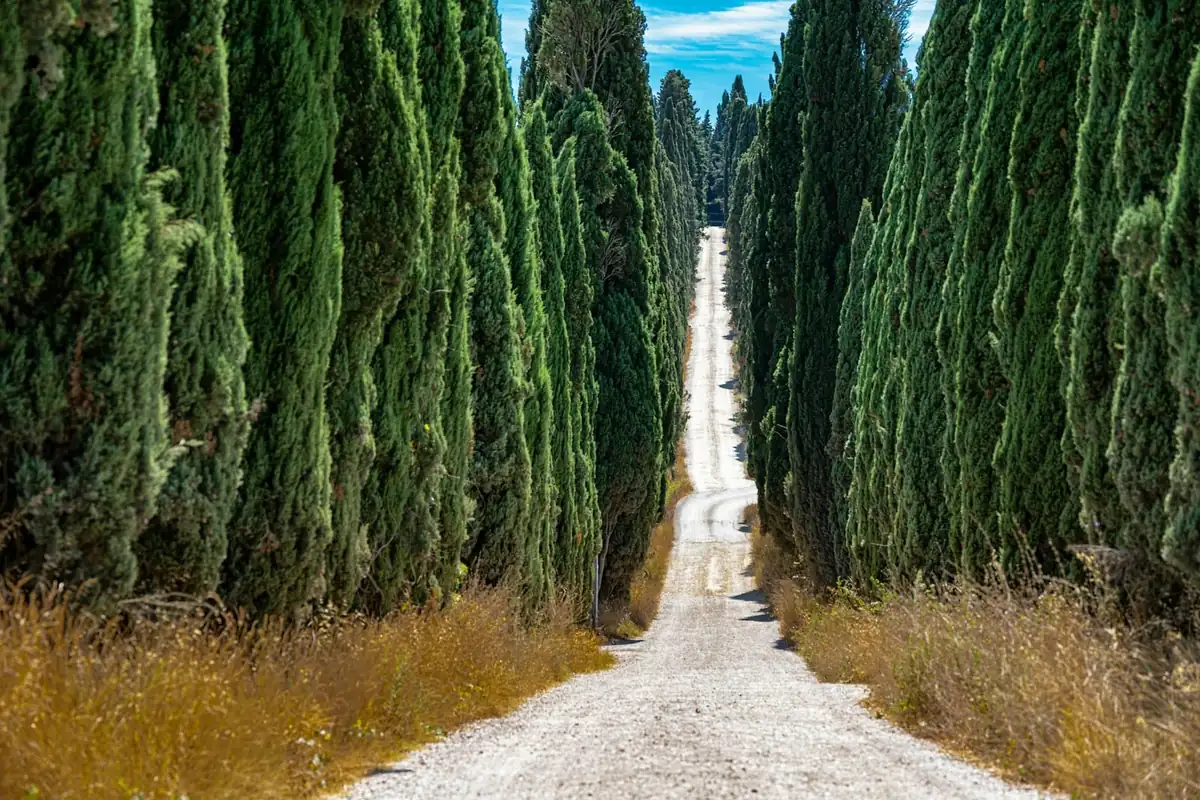
The first proper stage: 78 kilometres and 1,700 metres of climbing on cycle paths, forest roads, gravel and quiet asphalt. Long rideable climbs rather than brutal ones — this is the day the Alps introduce themselves at a reasonable volume, and the day a gravel bike starts to justify itself over anything narrower.
Imst sits in the Inn valley, and arriving there is the first time the format properly announces itself. You have crossed a border, climbed the better part of a Dolomite’s worth of vertical, and there is your bag. The van has taken the valley. You have not.
The evening rhythm from here is the same all week and it is worth describing once: arrive somewhere between mid-afternoon and early evening, collect the bag, shower, find the others on a terrace, eat a dinner that is already booked, and sit through a briefing where tomorrow’s stage is laid out with its route options and its key points. Then sleep, in a valley you had never heard of, at the foot of something you will ride up in the morning.
Night three — Nauders, Austria
Valley floors and alpine plateaux: 75 kilometres, 1,980 metres. Gravel, forest road and cycle path building steadily to a clean climb up to Nauders, which sits at the three-country corner where Austria, Switzerland and Italy meet.
This is the highest-feeling night of the first half of the week, and the one where the crossing stops being an abstraction. You can stand outside the hotel and see two other countries. In the morning the route goes over the Reschenpass and past the Reschensee — the reservoir with the fourteenth-century bell tower still standing in the water, which is one of those sights that is genuinely as odd in person as it is in photographs.
Nauders is a small alpine village that runs on skiing in winter and walking in summer, and a group of ten gravel riders is a perfectly normal thing to have in the dining room. The food is Tyrolean and substantial, which is the correct food for what the next day asks.
Night four and five — Merano, Italy (the rest day)
The fourth stage is the one people book the tour for. High-alpine mood, the view over Reschensee, and then a long descent into South Tyrol. On the Adventure route it is 90 kilometres with 1,000 metres of climbing. On the Explorer route it is 125 kilometres with 2,200 metres, because the Explorer route adds the Stelvio Pass.
Either way you finish in Merano, and Merano is where the week takes a breath.
Two nights in the same hotel changes things more than the arithmetic suggests. You unpack properly for the first time since Füssen. You wash kit and it actually dries. You find a café on the first afternoon and go back to it on the second morning, which after four days of arriving somewhere new is a small and genuine pleasure.
Merano itself is a spa town — thermal baths, arcaded streets, an Austrian-Italian hybrid culture that is neither one thing nor the other and is much better for it. The rest day is entirely yours: the baths, the cafés, the food, or an optional local ride with the guides for riders whose legs object to a full stop. A meaningful number take the ride. That is fine, and it is the reason it is offered.
The placement matters. The rest day sits immediately after the Stelvio day, not in the geometric middle of the week. Everything before it is the hard half of the crossing; everything after is Trentino, running south towards warmer air.
Night six — Tuenno, Italy
South into Trentino wine country: 71 kilometres, 1,900 metres. Valley passages, vineyards and alpine road sections linked by gravel, forest roads and quiet connections.
Tuenno is the smallest place you sleep all week and the one nobody has heard of, which is rather the point. It sits in the Val di Non, apple country, west of Trento — the kind of village that exists for its own reasons and has done for a long time. You are unambiguously in Italy now. The architecture changed somewhere on the descent into Merano and the food changed with it, and by Tuenno the Bavarian start of the week feels like something that happened to a different trip.
This is also, quietly, the evening where the group is at its best. Five days in, everyone knows everyone, the hard climbing is behind you, and the finish is close enough to talk about but not close enough to be over.
Night seven — Riva del Garda, Italy
The final stage runs 88 kilometres with 1,400 metres of climbing, through the Brenta area towards the lake — long connected stretches and varied surfaces, and then the descent through the Sarca gorge.
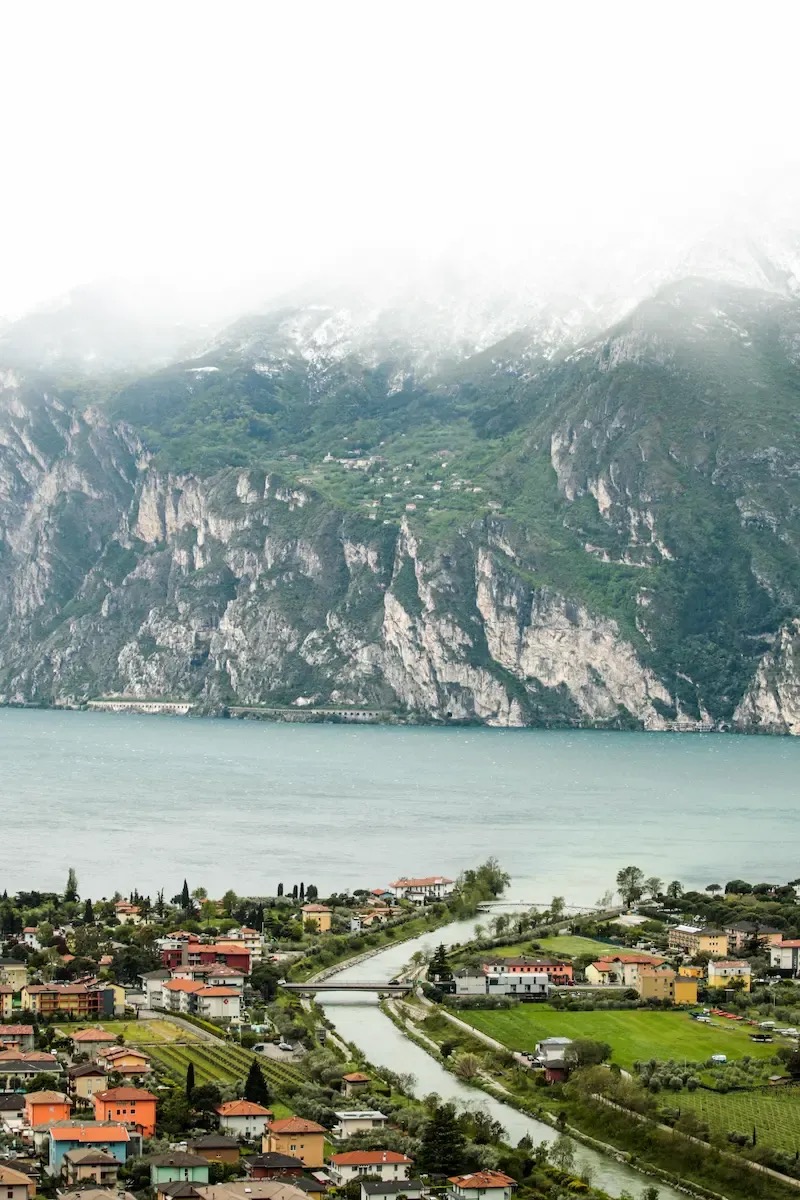
That descent is the piece of the week riders describe afterwards. The valley narrows, the mountains close in, the air warms and turns almost Mediterranean, olive trees replace the pine — and then it opens, and Lake Garda is simply there, wider and stiller than expected, with cliffs dropping straight into the water. You ride to the lakeside. The Alps are behind you. That sentence is doing real work: you started at the northern foot of the range and you are now at the southern end of it, and you got here by riding.
The last night is the gala dinner in Riva del Garda. It is the one included dinner of the week that is about something other than feeding cyclists, and it lands properly because everyone at the table crossed the same mountains to get to it.
Day eight — the bus back
A chartered bus with a bike trailer leaves in the morning for Füssen. There is an optional early descent to the lake shore first, for one last kilometre by the water, which a good proportion of the group take.
The return transfer is included, which is worth understanding when you plan flights: the tour is point to point, but you end the day back where you started, so a return flight from Munich works exactly as well as it would on a loop tour. If you would rather fly out of Italy, Verona and Milan Bergamo both work well from Riva. And extra nights at Riva run €90 per person in a double or €110 in a single for 2026 — a good option if you want a day by the lake before flying, rather than a bus.
What the hotels are actually like
Seven nights in South Tyrolean and Lombard hotels, from valley-floor townhouses to hillside mountain hotels. They are chosen for two things: where they are, and what happens at the dinner table. Neither is a luxury claim — these are proper alpine hotels in proper alpine towns, not resort properties, and the standard is consistent rather than extravagant.
The default is a shared double room, with a single-room supplement available on request. Breakfast is included every morning, seven times; dinner is included six times, the exception being the arrival evening in Füssen when the group eats together but pays separately.
What else is included
Beyond the beds: the intro day, five riding stages and the rest day; experienced English-speaking guides; GPS routes for Garmin, Wahoo and Komoot; a daily briefing with the route overview and key points; a support vehicle with service and spare parts; mechanic help from the guides with parts charged at cost; luggage transfer hotel to hotel; the return bus from Lake Garda to Füssen; complimentary PurePower energy powder; the gala dinner in Riva; a shared photo album; a Gravel-Adventure jersey; and lifetime membership of the RIDERS network.
Not included: flights, lunches and drinks, that first dinner in Füssen, parking during the tour, airport transfers, and travel and cancellation insurance, which is required. The how it works page sets out the full mechanics, including the €500 deposit and the balance falling due 60 days before departure.
Guided or self-guided, and why it matters here
Both run on the same dates, with the same hotels, the same luggage transfer and the same van on the road.
On a guided week a guide leads each day and navigates, so you ride with the group and are not handed the route file. On a self-guided week you get the full GPS route and you leave when you like, ride at your own pace, and stop where you want. Most riders on Trans Alp mix the two across the week, which is entirely normal — the format allows it because the fixed points are the hotels, not the pace.
The one place this genuinely changes the day is the Stelvio. Explorer riders on that stage cover 125 kilometres and 2,200 metres and may be a long way from the van, so the ability to sort a puncture or a chain yourself matters more than it does on the valley stages. We have written about the wider trade-off in guided versus self-guided.
What to bring, briefly
Temperatures swing from 5 to 25°C in a single day between valley stages and high passes, and that swing is the defining kit problem of an alpine week. A lightweight packable waterproof is essential. Arm warmers, a light thermal and gloves are worth carrying on every stage, not just the ones with a pass in them. High alpine weather turns fast even in July, and sunscreen at altitude matters considerably more than most riders expect.
On the bike: a gravel bike, mechanical or e-assist, or a light MTB with suitable tyres and gearing. Minimum 38 mm tyres, wider is better, tubeless strongly recommended for the alpine passes, and a low gear around 0.9 for the steeper climbs. Have it serviced before you travel. Our general packing guide covers the rest.
Six beds, one crossing
The thing that stays with people is not usually a climb. It is the accumulation: six hotels, four countries, one continuous line drawn from a Bavarian lake to an Italian one, and a bag that was always there before you were.
We ride it three times in 2026 and twice in 2027, guided or self-guided, finishing at the water in Riva del Garda with the gala dinner already booked. If you want to know whether the Explorer route and the Stelvio are the right call for your legs, talk to us — that is a fifteen-minute conversation, not a research project.
Questions riders ask
How does hotel-to-hotel gravel actually work in the Alps?
You ride a stage, your luggage travels ahead in the support van, and you collect your bag at the next hotel's reception when you arrive. On Trans Alp that happens six times across eight days — Füssen, Imst, Nauders, Merano for two nights, Tuenno and Riva del Garda. You ride with two bottles and a jacket. Nothing else needs to be on the bike.
Is the luggage delivered to my room?
You collect it at the hotel rather than finding it in the room. It is a small distinction, but worth knowing so you are not waiting for a knock at the door. The bag is there when you arrive, and it has taken the valley road while you took the pass.
Why is the rest day in Merano rather than in the middle of the week?
Because Merano falls immediately after the Stelvio day, which is where the week actually bites. It is a spa town with thermal baths, café culture and good food, and the guides offer an optional local ride for anyone whose legs disagree with the idea of resting. Placing the rest day for symmetry rather than for the route would waste it.
How do I get to Füssen, and home from Lake Garda?
Fly to Munich, which has direct services from most European cities, then roughly 1.5 hours by train to Füssen. At the end of the week a chartered bus with a bike trailer takes the group from Riva del Garda back to Füssen, so return flights work well from Munich — or from Verona or Milan Bergamo if you would rather fly out of Italy. Long-term parking sits about a kilometre from the start hotel at around €40 for the week.
Can I add nights at either end of the Trans Alp week?
Yes. Extra nights at the Füssen start hotel run €130 per person in a double or €160 in a single for 2026; at Riva del Garda, €90 in a double or €110 in a single. A night in Füssen before the tour is the one we recommend most — it turns a travel day into an arrival.
Planning a gravel week of your own?