Gravel Cycling for Experienced Riders: Which of Our Routes Demands the Most
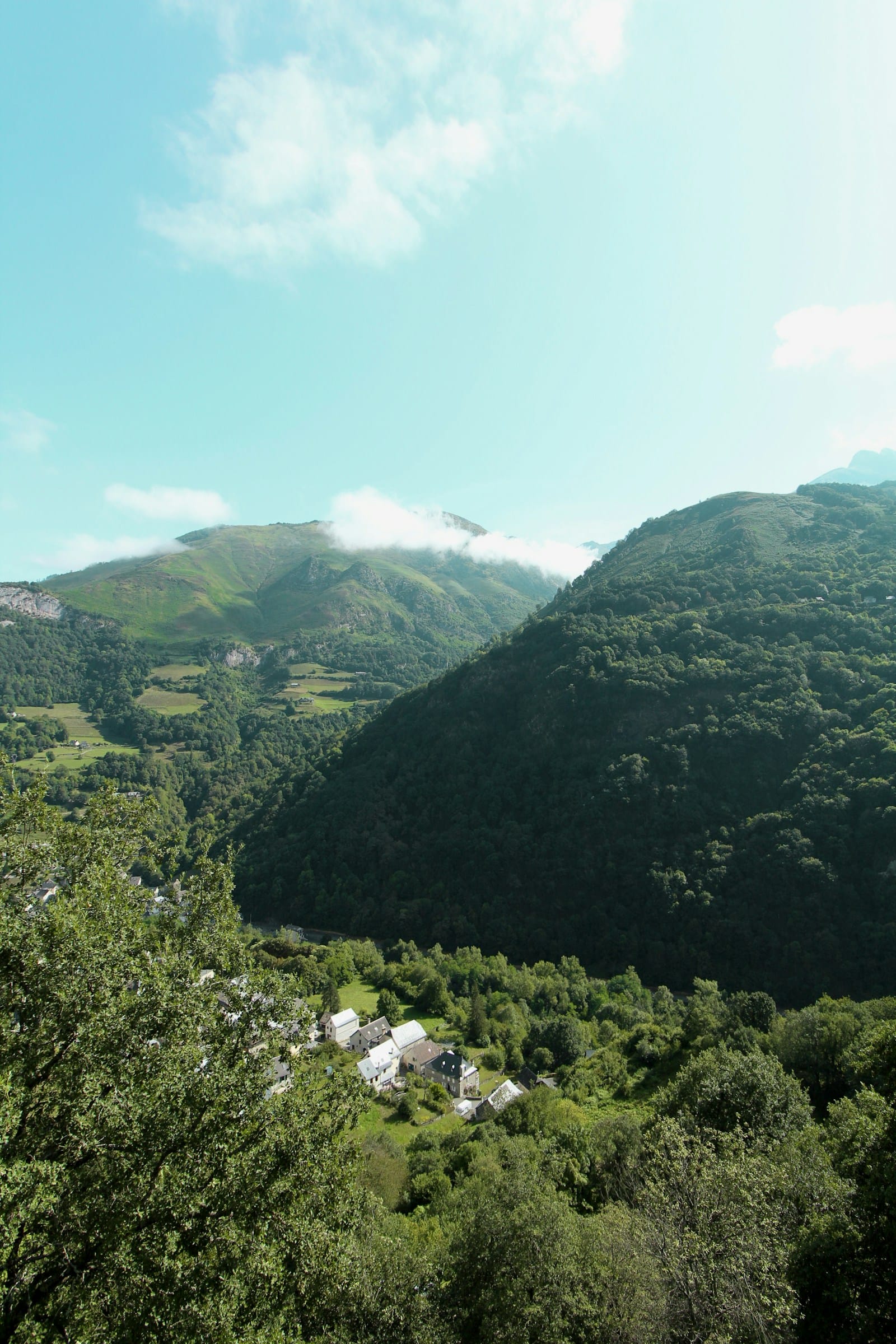
Somewhere on the fourth day in the Pyrenees, the numbers stop being abstract. You have ridden three stages, you are looking at an elevation profile with more vertical in it than most riders climb in a fortnight, and you understand for the first time that the tour is not going to relent — because there are still five stages to come and the range you are crossing has not yet reached its highest section.
That is what “demanding” means in practice, and it is not the same thing as steep. It is not the same thing as long, either. Experienced riders choosing between routes usually ask which one is hardest, and it turns out to be the wrong question — or rather, it is four different questions wearing the same coat.
We run seven routes. This is an honest ranking of what each one asks, using the real numbers rather than a difficulty grade, because grades compress exactly the information you need.
The number that separates them: metres per kilometre
Total distance is a poor guide to how a week feels. Total climbing is better. The ratio between them is best of all, because it describes the shape of a day rather than its size.
Here are all seven routes, sorted by climbing density — metres of ascent per kilometre ridden, using the midpoint of each route’s published range:
| Route | Days | Distance | Climbing | ≈ m/km | Stages |
|---|---|---|---|---|---|
| Trans Pyrenees | 11 | 780 km | 17,000–20,000 m | ~24 | 8 |
| Trans Alp | 8 | 380–440 km | 8,000–10,500 m | ~23 | 5 |
| Trans Cyprus | 8 | 300–375 km | 5,500–8,000 m | ~20 | 5 |
| Trans Algarve | 8 | 345–435 km | 4,300–6,800 m | ~14 | 5 |
| Tuscany | 8 | 460–615 km | 5,000–9,950 m | ~14 | 6 |
| South Africa | 9 | 480–660 km | 5,500–8,000 m | ~12 | 7 |
| Highlands Scotland | 8 | 520–540 km | 5,100–6,500 m | ~11 | 5 |
Two things in that table are worth sitting with.
The first is that Trans Alp is one of our shortest routes by distance and one of the hardest by density. At 380–440 kilometres it is shorter than Scotland, shorter than Tuscany, shorter than South Africa. It also climbs roughly twice as densely as Scotland does. Eight days, five stages, and every one of those stages spends its time going up or coming down. Riders who book it on the distance figure occasionally get a surprise on day two.
The second is that Cyprus is steeper than its size suggests. Three hundred to 375 kilometres sounds like the gentlest week on the list. It carries 5,500 to 8,000 metres of climbing, which is the same climbing load as South Africa in roughly half the distance. Short does not mean easy; it usually means steep.
But density is only one of four axes
A ranking by metres per kilometre is genuinely useful and genuinely incomplete. Four things make a week hard, and they do not correlate as neatly as you would hope.
1. Total load
How much work, in absolute terms, across the whole tour. Here the Pyrenees is not merely first, it is in a separate category: 17,000 to 20,000 metres of climbing over eleven days. The next highest total on the programme is Trans Alp at 8,000 to 10,500. The Pyrenees asks roughly twice as much total climbing as anything else we run, and it does it over a longer period, which is a different physiological question again.
2. Consecutive stages
The number of riding days you string together before the rest day arrives. This is the axis experienced riders most often underestimate, because most training weeks contain one hard day and not five.
Trans Pyrenees has eight riding stages. South Africa has seven. Tuscany has six. Trans Alp, Scotland, Algarve and Cyprus each have five. Every route has a rest day, and where it sits matters — Merano on Trans Alp comes immediately after the Stelvio day, Swellendam on South Africa comes after the two big passes, Aínsa on the Pyrenees comes after the remote central section.
If your training is a long Saturday and not much else, the stage count is the number that will find you out. Our training guide makes the case for back-to-back days over big single days, and this is why.
3. Technical demand
Handling, not fitness. Loose surfaces, corrugation, gradients that break traction, descents that require attention rather than nerve.
South Africa leads here, and its signature is the Rooiberg Pass: twelve kilometres of corrugated gravel at over 10%, on the longest and hardest stage of that tour. Corrugation is its own kind of hard — it is not a power problem, it is a problem of hands, line choice and patience, and it degrades riders across a week rather than within a day. The Swartberg the day before climbs nearly 1,000 metres over 15 km at up to 15%, on a Victorian gravel road still in its original condition.
Cyprus is the other technical week: white-earth roads, limestone, and steep loose gradients through the Troodos up towards 2,000 metres. The Pyrenees has the Zona Zero gravel around Aínsa, which is a proper playground and rides like one.
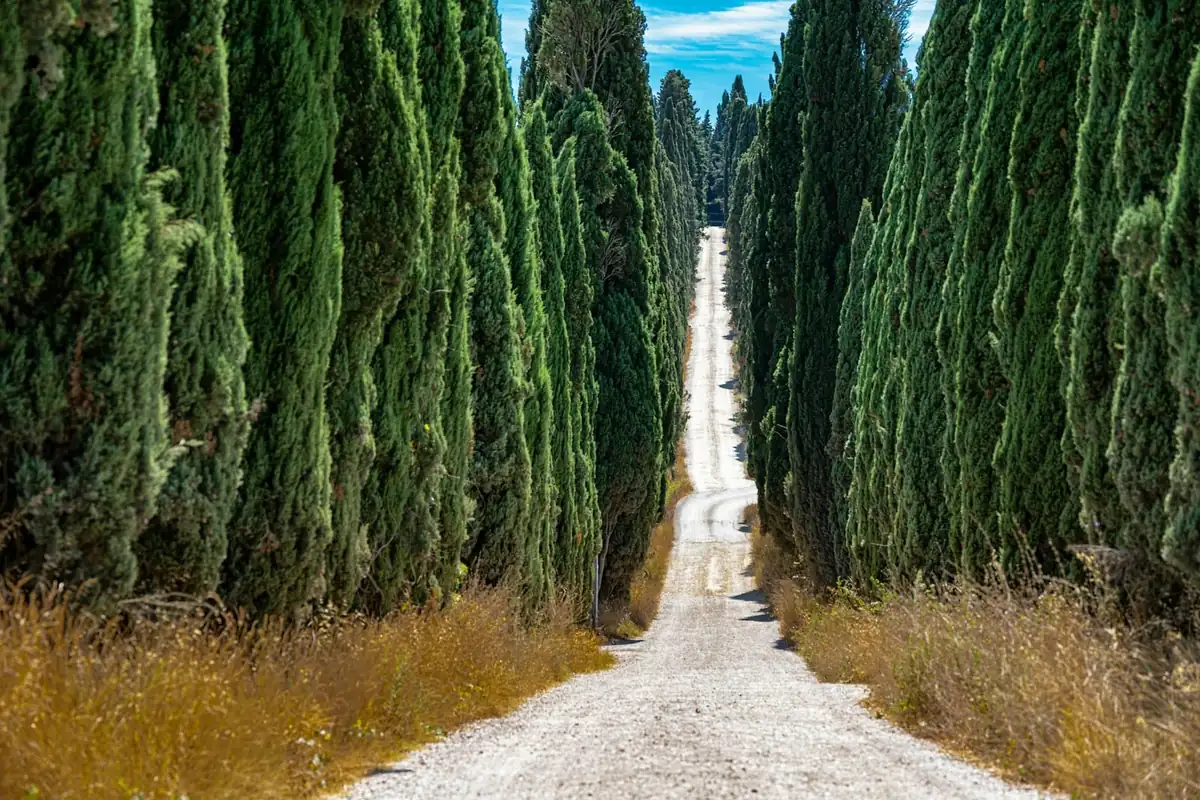
Tuscany, by contrast, is the least technical week on the programme. The strade bianche are firm, well-graded white gravel roads. They are demanding through repetition and through the Crete Senesi queen stage, not through surface.
4. Remoteness
How far you are from the van, the road, and the next village. On most of our routes the support vehicle meets the group at lunch and is reachable through the day. On the longer Explorer options — the 125 km Stelvio stage on Trans Alp, the 115 km Rooiberg day in South Africa — you can be a genuine distance from help, and the expectation shifts accordingly: you should be able to fix a puncture or a chain yourself.
The Pyrenees’ remote central section through Ordesa and the Noguera Ribagorzana is the most committing riding we offer, and Scotland has its own version of it — Glen Builg, long stretches, few people, and the kind of emptiness that is the reason to go rather than a drawback.
Route by route, for an experienced rider
Trans Pyrenees — the serious one
Eleven days, 780 kilometres, 17,000–20,000 metres, eight stages, Atlantic to Mediterranean across the whole range. San Sebastián to Sant Pere Pescador, via the Basque hills, Roncesvalles, the high central Pyrenees and Zona Zero.
The important structural fact: this tour runs at the Adventure level only. There is no lighter daily option, which is unique on our programme. Groups run eight to ten riders per guide rather than the usual ten. It is graded Advanced, and the grade is honest.
Book this if you have already done a hard week and want to find out what the next thing is. Do not book it as a first supported tour.
Trans Alp — the densest week
Eight days, 380–440 km, 8,000–10,500 m, five stages, four countries. Füssen to Riva del Garda over the spine of the Alps, with the Stelvio Pass available on the Explorer route on day four — 125 km and 2,200 m if you take it, 90 km and 1,000 m if you do not.
This is the best value on the programme in terms of hard riding per day away from home, and the daily choice means it can be a Challenging week or a genuinely brutal one depending on what you decide at breakfast. Our night-by-night look at the Alps week covers the shape of it.
South Africa — the longest and the roughest
Nine days, 480–660 km, 5,500–8,000 m, seven riding stages, up to 84% gravel. Not the biggest climbing total, but the most consecutive stages and by some way the most technical surface, on the back of a long-haul flight and a hemisphere change.
The Swartberg and the Rooiberg fall on consecutive days, which is the hardest 48 hours we run outside the Pyrenees. Our Western Cape packing guide covers what the thorns and corrugation demand of your kit.
Tuscany — the most riding, the least drama
Eight days, 460–615 km, 5,000–9,950 m, six riding stages — one more than most eight-day tours. Pisa to Marina di Grosseto via Lucca, Florence, San Gimignano, Siena and Montalcino, on the strade bianche.
Note the enormous climbing range: 5,000 metres if you take the lighter option daily, nearly 10,000 if you do not. Few of our routes vary that much by choice. The Crete Senesi queen stage through bare clay hills is the one that earns the week, and the finish is a swim on the Tyrrhenian coast.
Highlands Scotland — the emptiest
Eight days, 520–540 km, 5,100–6,500 m, five stages. Fort William to Montrose, coast to coast, Atlantic to North Sea, on General Wade’s old military roads across the Cairngorms and through Tomintoul, Scotland’s highest village.
The lowest climbing density on the programme, and one of the most demanding weeks in the right conditions — because in Scotland the weather is a fifth axis that the table cannot show. Long moorland stretches with few people and enormous views ask something that gradient does not.
Trans Algarve and Trans Cyprus — the short weeks that are not soft
Algarve: eight days, 345–435 km, 4,300–6,800 m, five stages, Tavira to Sagres across the Via Algarviana and the Serra de Monchique, finishing at Cabo de São Vicente, the south-western tip of Europe. Deliberately shorter daily distances, which the route uses to buy time and light rather than to reduce difficulty.
Cyprus: eight days, 300–375 km, 5,500–8,000 m, five stages, Larnaca to Paphos coast to coast, through the Troodos cedar and pine forests near 2,000 metres and out along the Akamas peninsula. The shortest distance we run and the third-steepest week on the programme.
So which is hardest?
Ranked honestly, for an experienced rider taking the harder option each day:
- Trans Pyrenees — by total load, stage count, remoteness and grade. Not a close contest.
- Trans Alp — by climbing density, and considerably harder again if you take the Stelvio.
- South Africa — by consecutive stages and technical surface, plus the travel.
- Trans Cyprus — by gradient, in a short week.
- Tuscany — by accumulated distance, if you take the Explorer option consistently.
- Highlands Scotland — by exposure and weather rather than by numbers.
- Trans Algarve — the most forgiving week we run, and still 4,300 metres minimum.
That last line is the one worth remembering. The gentlest route on our programme still climbs the better part of five thousand metres. There is no easy week here; there is only a range from serious to very serious.
What both levels actually mean
On every tour except the Pyrenees, each stage runs at two levels, chosen each morning rather than booked in advance. Explore stages are 55–85 km with 600–1,500 m of climbing. Adventure stages are 70–100 km with 1,200–2,500 m. Details on the levels page.
For an experienced rider, the practical implication is that the harder option is where the tour actually lives, and the lighter option exists so that one bad day does not cost you the week. Using it on the Tuesday before a queen stage is tactics, not retreat.
What is included, whichever you choose
Hand-picked hotels and hotel-to-hotel luggage transfer in the support van; a support vehicle on the road with spares, a spare bike and a clothing bag; experienced English-speaking guides at a maximum of ten riders per guide; GPS routes for Garmin, Wahoo and Komoot; a daily briefing with maps and elevation profiles; mechanic help with parts at cost; breakfast daily and dinner most evenings; a lunch stop at the van with a free energy-drink refill; a Gravel-Adventure jersey; a shared photo album; and lifetime RIDERS-network membership. Full mechanics on how it works.
Choosing well
The best week is not the hardest one available. It is the one whose particular kind of hard matches what you enjoy — density in the Alps, volume in the Pyrenees, surface in South Africa, exposure in Scotland, accumulation in Tuscany, gradient in Cyprus, light in the Algarve.
If you want a second angle on the same decision, which gravel tour is right for you approaches it from the rider’s side rather than the route’s. And if you would rather just describe your last big week to someone and be told which of the seven fits, get in touch — we have ridden all of them, repeatedly, and the answer is usually obvious within a few minutes.
Questions riders ask
Which Gravel Adventure route is the hardest?
Trans Pyrenees, by a distance that is not close. Eleven days, 780 km and 17,000–20,000 m of climbing across eight riding stages, graded Advanced and offered at the Adventure level only — there is no easier daily option on that tour. Every other route we run offers a lighter and a harder version of each stage; the Pyrenees does not.
What does metres of climbing per kilometre tell me that total distance does not?
It tells you what the day feels like rather than how long it is. Trans Alp is one of our shortest routes by distance at 380–440 km, but it climbs 8,000–10,500 m in that distance — roughly 22 metres per kilometre, which puts it second only to the Pyrenees. Scotland covers more ground at 520–540 km but climbs about half as densely, at around 11 m/km. Same eight days, entirely different weeks.
Is the hardest route also the most technical?
No, and conflating them is the most common planning mistake we see. South Africa's Rooiberg Pass gives you 12 km of corrugated gravel at over 10%, which is a handling and endurance problem rather than a fitness one. Cyprus packs steep, loose gradients into short distances. The Pyrenees is brutal mainly through sheer accumulated volume across eleven days. Ask which kind of hard you actually enjoy.
Can an experienced rider find any of these routes too easy?
Rarely, if you take the harder daily option. Every tour except Trans Pyrenees runs two route choices per stage, and the Explorer or Adventure option is genuinely demanding — the Trans Alp Explorer route on day four is 125 km with 2,200 m including the Stelvio Pass. If you take the lighter option every day on the shortest route we run, yes, you will finish the week wanting more.
How many consecutive riding days does each tour actually involve?
This matters more than the totals. Trans Pyrenees has eight riding stages, South Africa has seven, Tuscany has six, and Trans Alp, Scotland, Algarve and Cyprus each have five. Every tour has a rest day. The number of consecutive stages before that rest day is often the real limiter for riders who train on weekends.
Planning a gravel week of your own?