Packing for the Pyrenees: Ten Days, Two Climates
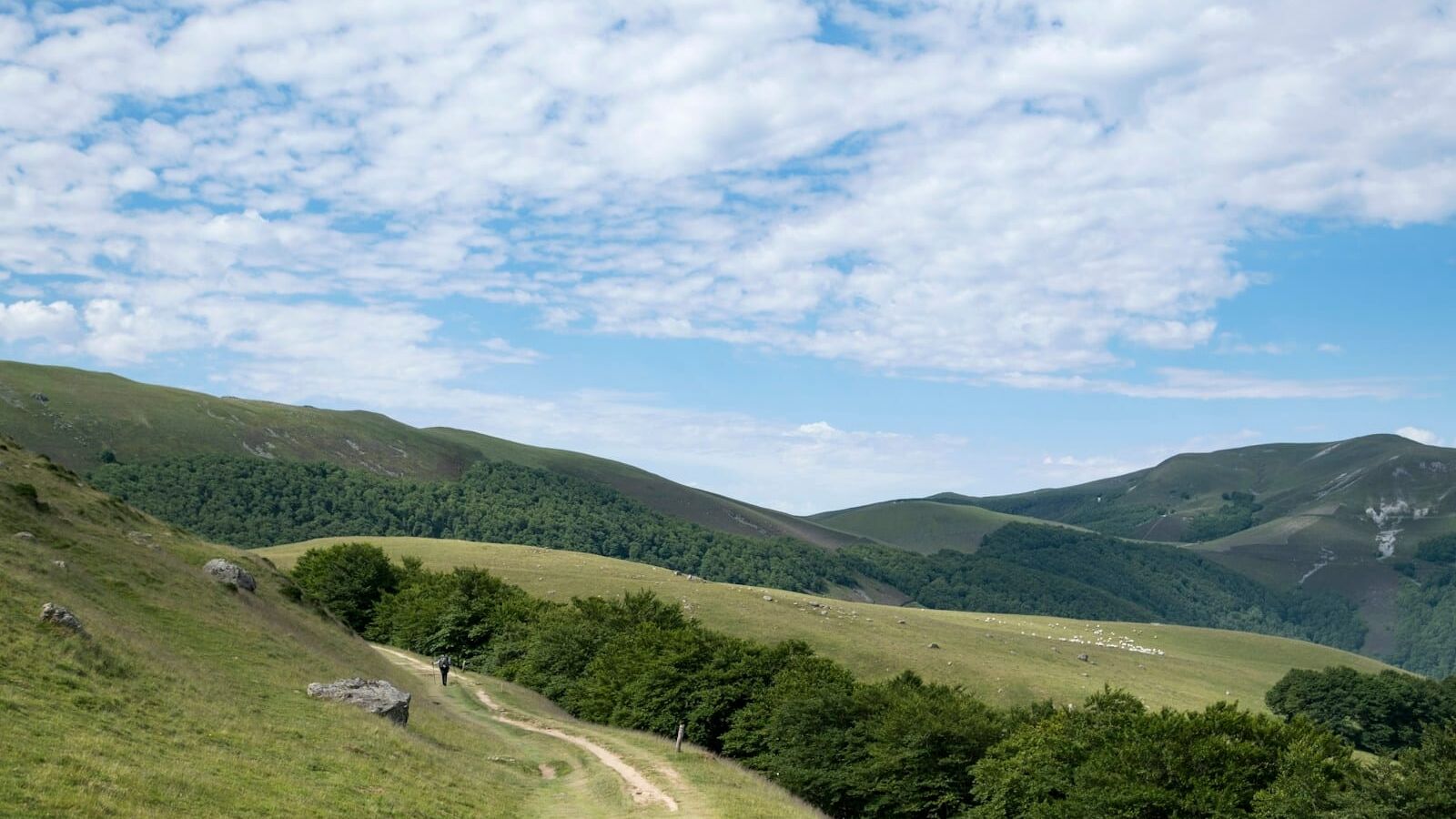
Somewhere on the climb out of Elizondo, on a morning that started cool enough for arm warmers, the Basque hills do something the forecast didn’t quite capture: they go from damp green shade to open, sun-struck ridge in the space of a few switchbacks. By the top you’re sweating inside a layer you were glad of twenty minutes earlier. Four days later, climbing out of Aínsa toward El Pont de Suert, the same kind of swing happens in the other direction — warm at the valley floor, properly cool by the time the Pyrenean peaks close in around you.
That’s the real packing question on the Trans Pyrenees Gravel crossing, and it isn’t the same question as our other routes ask. This piece is about the kit that covers the whole ten-day arc from San Sebastián to Sant Pere Pescador without you carrying two wardrobes for it — what actually earns its place in the bag, what to leave at home, and why a long point-to-point crossing packs differently to a shorter, more extreme week. Our general guide to what to pack for a multi-day gravel tour covers the universal kit properly; this is the Pyrenees-specific version. If you want the full route first, our San Sebastián to Sant Pere Pescador guide walks all eight stages, and our pacing guide to the longest tour we run covers the back-to-back hardest and longest days in depth.
Why the Pyrenees pack differently to anywhere else we ride
Every destination we run has its own defining packing problem, and none of them is really about raw heat or raw cold — they’re about the shape of the swing. In the Western Cape it’s sustained heat and dust over long days. In the Alps it’s a single sharp temperature drop between valley floor and high pass. In Scotland it’s wind and rain with no dry season to plan around. In Cyprus it’s a fast swing between coastal warmth and near-alpine chill, compressed into one week.
The Pyrenees ask a quieter version of the same question, stretched over a much longer route. This is our longest tour — 780 km, eight riding stages, 17,000 to 20,000 m of cumulative climbing, eleven days from the Atlantic to the Mediterranean — and nothing about it is as extreme as the hottest day in South Africa or the wettest week in Scotland. What it has instead is repetition: warm valley starts and cool, exposed high ground, trading places often enough across ten nights that a kit built for only one end runs genuinely short on the other, more than once.
Two things drive the packing decisions here:
The swing recurs rather than happening once. A tour like the Alps’ Trans Alp crossing asks you to manage one defining temperature drop, on one memorable day. The Pyrenees ask the same question on the Basque ridgelines of days two and three, again on the high ground either side of the Aínsa rest day, and again on the long climbs of days seven and eight. Pack for a single cold day here and you’ll be short of a dry layer again before the week’s out.
The terrain itself changes character partway through. The first stages, through Basque country and Navarra, are green, wet and technical — forest track, loose descents, the terrain the tour’s own highlights call “legendary.” East of Jaca the riding changes: drier air, longer climbs, fewer villages, and — near Aínsa — the rockier, more playful ground of the Zona Zero trail network, a named gravel and mountain-bike destination in its own right. That shift matters for tyres and gearing as much as for what you’re wearing.
The system: three things, used in different combinations
The solution isn’t two separate kit lists stitched together for two halves of the route — it’s a small set of items you carry the whole way and rely on in different combinations depending on the day.
A light, packable layer, kept reachable. The tour’s own guidance names this first, and on a ten-day crossing it earns its keep repeatedly rather than on one memorable afternoon: the Basque ridgelines of days two and three, the exposed sections either side of the Aínsa rest day, and the sustained climbing of days seven and eight all ask for it. It needs to pack small enough to disappear into a jersey pocket on the warm valley stages, where you won’t need it at all.
A way to cover your hands and head on the high ground. The route’s own note on conditions — warm days, cool mountain evenings down to 10–12°C — understates how that cold actually arrives: not at the hotel in the evening, but on an exposed col or a long descent after a climb has you sweating. Cold hands on loose gravel are a handling problem, not just a comfort one, which is reason enough to carry proper coverage rather than hope the sun holds.
Wide tubeless tyres and a low gear. Not clothing, but it belongs in the same conversation. The surface changes from Basque forest track to high loose gravel to the rockier fringes of Zona Zero, and a route with 2,000 m-plus days more often than not rewards a gear that turns sustained climbing into an aerobic effort rather than a strength one.
That’s genuinely the list. What changes stage to stage isn’t which of these you’re carrying — it’s all of them, every day — it’s how much you’re actually using at any given moment.
Stage by stage: where the swing actually happens
The route, so you can picture the system in use. Figures are for the tour’s single riding level, taken directly from the tour’s own itinerary.
- Day 2 — San Sebastián to Elizondo (85 km, 2,500 m): flat kilometres along the seafront first, then onto gravel and up into the Basque hills — the terrain the tour’s own highlights call legendary. Warm at the coast; cooling noticeably once the climbing starts in earnest.
- Day 3 — Elizondo to Isaba (90 km, 2,600 m): steep climbs and long ridgelines above 1,000 m, close enough to the French border to feel its presence without the route crossing it. Some of the week’s best views and descents, and the stage where the packable layer first earns its place on an exposed ridge.
- Day 4 — Isaba to Jaca (85 km, 2,095 m): more down than up but still plenty of work — rolling mountain roads, forest gravel and fun descents, with the terrain gradually drying out as the route moves east.
- Day 5 — Jaca to Aínsa (86 km, 1,750 m): flow, gravel and a classic three-stage climb before lunch at the support van, with the Zona Zero terrain arriving toward the end of the stage. Warmer and drier than the Basque days, but the rockier ground here is where tyre choice starts to matter as much as what you’re wearing.
- Day 6 — rest day in Aínsa: a spa, the medieval quarter and time for bike maintenance, with a short voluntary bonus ride on offer depending on weather and the group’s energy. The natural point in the week to dry out anything the Basque stages dampened, before the two hardest days that follow.
- Day 7 — Aínsa to El Pont de Suert (96 km, 2,900 m): the hardest stage of the crossing, close to the highest peaks in the range, with a long sustained climb that asks for the same discipline as the Basque ridgelines, this time at altitude rather than at the coast.
- Day 8 — El Pont de Suert to La Seu d’Urgell (118 km, 2,000 m): the longest day by distance, with long descents and easier road sections keeping the momentum going. Pacing matters more than raw climbing legs here, and so does having dry kit left for the final push.
- Day 9 — La Seu d’Urgell to Ripoll (99 km, 2,100 m): longer climbs and long descents, with the Mediterranean starting to feel closer even high in the mountains.
- Day 10 — Ripoll to Sant Pere Pescador (109 km, 1,200 m): the most manageable stage by climbing, rolling down toward the coast on varied terrain to finish on the Bay of Roses. Warmth returns for good on this stage — a genuine coastal arrival after a week in the mountains.
The pattern across all of it: two genuinely different climates recurring across ten days, not once each, which is exactly why a kit built around repetition beats one built around a single extreme.
Tyres and gearing: not clothing, but the same conversation
None of the layering above matters much if you’re nursing a slow puncture on a remote stretch between Isaba and Jaca instead of watching the terrain change around you. Get the bike right first.
- Minimum 38 mm tyres, wider genuinely better. Our floor across every tour, and the mix of Basque forest track, high gravel and the rockier Zona Zero fringe near Aínsa rewards the extra volume more than most single-terrain routes.
- Tubeless, strongly recommended. This is our most demanding route, and a flat on a remote stage — well away from the support van — costs more time here than it would on a shorter, less isolated tour.
- A low gear around 0.9, or lower. Days with 2,000 m or more of climbing are the rule on this route rather than the exception. The right gearing keeps that sustained, repeated climbing an aerobic effort rather than a strength one.
- A gravel bike or e-gravel bike, or a light MTB with suitable tyres and gearing. Road bikes and hybrids aren’t suitable for this terrain. Have it freshly serviced before you travel, and carry a multitool, a spare quick link and a spare derailleur hanger — the spares a support van can’t stock for every rider.
Bring your own bike — rental isn’t a reliable fallback here
There is no rental on the Pyrenean route, so the tour’s own advice is to bring your own bike as checked baggage, in a good hard case, rather than plan to hire one locally. It’s a genuine extra piece of logistics for an eleven-day trip, but the upside is real: you arrive on a machine you already trust, with fit, gearing and tyres already dialled in, rather than adapting to an unfamiliar bike on day one of the longest tour we run.
What you don’t need to carry
Because your main luggage travels hotel to hotel in the support van — you collect it on arrival, not in your room — there’s little real penalty for a fuller off-bike bag. There is a penalty for extra weight on the bike, and very little of the following belongs there:
- Separate kit systems for the Basque stages and the high Pyrenees. One warm-weather set plus the packable layer and hand/head coverage above covers the whole range; you don’t need a dedicated cold-weather wardrobe carried for ten days on the chance of a handful of cold hours.
- Heavy winter layers. Even the coldest high-ground sections, in the tour’s September departure window, don’t call for proper winter kit — a packable layer plus coverage for hands and head covers it.
- A full toolkit. The support vehicle carries tools, spares and a spare bike, with mechanic help from the crew at parts cost — bring only what a van can’t stock for every rider, and be ready to handle a puncture or chain issue yourself on the more remote stages, since you may be some distance from the vehicle.
- A week’s worth of nutrition. PurePower energy drink is included and refilled free at the van most days, with bars and chews available to buy.
Off the bike: Aínsa and the evenings
Towels and toiletries are provided at every hotel. What’s worth bringing instead:
- Something properly dry for the evenings, separate from whatever got damp or cold on the Basque or high-mountain stages.
- Comfortable shoes for walking. Aínsa’s medieval quarter, on the rest day, rewards a pair of shoes that aren’t cycling shoes — narrow stone streets and an arcaded plaza worth exploring properly rather than hurrying through in cleats.
- Something smart-casual for the two included dinners, including the closing dinner at Sant Pere Pescador.
What the ten days include, so you know what you’re packing around
Ten nights in hotels and refuges chosen for location — some in villages with little else around them — from the Atlantic start in San Sebastián to the Mediterranean finish at Sant Pere Pescador, with two nights in Aínsa around the rest day. Ten breakfasts and four dinners, including the closing dinner on the Bay of Roses. English-speaking guides at a maximum of ten riders per guide (groups here run 8 to 10), GPS routes for Garmin, Wahoo and Komoot if you’d rather ride self-guided at your own pace, a daily evening briefing with maps and elevation profiles, a support vehicle carrying spares, a spare bike and your clothing bag, mechanic help at parts cost, and luggage transfer every stage. The full mechanics — deposit, balance, what’s included stage by stage — are on how it works.
If you’re weighing this against our other routes, our levels guide sets out what a demanding week asks in general terms. For the fuller route picture, our San Sebastián to Sant Pere Pescador guide and the France-Spain border stage piece go deeper on the terrain itself, and our pacing guide covers how to ride the back-to-back hardest and longest days once you leave Aínsa rested.
The short version
Pack for repetition, not a single extreme: a packable layer and real coverage for hands and head, used on the Basque ridgelines, the high ground around Aínsa and the climbs of days seven and eight, then forgotten in a pocket on the warmer valley stages between. Fit wide tubeless tyres and a low gear before you fly, and bring your own bike, since there is no rental along the route. Carry a proper evening layer and a second pair of shoes without a second thought, because the van is carrying them, not you.
We cross from the Atlantic to the Mediterranean on the Trans Pyrenees Gravel tour — guided or self-guided, with the support van meeting you most days at lunch and a hotel room waiting at the end of every stage, whichever climate the day happened to be in.
Questions riders ask
What's the biggest difference between packing for the Pyrenees and packing for a shorter gravel tour?
Duration, not extremity. Nothing on the Trans Pyrenees route is as hot as South Africa's Karoo or as persistently wet as Scotland — but at ten days and 780 km, you pass through warm Basque valleys and cold high cols often enough, over a long enough stretch, that packing for only one of them leaves you short on the other. The kit list below is built around repetition across a long route, not a single extreme.
Do I need genuine cold-weather kit for a Spanish and French mountain crossing?
You need a proper packable layer and the ability to cover your hands and head, not a winter wardrobe. The high Pyrenees can drop to 10–12°C, and that's cool enough to matter on an exposed ridge or a long descent, especially after a warm climb has you sweating. It isn't cold enough to need anything bulky — the whole point of the system here is that it's light enough to disappear into a jersey pocket on the valley stages.
What tyres and gearing does the Trans Pyrenees route actually need?
A minimum 38 mm tyre, wider if your frame takes it, set up tubeless — the terrain runs from Basque forest track to high-altitude loose gravel and the rocky edges of the Zona Zero trail network near Aínsa, and punctures cost more time on a route this remote than on a shorter day out. A low gear around 0.9 earns its place on days with 2,000 m or more of climbing, which is most of them.
Can I rent a gravel bike for this tour, or should I bring my own?
Bring your own. There is no rental on the Pyrenean route, so the tour's own advice is to fly with your bike as checked baggage in a good hard case. Arriving on a machine you already trust, fitted and geared the way you ride, matters more on an eleven-day crossing than on a week where a rental is a workable fallback.
What does the support vehicle carry so I don't have to?
Spares, a spare bike, your clothing bag and a free refill of PurePower energy drink most days at lunch. Your main luggage travels hotel to hotel in the van and you collect it on arrival rather than finding it in your room, which is exactly why a real evening layer and a second pair of shoes cost you nothing to carry across ten nights.
Planning a gravel week of your own?