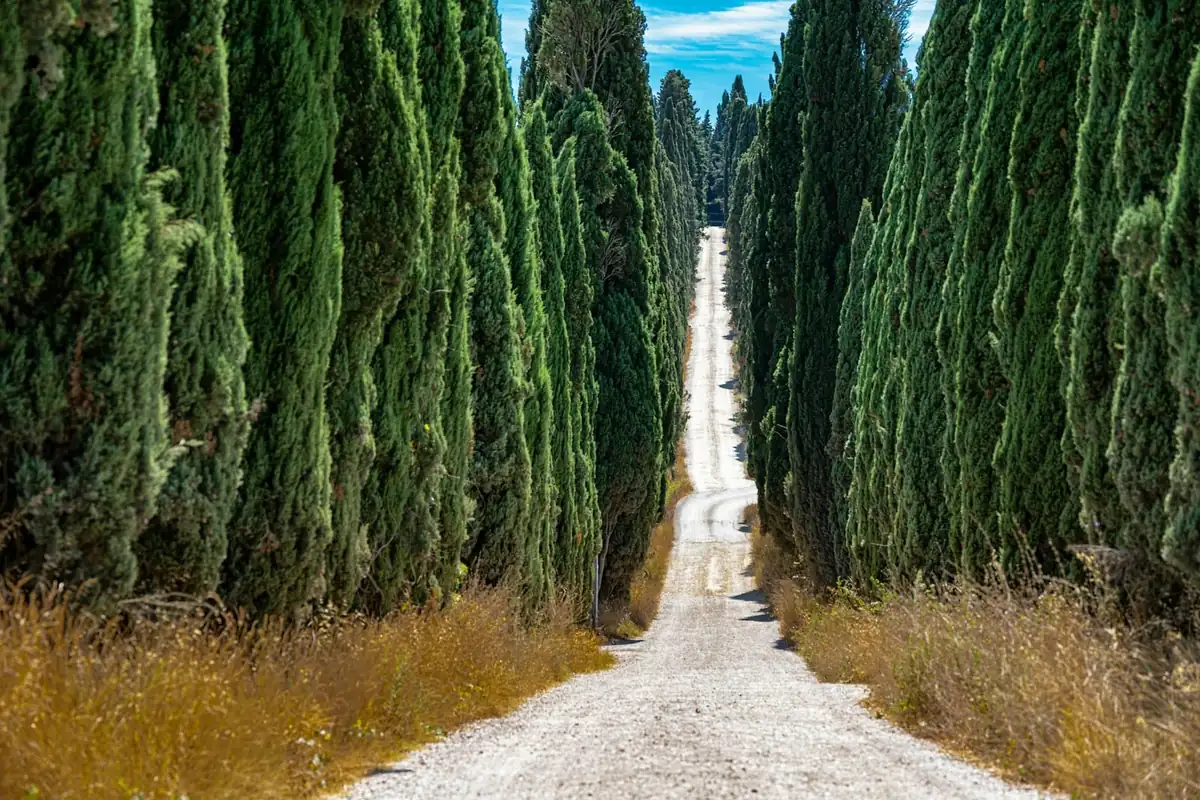
What to Pack for the Alps: Dressing for a 2,758-Metre Descent
At breakfast in Nauders the window is open and the morning is mild enough that arm warmers feel like overcaution. Ninety minutes later, at the Reschensee, the wind has a genuine edge to it and the group is stopped at the viewpoint pulling on exactly the layers that felt unnecessary over coffee. That is not a bad forecast. That is Tuesday, on the Trans Alp crossing, and it is the single thing that most decides whether a rider enjoys the week or spends it slightly miserable.
Packing for gravel cycling in the Alps is not really a clothing problem. It is a range problem. The tour’s own route notes put it plainly: temperatures swing from 5 to 25°C in a single day between valley stages and high passes, and the gravel high points on the crossing generally sit between roughly 1,800 and 2,500 metres — with the Stelvio itself, on the Explorer route’s fourth day, going higher still, to 2,758 metres. You are not choosing clothes for a week in the Alps. You are choosing a small, repeatable system that works at breakfast and works again forty minutes later at altitude, then works in reverse on the way back down.
This piece is about that system: what actually earns its place in the bag for Trans Alp Gravel, what you can leave at home, and why the fourth day’s descent off the Stelvio is the one stage where getting it right or wrong is most obvious. If you want the universal kit list first, our general guide to what to pack for a multi-day gravel tour covers that ground. This is the Alps-specific version — the one built around a mountain crossing where the weather changes faster than the scenery does.
Why the Alps pack differently to anywhere else we ride
Every destination we run has its own defining packing problem. In the Western Cape it’s heat, dust and thorns. In Scotland it’s wind, rain and single-track. In the Alps, it is neither heat nor cold on its own — it is the two of them, in the same stage, sometimes twice.
Three things drive this:
Altitude gain within a single day. Trans Alp’s five riding stages climb between 1,000 and 2,200 metres each, gaining and losing several hundred metres of elevation more than once in a day on the bigger stages. Air temperature drops roughly 6–7°C for every 1,000 metres of ascent, on top of whatever the wind is doing — so a stage that starts at a comfortable valley 15°C can genuinely be close to freezing at a col, before descending back into warmth an hour later.
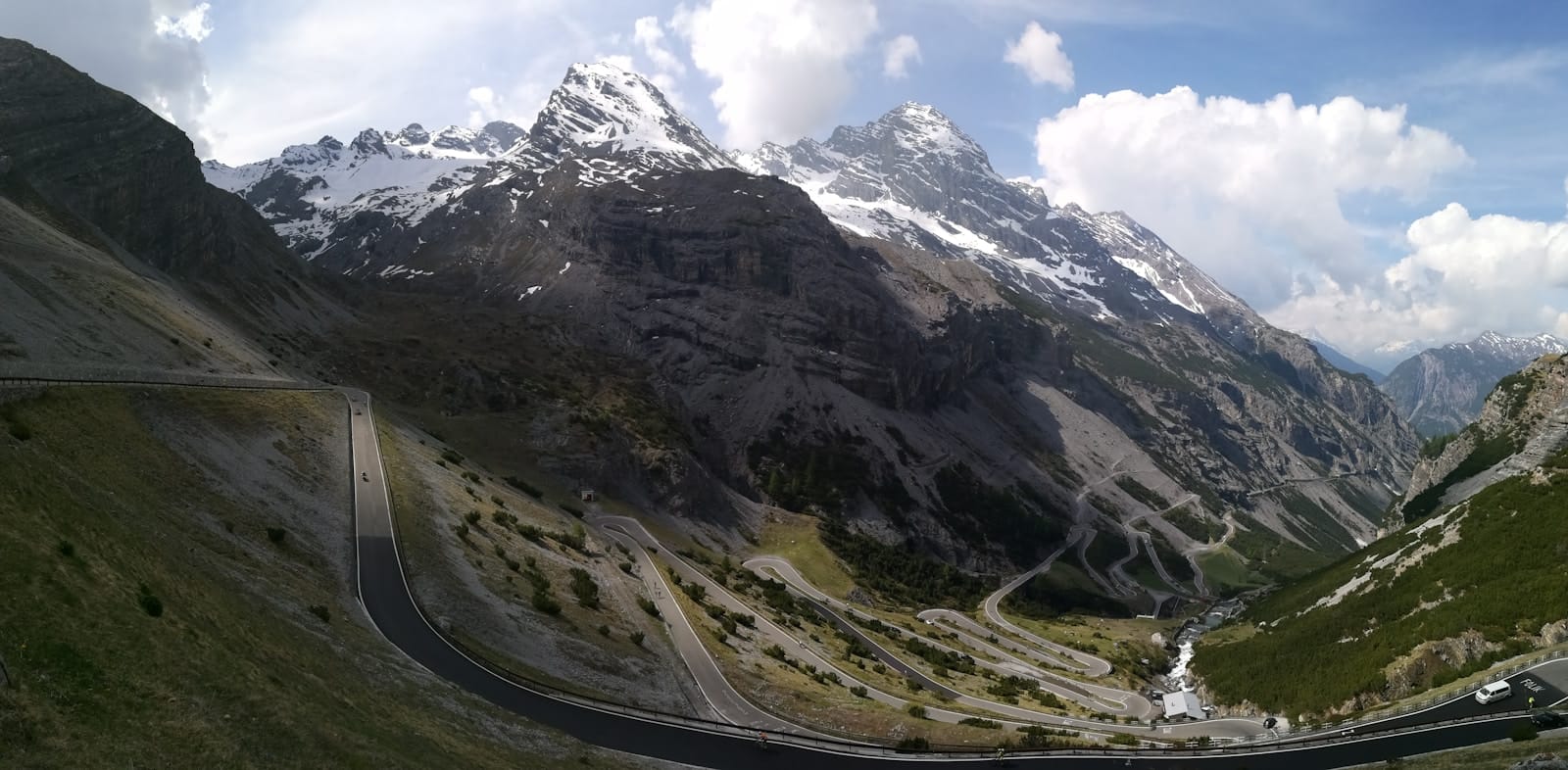
Descents that remove the heat you were generating. Climbing keeps you warm regardless of the air temperature, because you’re working. Descending doesn’t — you stop generating heat exactly when the wind chill from moving fast is at its worst, on a bike that’s carrying you back downhill at speed with nothing to warm your hands or core. This is the mechanism behind the “2,758-metre descent” in this piece’s title: the Stelvio’s summit is a still, cold, high place, and the road off it drops you a great distance in a short time, at speed, before you’re back in South Tyrol’s warmth.
Genuine weather, not just altitude. High alpine stages can change fast even in summer — cloud builds over a col in the time it takes to eat lunch, and a still morning can turn to a stiff, cold wind by early afternoon. This is normal mountain behaviour, not bad luck, and it’s why the kit list below leans toward “carry it every day” rather than “check the forecast and decide.”
The system: five things, worn in combination
The whole solution is smaller than most riders expect. It’s not a wardrobe — it’s five items, used in different combinations depending on where you are in the stage.
A genuinely lightweight, packable waterproof. This is the piece that does the most work all week. It needs to compress small enough to disappear into a jersey pocket or bar bag without you noticing it’s there, because it will go on and come off multiple times in a single stage — at the top of a climb, in a sudden squall, on the fast section of a descent. Buy for packed size and breathability, not for how it looks off the bike.
Arm warmers. The single best value-for-weight item in the entire kit. On or off in seconds, they cover the gap between a short-sleeve jersey and a full thermal, and they live in a pocket for the whole week regardless of the day’s forecast.
A light thermal or long-sleeve base layer. For the cold starts — Füssen and Imst mornings can be genuinely crisp before the sun clears the valley walls — and for layering under the shell on the highest, coldest sections.
Lightweight gloves. Not winter gloves. A thin pair that cuts wind chill on a fast descent and takes the edge off cold hands at a col, without being too warm to wear on a climb if you forget to take them off.
Sun protection that keeps up with altitude. Sunscreen, a peaked cap or visor, and proper sunglasses. UV exposure rises with altitude in a way that a cool-feeling morning disguises — riders who protect properly from Füssen onward finish the week in noticeably better shape than riders who only reach for sunscreen once it feels hot.
That’s genuinely the list. What changes stage to stage is not which of these five things you’re carrying — it’s all five, every day — but how many of them you’re actually wearing at any given moment.
Stage by stage: where the swing actually happens
The numbers, so you can picture the system in use rather than in the abstract:
- Day 2 — Füssen to Imst (78 km, 1,700 m): the gentlest introduction, but still a full alpine day. Cool at the Füssen start, genuinely warm by early afternoon in the valley approaching Imst. Arm warmers on at the start, off by mid-morning.
- Day 3 — Imst to Nauders (75 km, 1,980 m): the biggest single climbing day on the Adventure route, building steadily toward the three-country corner of Austria, Switzerland and Italy at altitude near Nauders. This is where the shell earns its keep even on a route that never touches the Stelvio.
- Day 4 — Nauders to Merano (90 km / 1,000 m on Adventure, or 125 km / 2,200 m on Explorer): the defining day. The Explorer route adds the Stelvio Pass, climbing to 2,758 metres before a long descent into South Tyrol. This is the stage the title of this piece is about — full kit on at the summit, all of it coming off in stages on the way down into Merano’s warmth.
- Day 5 — rest day in Merano: a spa town at valley altitude. Warm, café weather, and the one day you can genuinely pack light and leave the shell at the hotel.
- Day 6 — Merano to Tuenno (71 km, 1,900 m): back to altitude through Trentino, on legs that had a rest day but not a reset. The swing repeats — riders who packed the Stelvio day’s kit away for good are the ones caught out here.
- Day 7 — Tuenno to Riva del Garda (88 km, 1,400 m): the final stage, descending through the Brenta toward Lake Garda. The air changes noticeably on this one — warmer, almost Mediterranean, olive trees replacing pine by the finish. This is the one day you’re genuinely shedding layers for good.
The pattern across all of it: two genuinely big climbing days before any rest, a rest day that restores you without resetting the terrain, then a return to altitude on day six that catches people who assumed the hard packing decisions were behind them after the Stelvio.
Tyres and gearing: not clothing, but the same conversation
None of the layering above matters much if you’re too occupied staying upright to use it. Get the bike right first.
- Minimum 38 mm tyres, wider genuinely better. Our floor across every tour, and the alpine gravel and forestry roads reward the extra volume.
- Tubeless, strongly recommended for the alpine passes. Fresh sealant, not sealant that’s been sitting since last season.
- A low gear around 0.9. Roughly a 34-tooth chainring with a 36-tooth sprocket, or lower. The climbs are long and sustained rather than savage, and the right gearing turns them into an aerobic effort you can hold rather than a strength effort you survive.
- A bike freshly serviced before you travel. A gravel bike, mechanical or e-assist, or a light MTB with suitable tyres and gearing — road bikes and hybrids aren’t suitable for this route.
Our detailed guide to gravel bike tyres for touring covers the wider trade-offs; the Alps-specific note is simply that a properly set-up bike lets you spend your attention on the descent and the view, rather than on the road surface.
What you don’t need to carry
Because your bag travels hotel to hotel in the support van — you collect it at reception, not in your room — there’s no real penalty for a slightly fuller off-bike bag. There is a penalty for extra weight on the bike, and very little of the following belongs there:
- A second full set of riding kit for “just in case.” One set, used well, with the layering system above, covers the range. Wash kit dries overnight in most hotels.
- Heavy winter layers. Even the Stelvio summit at 2,758 metres, in the tour’s operating season, doesn’t ask for a proper winter jacket — a good packable shell over a thermal covers it.
- A full toolkit. The support vehicle carries tools, spares and a spare bike, and the guides help with repairs at parts cost. Bring a multitool and the bike-specific spares a van can’t stock for every rider — a spare rear derailleur hanger and a quick link are the two worth having in your own bag.
- Multiple books’ worth of nutrition. PurePower energy powder is included and refilled free at the van most days, and bars and chews are available to buy. Bring your own favourites if you’re particular, not a week’s supply.
Off the bike: Merano and the evenings
Towels and toiletries are provided at the hotels. What’s worth bringing instead:
- Something smart-casual for the gala dinner in Riva del Garda and for Merano’s café culture on the rest day — nothing formal, but one thing you haven’t ridden in.
- Comfortable shoes for walking. Merano rewards an evening on foot — spa town streets, café terraces, the promenade along the Passer — and you have a full rest day to use them.
- A power adaptor. The route crosses Germany, Austria, Switzerland and Italy in a week; all use the two-pin European standard, but if you’re travelling from outside continental Europe, bring the right adaptor rather than assuming every hotel has a universal socket.
What the week includes, so you know what you’re packing around
Seven hotel nights across Füssen, Imst, Nauders, Merano (two nights, with the rest day), Tuenno and Riva del Garda. Seven breakfasts and six dinners, including a gala dinner on the shore of Lake Garda at the finish. An English-speaking guide, GPS routes for Garmin, Wahoo and Komoot for self-guided riding, a daily briefing with route overview and key points, a support vehicle carrying spares and a spare bike, mechanic help at parts cost, daily luggage transfer, a Gravel-Adventure jersey, a shared photo album and lifetime RIDERS-network membership. The full mechanics — deposit, balance, what’s included stage by stage — are on how it works.
If you’re deciding between the Adventure and Explorer routes day to day, our levels guide sets out what each asks in general terms, and our training piece for the Alps and night-by-night look at the week both cover ground this article doesn’t. If the Stelvio itself is what’s pulling you toward this tour, our full piece on the pass is worth reading before you go.
The short version
Plan for 5–25°C in a single stage, not for a week’s forecast. Carry a genuinely packable waterproof, arm warmers, a light thermal and gloves on every stage — not just the Stelvio day. Reapply sunscreen at the lunch stop. Fit wide tubeless tyres and a low gear before you fly. Pack a proper evening layer for Merano without a second thought, because the van is carrying it, not you.
We ride the Stelvio’s 2,758-metre summit and the long descent that follows it on the Explorer route of Trans Alp Gravel — guided or self-guided, with the support van meeting you at lunch on the high stages and your bag already waiting in Merano by the time the temperature has changed twice.
Questions riders ask
How much does the temperature really change in a single day on Trans Alp?
The tour's own guidance is blunt about it: 5–25°C in a single day is routine, not an exception, moving between valley stages and high passes. The gravel high points generally sit between roughly 1,800 and 2,500 metres, and the Stelvio itself — on the Explorer route's day four — tops out at 2,758 metres. You can be in short sleeves at breakfast in Nauders and reaching for a shell an hour and a half later.
Do I need different kit for the Stelvio descent specifically?
Not different kit — the same kit, used with more discipline. A long alpine descent removes the effort that was keeping you warm on the way up, adds wind chill on top, and can last thirty minutes or more. This is where the packable shell, the arm warmers and the gloves earn their place in the bag rather than staying in it. Riders who only pull layers on when they are already cold are usually pulling them on too late.
I'm taking the Adventure route, not the Explorer route with the Stelvio — do I still need to pack for this?
Yes. The Adventure route skips the Stelvio itself, but every stage still moves between valley floor and altitude — day three alone climbs to the Reschensee at the three-country corner of Austria, Switzerland and Italy. The swing that matters for packing is the daily one, not the presence of one specific summit.
Can I really get away with one warm layer for the whole week?
For most riders, yes — the point of layering is that a packable shell, arm warmers, a light thermal and gloves combine to cover a very wide range without needing separate kit for separate days. What changes stage to stage is how much of that combination you actually wear, not how much of it you carry. Pack it once, at the start, and use it as needed.
Planning a gravel week of your own?