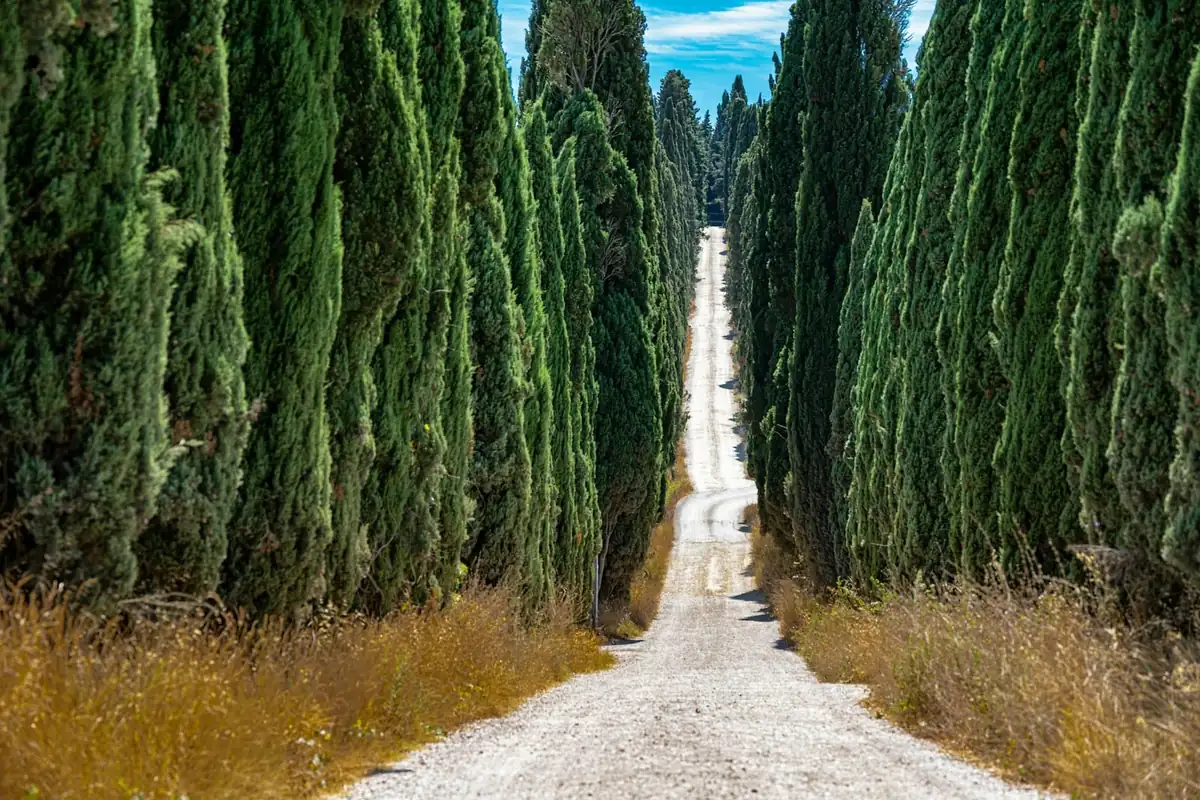
Gravel Cycling in the Troodos Mountains: a Trans Cyprus Guide
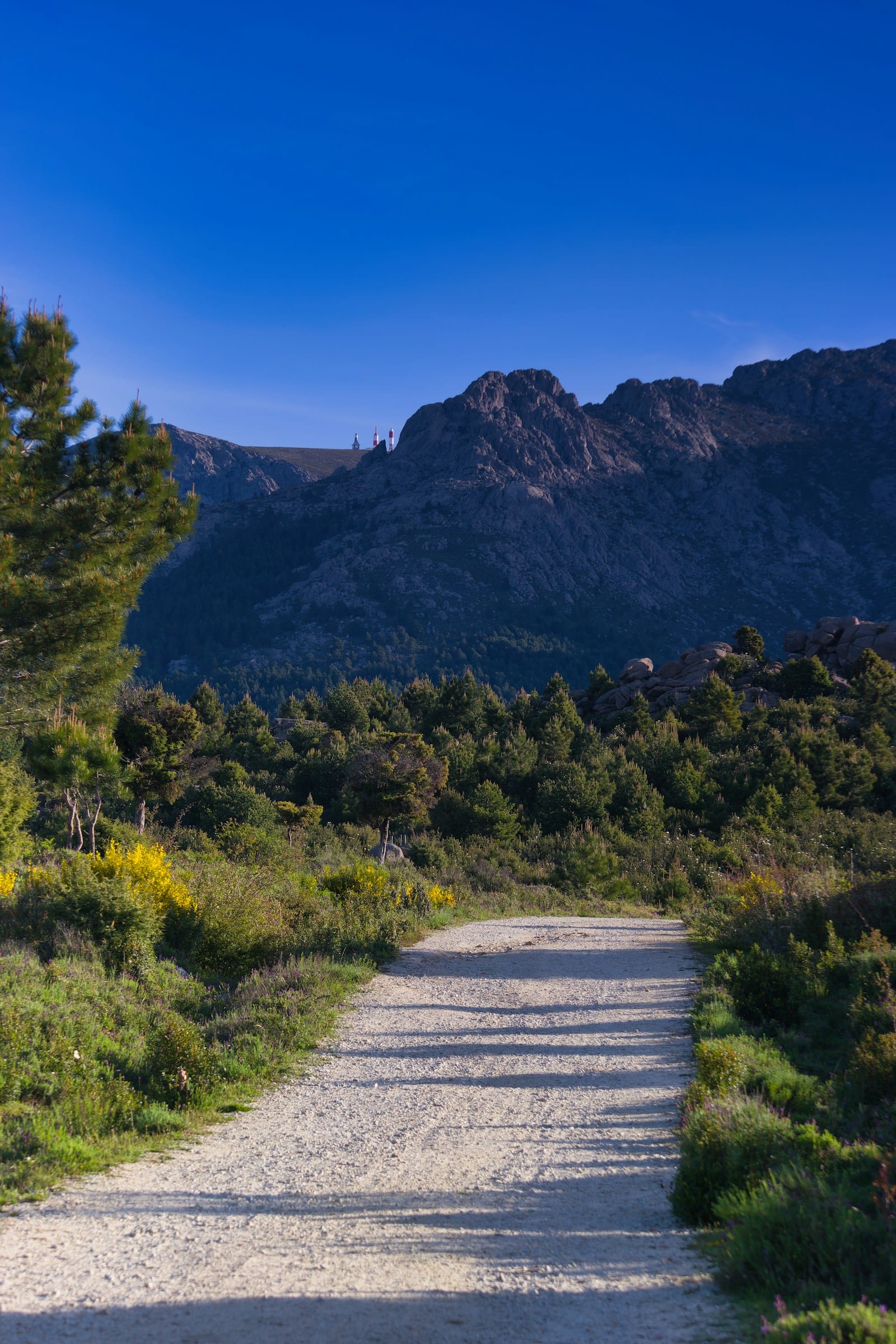
The first time the Troodos really show themselves is somewhere above Agros, late on a long morning of climbing. The forest opens, the white-earth track tilts up one more time, and the air changes — cooler, drier, carrying pine and something herbal off the hillside. Below and behind you the limestone hills you climbed through fall away in folds toward a coast you left at breakfast. Ahead, the gravel runs up into cedar, toward ground that sits near 2,000 metres in the middle of a Mediterranean island. For a rider who has spent years looking for routes that surprise them, Cyprus in April can come as a genuine one: a high, forested mountain range, threaded with well-graded gravel almost no one outside the island has ridden, sitting between two warm coasts.
That range is the spine of a coast-to-coast — Larnaca on the east coast to Paphos in the west — and it’s the route we ride as Trans Cyprus Gravel. This guide is the long version: what gravel cycling in the Troodos Mountains is actually like, the island crossing stage by stage, the terrain and the spring season that make it work, the bike and kit that suit it, and how to ride the whole thing across a week without carrying your own logistics. It’s written for riders who already know their way around a gravel bike and a multi-day route, and who are deciding where to spend a precious week of it.
Why the Troodos are an overlooked gravel destination
Cyprus does not present itself as a mountain-cycling destination. The island sells its coast — the beaches, the sun, the resorts — and most visitors never see the interior at all. But drive twenty minutes inland from Larnaca and the country starts to climb, and keep going and it keeps climbing, through limestone hills and monastery roads up into a forested massif that holds snow markers into spring and tops out near 2,000 metres. The Troodos Mountains are the part of Cyprus the postcards leave out, and they happen to be laced with exactly the kind of gravel a rider crosses a continent to find.
What makes the riding so good is that most of these roads were never built for tourism. They’re forest tracks — wide, well-graded, connecting villages that see almost no through traffic — laid down to manage the cedar and pine of the high zone and to link the mountain settlements. Three things follow from that. The surfaces are largely unknown outside Cyprus, so you’re not sharing them with anyone. They climb and descend with the grain of real mountains rather than the gentle roll of a coastal region. And they pass through a landscape that changes completely as you gain height — from the white-earth limestone of the lower stages to cedar forest near the summit, then down through the Akamas to the sea.
What sets it apart from the better-known gravel regions of the Alps or Tuscany is the compression. This is a small island, and the route uses that: 300 to 375 kilometres carry you from one coast to the other and over a serious mountain range in the middle, with 5,500 to 8,000 metres of cumulative climbing packed into the stages. You’re rarely far from a coast, and yet for three days you ride genuine high-mountain gravel. Few destinations let you start a week with salt air at sea level, sleep at altitude among the cedars by midweek, and finish with the Mediterranean closing in again — all under your own legs, all off tarmac.
The Larnaca to Paphos crossing, stage by stage
The crossing runs east to west over five riding stages, with a rest day in the middle near Mount Olympos, the high point of the Troodos. It begins at Larnaca on the coast and finishes on the waterfront at Paphos. Each stage offers two lines — a steadier Adventure route and a longer, higher Explorer route — so riders of different ambitions share the same week and the same hotel each night. Here is how it unfolds.
Larnaca — arrival and an intro ride
The week opens gently. A short transfer brings you from Larnaca airport to the start hotel, about ten minutes away, and if you arrive by midday there’s an afternoon intro ride — a relaxed coastal loop to settle the travel out of your legs, check the bike over and feel the surfaces before they matter. Then a welcome meeting and dinner, the first of the week, and the quiet anticipation of a crossing about to begin.
Larnaca to Kapedes — into the limestone
Stage one is a long, beautiful climb off the coastal plain and into the interior, through windmills and limestone cliffs and past Stavrovouni Monastery on its hilltop. The first white-earth tracks and loose gravel arrive early, which is the point: line choice starts to matter almost straight away, and you learn how the limestone behaves underwheel before you’re deep in the mountains. The Adventure line runs around 50 km with 950 m of climbing; the Explorer line stretches to 60 km and 1,400 m. By the day’s end the sea is well behind you and the country has turned mountainous.
Kapedes to Agros — ridgelines and a mountain village
The second stage is some of the finest riding of the week: fine gravel roads and long views, through valleys and along ridgelines with glimpses of the north coast appearing and disappearing. It closes with a final climb to Agros, a mountain village set high in the hills, known for its roses and its rose-water, its cherries and its cured meats. Dinner here is local cooking, and the quiet of the heights settles over the place early. Adventure: around 50 km, 1,300 m. Explorer: 60 km, 1,950 m.
Agros to Troodos — the summit stage
This is the mountain day, more up than down, gaining altitude steadily into the classic Troodos area where the landscape changes and the air cools in earnest. The cedars thicken, the limestone gives way to the forested high zone, and the gravel turns looser as you climb toward ground near 2,000 metres. It’s a day that rewards a steady cadence and good gearing rather than bursts of effort — the kind of sustained mountain climbing experienced riders settle into and quietly enjoy. Adventure: around 45 km, 1,350 m. Explorer: 54 km, 2,000 m. You sleep that night up in the heights.
Rest day — the Mount Olympos area
Midweek, deliberately placed, comes the rest day, based close to Mount Olympos, the highest point on the island. The options are genuinely yours: a voluntary highland gravel loop if the legs are good, a shorter ride, or a pure day off with a walk and a café and nothing to prove. The value of a mid-crossing rest day is well understood by anyone who has ridden a multi-day route — it’s the difference between arriving at the far coast strong and arriving at it merely relieved. Reload here before the final two stages.
Troodos to Lysos — the long descents
This is the reward for all the climbing. Stage four opens up into long descents and fast gravel, the landscape changing constantly as you drop through valleys and forest off the high ground. It’s exhilarating riding — open, flowing, the kind of surface that pulls you along — closing with a final climb up to Lysos, a village on the western flank of the range. Adventure: around 65 km, 1,200 m. Explorer: 77 km, 1,800 m.
Lysos to Paphos — down to the Mediterranean
The final stage carries you off the mountains and toward the sea, through forest and open landscapes and coastal sections as the Mediterranean closes in. The line is chosen for the experience rather than the most direct route — a route designer’s day, not a commuter’s — and it threads toward the Akamas peninsula, the wild headland in the island’s far west, before the waterfront at Paphos completes the crossing. Adventure: around 60 km, 600 m. Explorer: 72 km, 900 m. Coast to coast, on gravel, in a week.
Departure — and an optional last descent
On the final morning a bus runs to Larnaca airport, about two hours away. With an evening flight there’s a voluntary top-to-sea bonus on offer: back up to Troodos for one long, connected descent to the coast — a last, generous run down the mountain you spent the week climbing, before you fly home.
The terrain: what the riding actually demands
For a rider used to gravel at home, the Cypriot surfaces will feel familiar in type but distinctive in character. Expect:
- White-earth limestone tracks — bright, loose in places, with a particular feel underwheel; line choice rewards attention, especially on descents.
- Well-graded forest road — the wide, firm cedar-and-pine tracks of the high Troodos, the backbone of the mountain stages, fast and rideable when you’ve earned the height.
- Coastal and headland trails — the lower and final sections toward the Akamas and Paphos, where the country opens out and the sea air arrives.
- Sustained mountain climbs — not the savage gradients of the Alps, but long and real; the week’s 5,500–8,000 m of total ascent is the defining demand, far more than the moderate daily distances.
None of it is beyond a confident gravel rider, but it earns its grade of intermediate to challenging. What it rewards is steady climbing, sensible pacing and a relaxed grip on loose limestone — the patience to keep turning a low gear up a long forest climb rather than the legs to sprint a flat. This is a route ridden for the experience, not the most direct line, and it suits riders who would rather travel through a landscape than race across it.
When to go: spring in Cyprus, and why April
The crossing runs in late April, and the timing is the heart of why it works. Cyprus in spring is the version of the island most visitors never meet, and it gives you two climates in one week.
- At sea level, the coast is warm and the roads are open. Evenings in Larnaca and Paphos are mild and easy — the Mediterranean at its most generous, before summer turns the plain fierce.
- In the high Troodos, where the route climbs toward 2,000 m, the air stays genuinely cool even in April, and the upper stages are lined with wildflowers. The light at altitude in spring is extraordinary, and the riding temperature up among the cedars is a relief rather than a hardship.
That combination is rare, and it’s the reason we run a single April departure rather than chasing the calendar. Earlier in spring the highest ground can still be cold and the snow markers along the road are still fresh. By high summer the coastal stages would be punishing. Late April threads the needle: a spring gravel cycling holiday with warm coastal evenings at one end of the day and cool mountain air at the other, on an island that has the whole range to itself before the season turns.
How hard is it, really?
Across the week: 300–375 km and 5,500–8,000 m of climbing, over five riding stages with a genuine rest day in the middle. The distances are moderate — most stages sit between 45 and 77 km depending on the line you take — but the climbing is real, and on the summit stage the route gains altitude toward near 2,000 m. This is a climbing week more than a distance week, which is a different kind of demand and, for many experienced riders, a more enjoyable one.
Two things make it manageable regardless of how you feel on the day. First, every stage runs as two pace options — the steadier Adventure line and the longer, higher Explorer line — so a couple riding at different speeds, or a group with mixed legs, can share the same week and the same hotel each night without anyone feeling held back or left behind. Second, the support vehicle is on the route: if a mountain stage turns out longer than your legs wanted, the van is there. You are never committing to finish-or-bust halfway up a Troodos climb.
If you can ride three to four hours on gravel over consecutive days and still enjoy your dinner, you’ll be at home here. Our tour levels explain the two paces in more detail, and the Explorer route in particular adds the distance, the elevation and the confidence to navigate loose gravel independently.
Bike and kit for Cyprus gravel
You don’t need anything exotic, but a few choices make the week more comfortable and the loose limestone less of a lottery:
- Bike: a gravel bike, mechanical or e-assist, or a light MTB with suitable tyres and gearing. Road bikes and hybrids aren’t suitable for these surfaces.
- Tyres: a minimum of 38 mm, and wider is better. The rocky limestone tracks reward volume, and tubeless is strongly recommended — it’s the single best defence against the sharp-edged rock of the lower stages.
- Gearing: bring low gears. A ratio around 0.9 or lower earns its place on the long climb toward the summit; you’ll be glad of it by the second mountain stage.
- Layers: April is warm at the coast but cool in the Troodos, with the route climbing near 2,000 m, so a light packable layer and warm gloves earn their place in the day bag even when the morning starts hot.
- The rest: comfortable walking shoes and something smart-casual for dinner; towels and toiletries are provided. A basic roadside kit — pump, tubes, multitool, levers — in your day bag for self-sufficiency on the Explorer stages, where you may be further from the vehicle.
One Cyprus-specific note: rental isn’t readily available on the island, so bring your own bike as checked baggage. A good hard case makes the journey far more straightforward, and there’s a real advantage to riding a week like this on a machine you already trust — fit, gearing and tyres dialled in before you leave home. Our packing guide for a multi-day gravel tour covers the wider picture, and our Cyprus route guide goes deeper on the island itself.
Guided or self-guided in the Troodos
This crossing can be ridden either way, and the choice carries a little more weight here than it does in gentler, more signposted regions.
On a guided tour, you ride with the group — a maximum of ten riders per guide — and the guide handles the navigation. On white-earth limestone, where the right line through loose rock isn’t always obvious and a forest junction can look the same in three directions, having someone who knows the route is a genuine comfort, and it frees you to simply ride and look around. It’s also the more sociable way to do it, and the easiest if this is your first supported crossing.
On a self-guided tour, you take the full GPS route for Garmin, Wahoo and Komoot and ride at your own pace, not tied to a group. You still get the same hotels, the same daily luggage transfer and the same support vehicle nearby — you just navigate yourself, which experienced, independent riders often prefer. Either way, the support crew meets you at each hotel, and how our tours work walks through the model in detail.
What a supported Trans Cyprus week includes
The point of riding the crossing as a supported tour is that you carry the riding and we carry everything else. There are two ways to ride it — guided, with a guide navigating and the group together; or self-guided, with the full GPS route at your own pace — and both cover the same five riding stages from Larnaca to Paphos by way of the Troodos. Concretely, the week is:
- Five riding stages from Larnaca to Paphos over the Troodos Mountains, with experienced, English-speaking guides and a daily evening briefing with maps and elevation profiles.
- Seven hotel nights in a shared double room — from Troodos village guesthouses in the heights to a final night in Paphos by the Mediterranean — with seven breakfasts and three dinners, among them a closing dinner to mark the crossing.
- Your luggage transferred hotel to hotel every stage in the support van — you collect your bag at the hotel rather than have it delivered to the room — so you ride with only a day bag.
- A support vehicle on the road carrying spare parts, a spare bike and a clothing bag, with mechanic help from the crew; you pay only for parts, and only at cost.
- The van meets the group most days at lunch, where you can change kit and refill your PurePower energy drink free of charge — energy bars and chews are available to buy.
- A return transfer to Larnaca on the final morning, GPS routes for self-guided riders, a Gravel-Adventure jersey to take home, a shared online photo album, and lifetime membership of the RIDERS network.
You arrange your own flights to Larnaca; the arrival transfer from the airport is at your own expense, and we’re happy to recommend a local taxi. From the moment you’re on the bike, we handle the rest. More on the supported model is on how our tours work.
What’s not included is straightforward and worth knowing up front: flights to and from Larnaca, lunches, drinks, dinners on the free evenings, travel and accident insurance (which is required), the arrival transfer, and any single-room supplement or bike rental on request.
The island you’re riding through
Part of what makes the crossing more than a fitness exercise is the country itself, and it pays to ride with some sense of what’s around you. The lower stages climb past Stavrovouni Monastery, one of the oldest in Cyprus, set on a limestone peak with the coast spread out below — a fitting marker for the moment the route leaves the sea behind. The mountain villages you pass through and sleep in, Agros chief among them, are working settlements rather than tourist stops: known for rose-water and cured meats, for cherries and quiet, for a kind of mountain hospitality that has little to do with the resorts on the coast.
The high Troodos themselves are the heart of it — a cedar and pine forest near 2,000 metres in the middle of a hot island, cool and green and almost empty, holding snow markers into spring. And the run down to Paphos brings the Akamas peninsula, the island’s last wild headland, into the final day before the Mediterranean closes the loop. None of this is a history lecture from the saddle; it’s simply the depth that turns a strong week of riding into a memorable one. The accommodation reflects the journey — small hotels and guesthouses chosen for character, from the heights to the coast — and arriving each evening to find your bag already at the hotel and a good dinner ahead is no small thing after a day in the mountains.
Who rides the Trans Cyprus crossing
This is a route for experienced riders comfortable with real climbing on loose surfaces — riders who value the quality of a line over the noise of an event. In practice, the people who come with us pace themselves intelligently and would far rather travel thoughtfully across a great landscape than sprint through it. The Cyprus week rewards exactly that: steady mountain climbing over raw speed, a relaxed grip on white-earth gravel, the patience to keep a low gear turning up a long forest climb.
It works well for couples and friends riding at different speeds, thanks to the two daily pace options and the shared hotel each night — you ride your own day and meet for dinner. Many riders come on their own, too: groups are up to ten per guide and typically international, accommodation is a shared double room by default, and a single-room supplement is available for those who’d rather have their own. If you’re weighing whether a supported tour is right for you at all — versus going self-supported, or versus organising it yourself — our guide to choosing a supported gravel tour lays out the honest trade-offs.
Ride the Troodos crossing with us
If a true island crossing is on your list, this is the route — Larnaca to Paphos, coast to coast over the cedar-forested Troodos, on white-earth limestone and well-graded forest gravel almost no one outside Cyprus has ridden. We run it guided or self-guided, with the hotels, the luggage transfer, the support vehicle and the daily lunch stop all handled, so you arrive at the start with nothing to think about but the riding and the climb up into the mountains.
The full day-by-day, the April 2027 departure and what’s included are on the Trans Cyprus Gravel tour page. If you’re weighing it against another route, how our tours work explains the supported model, and our destination guides in the Journal cover the rest of the calendar. Come and cross the island with us in spring — we’ll carry the rest.
Questions riders ask
How fit do I need to be for Troodos Mountains gravel cycling?
You should be comfortable riding three to four hours a day for several consecutive days on loose surfaces — roughly 45–77 km with 600–2,000 m of climbing per stage depending on which line you take. Across the week the Trans Cyprus crossing covers 300–375 km and 5,500–8,000 m of ascent, graded intermediate to challenging. The distances are moderate; the climbing is the real demand, because the route reaches near 2,000 m. You don't need to be fast — there are two pace options each day and the support vehicle means a long mountain stage never becomes a problem.
When is the best time of year for gravel cycling in Cyprus?
Late April is the window we run, and it's the right one. At sea level the coast is warm and the roads are open; up in the Troodos, where the route climbs toward 2,000 m, the air stays cool and the upper stages are lined with spring wildflowers. Earlier in spring the highest ground can still be cold, and high summer turns the coastal plain fierce. April gives you the rare combination of warm coastal evenings and cool mountain riding in a single week.
Should I ride it guided or self-guided?
Both work, every day, and the support is identical. Guided groups are capped at ten riders per guide, who handles the navigation — useful on white-earth tracks where the right line through loose limestone isn't always obvious. Self-guided riders take the full GPS route for Garmin, Wahoo and Komoot and set their own rhythm. Either way you get the same hotels, the same daily luggage transfer and the same support vehicle, which meets you at each hotel.
What bike and tyres work best for Cyprus gravel?
A gravel bike, mechanical or e-assist, or a light MTB with suitable tyres and gearing — road bikes and hybrids aren't suitable. Run a minimum of 38 mm tyres, wider if you can, tubeless strongly recommended for the rocky limestone tracks. Bring low gearing — a ratio around 0.9 or lower earns its place on the climb to the summit. Have the bike freshly serviced before you travel, because rental isn't readily available on the island.
How do I get there, and is travel included?
Fly to Larnaca (LCA) — direct flights from some Northern European cities, one-stop connections via several airlines. The start hotel is about ten minutes from the airport; the arrival transfer is at your own expense, and we can recommend a local taxi. The return transfer to Larnaca on the final morning is included, and your main luggage travels in the support van between hotels for the whole week.
Can I rent a gravel bike in Cyprus, or should I bring my own?
Rental isn't readily available in Cyprus, so we recommend bringing your own bike as checked baggage. A good hard case makes the trip far more straightforward, and you arrive on a machine you already trust — fit, gearing and tyres dialled in. Get in touch before you book flights if you'd like guidance on packing the bike or on baggage.
Planning a gravel week of your own?