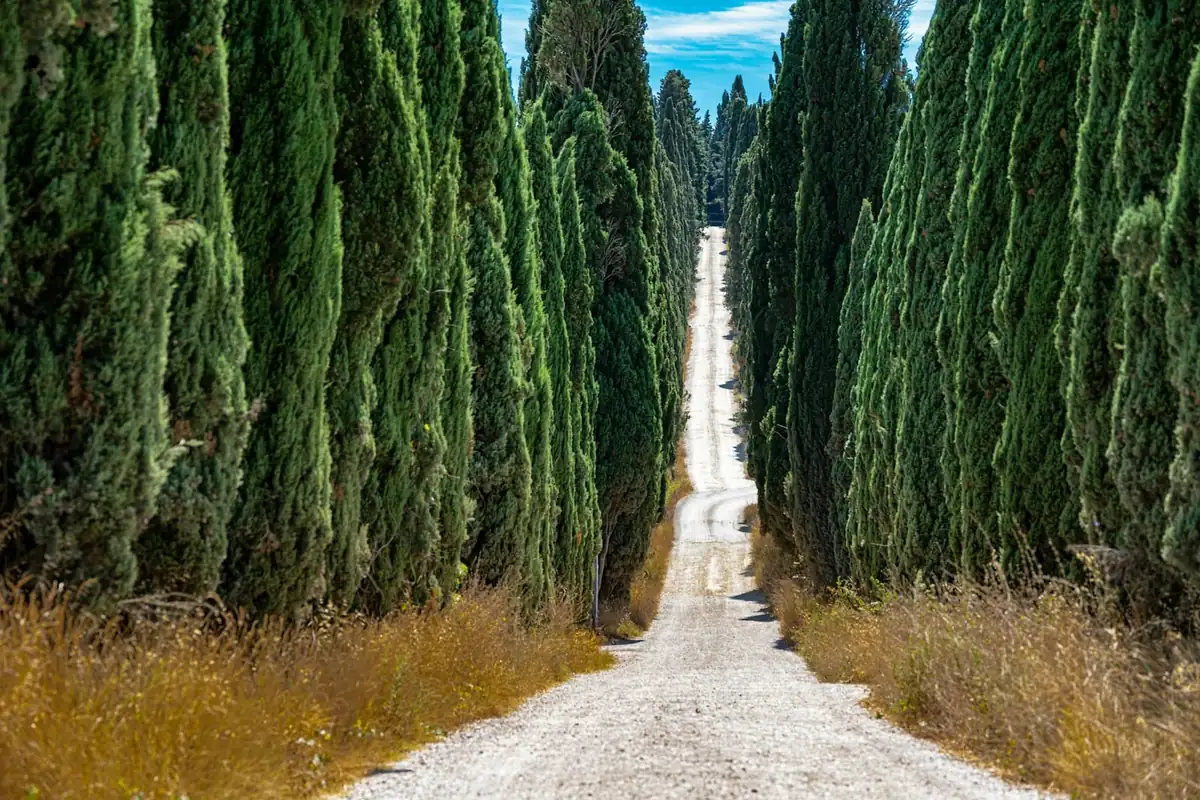
Cyprus in April: Why the Single Spring Departure Works
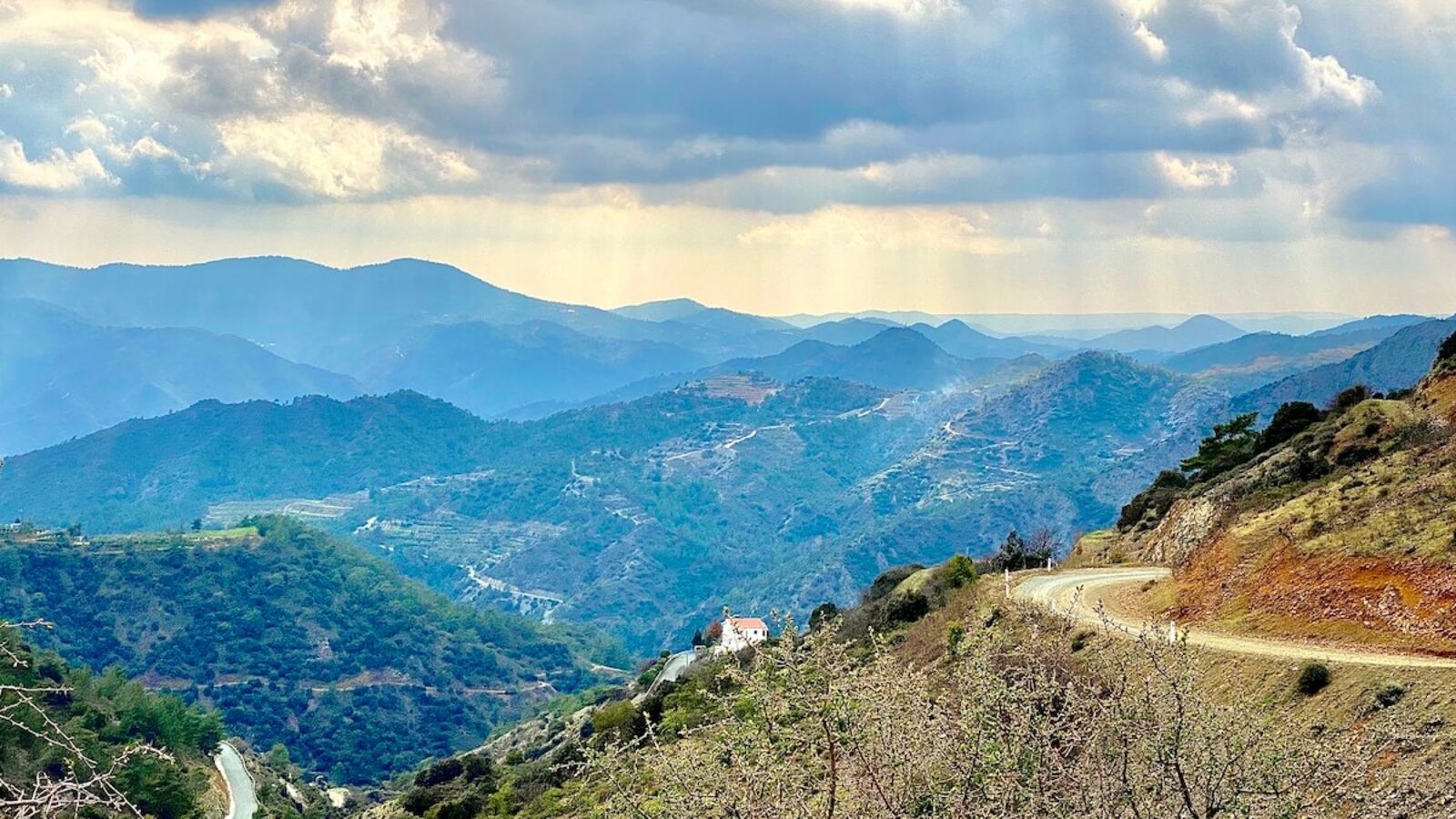
The almond and cherry trees along the upper Troodos roads are usually still in blossom when our Cyprus group reaches them, which is not something you’d guess from the coast four hours earlier, where the morning at Larnaca already felt like early summer. That gap — blossom at altitude, bare arms at sea level, in the same week — is more or less the whole case for riding Trans Cyprus Gravel in spring, because this particular tour does not give you a season to choose from. It gives you one week.
One week, not a season to choose from
Most of our tours run across several months, with a handful of departures to pick from. Trans Cyprus Gravel doesn’t. The next departure is a single confirmed week — 24 April to 1 May 2027 — and that isn’t a gap in the schedule waiting to be filled; it’s the window the route actually needs.
The reasoning is climate, not calendar. The crossing spends five stages moving between two very different elevations: the coastal plain around Larnaca and Paphos, and the interior high point above 1,800 metres near Troodos village. In winter and early spring, that high ground can still be cold and raw. By midsummer, the coastal and lower wine-country stages — Larnaca’s windmills and limestone, the ride up through Kapedes and Agros — run hot enough that a long climbing day loses its appeal fast, and the island’s holiday season fills the roads and hotels that make the crossing quiet the rest of the year. Late April sits in the gap between the two: the passes have cleared, the heat hasn’t arrived, and the wildflowers that only show up for a few weeks each spring are still out.
Two climates in the same week
What this actually feels like on the bike changes more than once over five stages and 300 to 375 kilometres, with 5,500 to 8,000 metres of cumulative climbing depending on whether you ride Adventure or Explorer each day.
Out of Larnaca, April mornings are already warm enough for short sleeves by mid-ride, and the first stage’s climb through limestone cliffs and past Stavrovouni Monastery rewards a light kit choice rather than a heavy one. That starts to change on the approach to Agros and then Troodos itself, where the route gains real altitude — the high point sits above 1,800 metres, among cedar and pine rather than the lemon groves and vineyards lower down. The air up there is cool even in late April, cool enough that the rest day based near Mount Olympos is as much about warming up over coffee as it is about resting legs. From Troodos the route drops back toward Lysos and then Paphos, and the coastal warmth returns for the finish.
None of this is extreme weather in either direction. It’s a week that asks you to dress for two genuinely different climates rather than one — which is a more interesting problem to plan around than it sounds, and a far easier one than riding the same crossing in August heat.
Wildflowers, not just mild air
The tour’s own description calls the April window “wildflowers up high, warm coastal evenings,” and on the ground that’s specifically about the upper stages around Agros and Troodos, where the hillsides and verges carry a show that a June or October departure simply wouldn’t see. It’s the kind of detail that’s easy to write as a selling point and harder to actually time — which is exactly why the departure sits where it does rather than drifting later for convenience.
The island’s quiet is a separate, year-round fact of this route rather than something April adds on its own — the gravel roads through the Troodos and the white-earth tracks above Larnaca see almost no through traffic in any month, long before the coast gets busy with its own summer season. What the spring date changes is the detail at eye level: the blossom at altitude, the particular clarity of the light before the haze of a Mediterranean summer sets in, and evenings at the Troodos village guesthouses that are properly cool rather than merely pleasant.
Packing for the swing
The tour’s own kit note is short, and worth repeating exactly because it covers the real range: a light, packable layer and warm gloves for the mountain stages, and tubeless tyres — 38 mm minimum, wider is better — for the rocky limestone tracks.
A few specifics worth adding to that:
- Carry the layer every day, not just for the rest day near Troodos. The descent off the high point into forest and valley roads toward Lysos can be cool even after a warm morning climb.
- Don’t skip the gloves. They’re the one item riders most often leave out of a spring packing list for a warm-sounding island, and the one you’ll reach for first above 1,500 metres.
- Go tubeless if you can. The white-earth tracks above Larnaca and the rockier limestone sections reward it; a 38 mm minimum width handles the terrain comfortably without needing anything heavier.
- Bring smart-casual for two evenings. The included dinners are a small step up from riding kit; towels and toiletries are provided throughout, so there’s little else to plan for off the bike.
Booking around a single window
Because there’s only one departure, the practical question most riders have isn’t “which month” — it’s “how do I make sure I get the week.” A €500 deposit per rider holds your place, with the balance not due until 60 days before departure, which gives plenty of room to plan flights into Larnaca around it.
If the April week doesn’t line up with your year, it’s worth knowing where Cyprus sits in the wider programme: our other six tours — the Alps, Tuscany, the Pyrenees, Scotland, the Algarve and South Africa — run at different points between April and October, so a missed Cyprus date doesn’t have to mean a missed year. Our general guide to choosing when to take a gravel tour walks through how the full programme’s seasons line up against each other.
What a supported Cyprus week includes
Seven nights in small hotels, from Troodos village guesthouses to a final night in Paphos by the Mediterranean, with seven breakfasts and three dinners including a closing dinner. Luggage travels hotel to hotel in the support vehicle every stage, so you ride with a day bag and collect the rest each evening. English-speaking guides lead the group daily, or follow the full GPS route for Garmin, Wahoo and Komoot at your own pace as a self-guided rider — both options run with identical support, and the choice between the Adventure and Explorer pace is made stage by stage, not locked in at booking. The full breakdown is on the Trans Cyprus Gravel tour page, how our tours work covers the guided/self-guided model in detail, and the difference between the two daily paces is on the levels page.
For the shape of the whole crossing, stage by stage, our route guides gravel cycling in Cyprus and Larnaca to Paphos beyond the Troodos cover the week in full.
The short answer
Late April isn’t the Cyprus departure because it’s convenient to schedule — it’s the one stretch of the year where the Troodos has cleared winter and the coast hasn’t yet reached summer, with the wildflowers as a genuine, time-limited bonus rather than the main reason. We run it once a year on Trans Cyprus Gravel, guided or self-guided, with the support vehicle carrying the rest.
Questions riders ask
Why does a Cyprus gravel cycling holiday only run in spring?
Because late April is the one point in the year when both halves of the route work at once. The Troodos passes near 2,000 m have shed the last of the winter snow and cold by then, but the coastal plain and the lower wine country haven't yet reached the heat that builds through a Cypriot summer. Ride it two months later and the climbs into the mountains are still fine, but Larnaca and the lower stages turn hard going; ride it two months earlier and the high route can still be raw. Late April is the window where neither end of the crossing is working against you.
How different is the temperature between the coast and the Troodos?
Enough to plan for, not enough to worry about. Larnaca and the lower stages sit comfortably warm through the day — short-sleeve riding weather by mid-morning. Climb toward the high point above 1,800 m near Troodos village and the air cools noticeably; evenings there ask for a packable layer and something for your hands. It's a one-week trip through two different spring climates rather than one.
Is there another date if the April departure is already full?
Not currently. Trans Cyprus Gravel runs a single confirmed departure each year — 24 April to 1 May 2027 — rather than a spread of dates across the season. If that week doesn't work, our other six tours run between April and October, so the right week may simply be on a different route. A €500 deposit holds your place on any of them, with the balance not due until 60 days before departure.
What should I actually pack for the swing in temperature?
The tour's own guidance is short: a light, packable layer and warm gloves for the Troodos stages, tubeless tyres for the rocky limestone tracks. Add comfortable walking shoes and something smart-casual for the two included dinners — towels and toiletries are provided, so there's little else to plan around.
Planning a gravel week of your own?