Packing for Cyprus: Spring Warmth, Mountain Chill and Limestone Dust
On the climb out of Agros, somewhere past the last of the vineyard terraces, the light changes before the temperature does. The vines give way to pine, the pine thins into cedar, and for a few hundred metres you’re still riding in a short-sleeve jersey through air that’s visibly cooler than it was an hour ago. By the time Troodos village appears, near 2,000 metres, the riders who packed only for a Mediterranean island are reaching for jackets that are folded wrong at the bottom of a bag, while the ones who read the route properly already have a layer on.
That’s the whole packing problem of a Cyprus cycling holiday, in one stage. Cyprus isn’t a hot-weather destination with an inconvenient mountain in the middle of it — it’s two genuinely different climates, coastal spring warmth and near-alpine mountain chill, inside the same eight days, and sometimes inside the same afternoon.
This piece is about the kit that covers both ends without you carrying two separate wardrobes: what actually earns its place in the bag for Trans Cyprus Gravel, what you can leave at home, and why a small island asks a more specific packing question than its size suggests. Our general guide to what to pack for a multi-day gravel tour covers the universal kit properly — this is the Cyprus-specific version. If you want the fuller route picture first, our Troodos Mountains route guide walks the whole crossing stage by stage; this piece goes deeper on the one question that guide only touches in passing.
Why Cyprus packs differently to anywhere else we ride
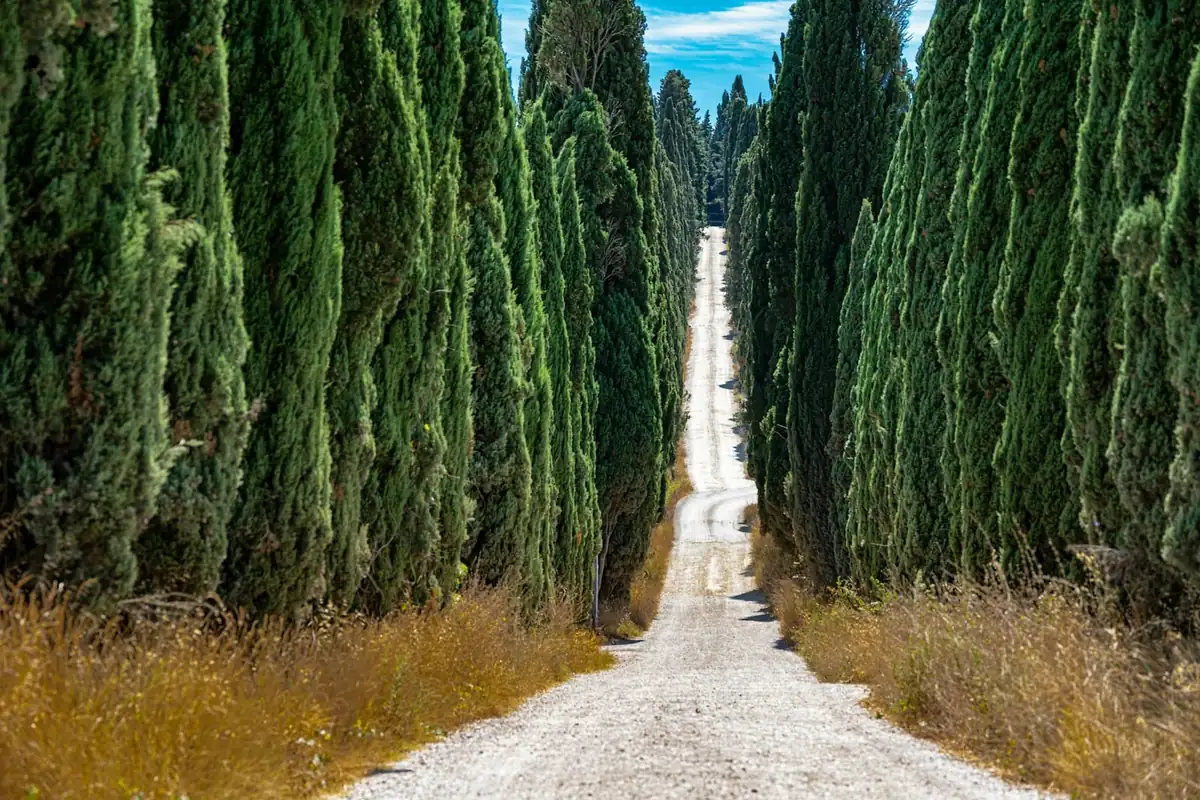
Every destination we run has its own defining packing problem. In the Western Cape it’s heat, dust and long days in the saddle. In the Alps it’s a temperature swing between valley floor and high pass. In Scotland it’s exposure to wind and rain with no dry season to plan around. In Cyprus, it’s compression: a 300 to 375 kilometre crossing with 5,500 to 8,000 metres of cumulative climbing, small enough that you’re never far from a coast, yet substantial enough to carry you from short-sleeve coastal warmth to a cedar-forest summit above 1,800 metres and back down again, all inside one week.
Two things drive the packing decisions here:
The swing happens fast, not gradually. Unlike a multi-week tour that drifts slowly into a different season, the Trans Cyprus route gains most of its altitude in two concentrated days — the climbs into Agros and then Troodos. A rider who’s warm at breakfast can be glad of gloves by mid-morning, on the same stage.
The lower stages are genuinely rocky, not just unpaved. The white-earth tracks and limestone sections that arrive early, around Stavrovouni, and return on the run down towards Paphos, are sharper underfoot than the smoother forest roads higher up. That’s a tyre and tubeless question as much as a clothing one, which is why this list treats the two together, the same way our Scotland and South Africa guides do.
The system: four things, worn in combination
The solution is smaller than the island’s reputation for heat might suggest. It isn’t two separate kit lists for two separate climates — it’s four items, used in different combinations depending on where you are on the route.
A light, packable layer. The tour’s own guidance names this first, and it earns its place specifically on the climbs into Agros and Troodos, and on the cool mornings of the rest day near Mount Olympos. It needs to pack small enough to disappear into a jersey pocket on the warm coastal stages, where you won’t need it at all.
A pair of warm gloves. The item most often left out of a spring packing list for what sounds like a warm island, and the one you’ll reach for first above about 1,500 metres. Cold hands on a loose gravel descent are a genuine handling problem, not just a comfort one.
Tubeless tyres, 38 mm minimum, wider is better. Not clothing, but it belongs in the same conversation — the rocky limestone tracks on days two and seven reward the extra volume and puncture resistance, and a flat on the more remote Explorer stages is a worse problem than a flat on a stage where the support van is never far away.
A low gear, around 0.9 or lower. The sustained climbing on days three and four — into Agros and then up to the Troodos summit — is steady rather than savage, and the right gearing keeps it an aerobic effort rather than a strength one.
That’s genuinely the list. What changes stage to stage isn’t which of these four you’re carrying — it’s all of them, every day — it’s how many you’re actually wearing or relying on at any given moment.
Stage by stage: where the swing actually happens
The route, so you can picture the system in use. Distances and climbing are given for the Adventure route, with the Explorer route’s longer alternative in brackets.
- Day 2 — Larnaca to Kapedes (56 km, 950 m; Explorer 60 km, 1,400 m): a long climb through windmills and limestone cliffs, past Stavrovouni Monastery and into the interior. Still warm at the start; the first white-earth tracks and loose gravel arrive early, and this is where line choice over the rocky sections starts to matter more than the layer you’re wearing.
- Day 3 — Kapedes to Agros (55 km, 1,300 m; Explorer 60 km, 1,950 m): fine gravel roads and long ridge-line views, climbing steadily into the mountain village of Agros. The air noticeably cools through the day; a stage to have the packable layer accessible rather than buried.
- Day 4 — Agros to Troodos (50 km, 1,350 m; Explorer 54 km, 2,000 m): the summit stage, more up than down, gaining altitude into the cedar and pine of the classic Troodos area. The defining cold stage of the week — gloves and the packable layer on before the climb properly begins, not after you’re already cold.
- Day 5 — rest day near Mount Olympos: a voluntary highland gravel loop, a shorter ride, or a genuine rest day with a walk and a café. The coldest base of the week and the natural point to dry out anything the first three stages dampened.
- Day 6 — Troodos to Lysos (72 km, 1,200 m; Explorer 77 km, 1,800 m): the reward for the climbing — long descents, fast gravel and changing landscapes through valleys and forest. The warmth returns gradually as you lose altitude; layers come off in stages rather than all at once.
- Day 7 — Lysos to Paphos (67 km, 600 m; Explorer 72 km, 900 m): forest, open landscapes and coastal sections through the Akamas as the Mediterranean closes in, finishing at the waterfront in Paphos. Back to short-sleeve warmth for the finish.
- Day 8 — departure, optional last descent: a morning bus to Larnaca airport, with the voluntary top-to-sea bonus ride for anyone with an evening flight — back up to Troodos for one long connected descent to the coast, a last chance to feel both climates in a single morning.
The pattern across all of it: two genuinely warm coastal bookends, two days of real climbing into cool mountain air in between, and a rest day sitting at the coldest point of the week to let you reset before the long descent back towards the sea.
Tyres and gearing: not clothing, but the same conversation
None of the layering above matters much if you’re managing a slow puncture on a rocky limestone track instead of watching the cedar forest close in around you. Get the bike right first.
- Minimum 38 mm tyres, wider genuinely better. Our floor across every tour, and the limestone sections on days two and seven reward the extra volume more than most.
- Tubeless, strongly recommended. The tour’s own guidance names this specifically for the rocky lower tracks — fresh sealant, not sealant left over from a previous trip.
- A low gear around 0.9, or lower. Roughly a 34-tooth chainring with a 36-tooth sprocket. The climbing into Agros and up to Troodos is sustained rather than brutally steep, and the right gearing turns it into a cadence problem rather than a power one.
- A gravel bike or e-gravel bike, or a light MTB with suitable tyres and gearing. Road bikes and hybrids aren’t suitable for these surfaces. Have it freshly serviced before you travel, and bring a multitool, a spare quick link and a spare derailleur hanger — the spares a support van can’t stock for every rider.
Bring your own bike — this is the one Cyprus-specific wrinkle
Rental on the island is limited, unlike some of our other destinations: only a limited number of fairly basic gravel bikes through local partners. If you would still like to rent, request one when you book and we send you the options 1–2 months before departure. The tour’s own advice is to fly with your bike as checked baggage, in a good hard case, rather than plan to hire one on arrival. It’s a genuine extra piece of logistics, but it comes with a real upside: you arrive on a machine you already trust, fit, gearing and tyres already dialled in, rather than adapting to an unfamiliar bike on day one of a week that starts climbing almost immediately.
What you don’t need to carry
Because your main luggage travels hotel to hotel in the support van — you collect it on arrival, not in your room — there’s no real penalty for a fuller off-bike bag. There is a penalty for extra weight on the bike, and very little of the following belongs there:
- Two separate kit systems for two separate climates. One warm-weather set plus the packable layer and gloves above covers the whole range; you don’t need a dedicated cold-weather wardrobe for two days out of eight.
- Heavy winter layers. Even the Troodos summit, in the tour’s April departure window, doesn’t call for proper winter kit — a packable layer over a short-sleeve jersey, plus gloves, covers it.
- A full toolkit. The support vehicle carries tools, spares and a spare bike, with mechanic help from the crew at parts cost — bring only what a van can’t stock for every rider.
- A week’s worth of nutrition. PurePower energy drink is included and refilled free at the van most days, with bars and chews available to buy.
Off the bike: Troodos, Mount Olympos and the evenings
Towels and toiletries are provided at every hotel. What’s worth bringing instead:
- Something properly dry for the evenings, separate from whatever got cool or damp on the Troodos stages.
- Comfortable shoes for walking. The rest day near Mount Olympos rewards a pair of shoes that aren’t cycling shoes, whether you take the voluntary loop or simply walk the village.
- Something smart-casual for the two included dinners, including the closing dinner.
What the week includes, so you know what you’re packing around
Seven hotel nights from a coastal start near Larnaca airport to a final night in Paphos by the Mediterranean, with a rest night near Mount Olympos — seven breakfasts and three dinners, including the closing dinner. English-speaking guides at a maximum of ten riders per guide, GPS routes for Garmin, Wahoo and Komoot for self-guided riding, a daily evening briefing with maps and elevation profiles, a support vehicle carrying spares, a spare bike and your clothing bag, mechanic help at parts cost, and luggage transfer every stage. A return transfer to Larnaca on the final morning is included; the arrival transfer from Larnaca airport is at your own expense. The full mechanics — deposit, balance, what’s included stage by stage — are on how it works.
If you’re deciding between the Adventure and Explorer routes, our levels guide sets out what each asks in general terms. For the fuller route picture, our Troodos Mountains guide and Larnaca to Paphos piece cover the terrain and the crossing in depth, and our guide to the single April departure goes deeper into why this particular week is the one to commit to.
The short version
Pack for two climates, not one: a light packable layer and warm gloves for days three, four and the rest day, left in a pocket and forgotten on the warm coastal stages either side. Fit wide tubeless tyres and a low gear before you fly, and bring your own bike, since rental on the island is limited to a few fairly basic gravel bikes. Carry a real evening layer for Troodos without a second thought, because the van is carrying it, not you.
We cross from windmills and limestone cliffs to cedar forest above 1,800 metres and back down to the Mediterranean on the Trans Cyprus Gravel crossing — guided or self-guided, with the support van meeting you at lunch most days and a hotel room waiting at the end of every stage, whichever climate the day happened to be in.
Questions riders ask
How different is packing for Cyprus from packing for a hot-weather tour?
More different than the island's reputation suggests. Cyprus has a genuine warm-weather problem at the coast and a genuine cold-weather problem in the Troodos, inside the same eight days — sometimes inside the same stage, climbing from sea-level warmth into cedar forest above 1,800 m. The kit list below covers both ends without duplicating anything, which is a different exercise from packing purely for heat, as you would for the Western Cape.
Do I really need gloves on a Mediterranean island in spring?
Yes, and they're the one item riders most often leave out of a spring packing list for a warm-sounding island. The Trans Cyprus route's own guidance names warm gloves specifically, because the high point near Troodos village sits close to 2,000 m, where April mornings are properly cool even while Larnaca is already warm at sea level.
What tyres and gearing does the Trans Cyprus route need?
A minimum 38 mm tyre, wider if you can manage it, set up tubeless — the rocky limestone tracks on the lower stages reward both the volume and the puncture resistance. A low gear around 0.9 or lower earns its place on the sustained climb towards the summit, particularly on day four into Troodos itself.
Can I rent a gravel bike in Cyprus, or should I bring my own?
We recommend bringing your own. Through local partners we can arrange only a limited number of fairly basic gravel bikes (request one when you book, and we send the options 1–2 months before departure), so the tour's own advice is to fly with your bike as checked baggage — a good hard case makes the journey considerably more straightforward, and there's a real advantage to riding a week like this on a machine you already trust, fit and gearing already dialled in.
What does the support van carry so I don't have to?
Spare parts, a spare bike, your clothing bag and a free refill of PurePower energy drink most days at lunch. Your main luggage travels hotel to hotel in the van and you collect it on arrival, not in your room, which is why a proper evening layer costs nothing to carry — the only real cost is extra weight on the bike itself.
Planning a gravel week of your own?