Race gravel vs adventure gravel: which bike suits a touring week?
Two riders roll into the hotel in Aínsa at the end of the fourth stage of our Pyrenean crossing. They left Jaca together that morning, they finished within ten minutes of each other, and they have ridden at almost exactly the same speed all week. One is on a light, aero, race-bred gravel bike on 42 mm tyres. The other is on something heavier and taller, with 50 mm rubber and mounts they are not using. On paper, over four stages, the first bike should have won that argument comfortably.
What is actually different is not the finishing time. It is that one of them goes straight to the bar and the other spends twenty minutes on the floor of their room with their feet up a wall, negotiating with their lower back.
That is the whole of this article, so we will say it up front. The race gravel vs adventure gravel split is real: gravel bikes have divided into fast, aero race machines and stable, high-clearance adventure machines, and for a multi-day supported holiday the second answers more of the questions you will actually face. Not because our routes are technical in the mountain-bike sense. Because a week of consecutive long days puts different demands on a bike than a hard Saturday does, and the industry is building bikes that are increasingly specialised at one end or the other.
If you are choosing a bike, or working out whether the one in your garage suits the week you have booked, here is how to place yourself on that spectrum.
The gravel category has become two categories
For years, “gravel bike” described a single, fairly forgiving idea: a drop-bar bike with disc brakes, room for tyres a road bike could not fit, and geometry a little calmer than a race bike. Most models sat close together, and the differences were mostly a matter of taste.
That has changed. The market has pulled apart at both ends, and the middle is getting thinner.
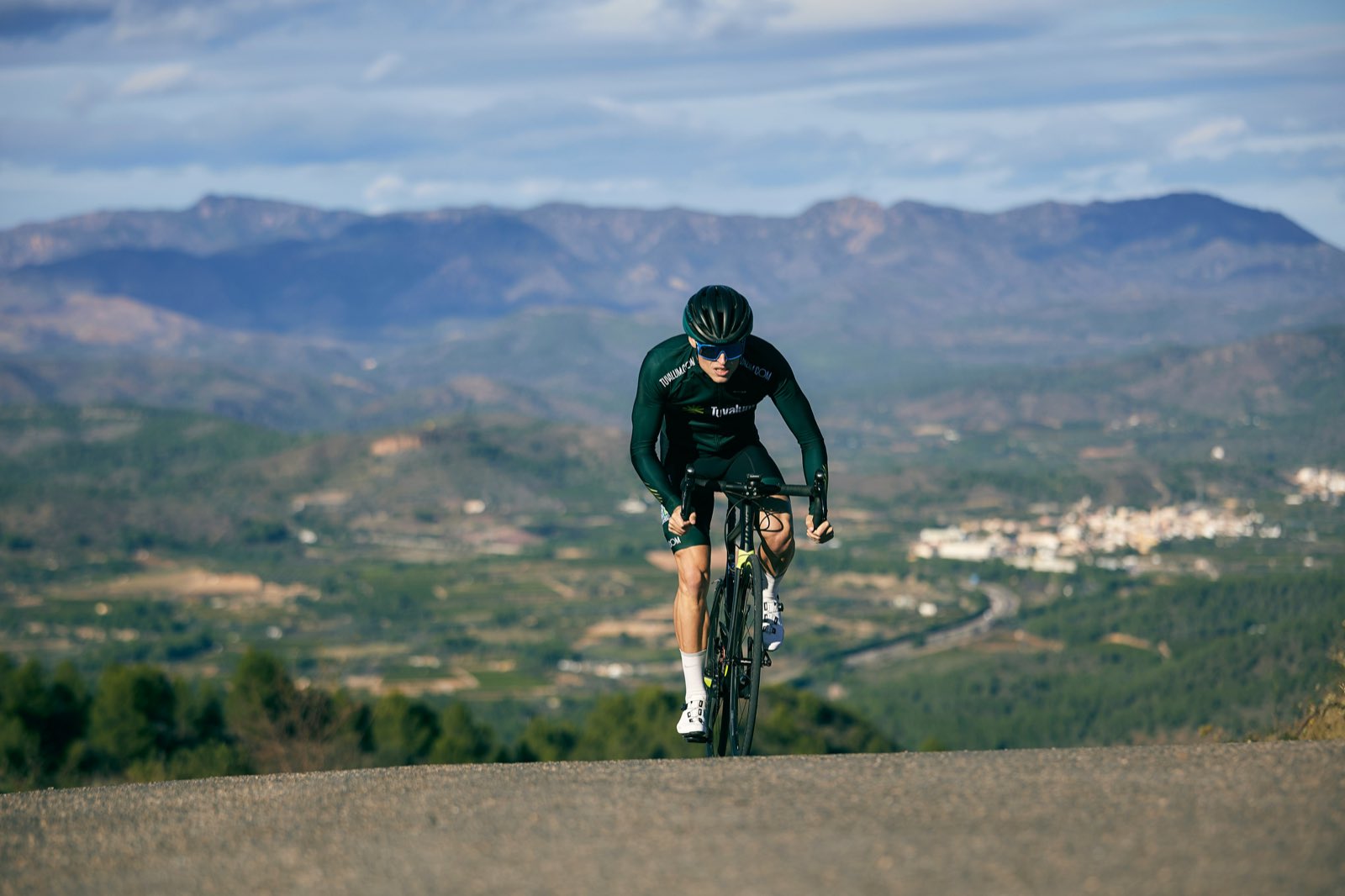
At the race end, bikes borrow aero tube shaping from road development, run lower front ends and integrated cockpits, and lean towards stiffness that rewards a strong rider putting down power on a firm surface. Clearance has grown here too, and fast. Some 2027 race frames now accept tyres around 57 mm, a width that used to belong to mountain bikes, because racers found that big tyres are quicker over rough ground. But clearance is not the point of a race bike. Speed is, and the position follows from that.
At the adventure end, the priorities are volume, a taller front end and composure. Many frames take 50 mm tyres and some 55 mm or more, wheelbases are longer, steering is calmer, and luggage, mudguards and in-frame storage are assumptions rather than afterthoughts. Some of these bikes now come with a suspension fork, or the option of one.
Both directions are real improvements at what they are trying to do. The problem is that “gravel bike” no longer tells you which one you are looking at. Two bikes with the same groupset and a price within a few hundred euros of each other can now be built around opposite assumptions.
What race gravel is genuinely good at
It would be easy, on a touring company’s website, to dismiss the fast end of the market. That would be wrong, and it would not match what we see on our own routes.
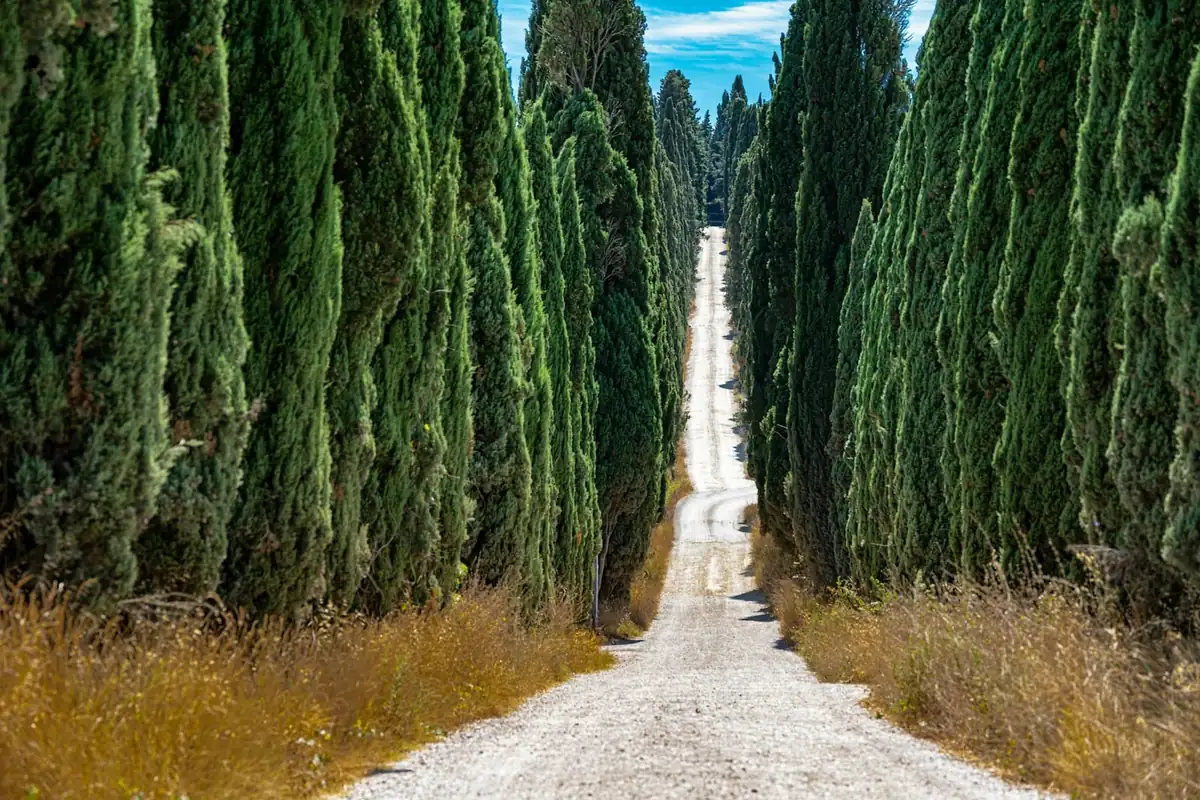
A race-oriented gravel bike is excellent when the surface is firm and predictable, when the day is measured in hours rather than days, and when the rider is strong enough to use the platform. On fast European hardpack, such as the compacted white roads of Tuscany in dry weather or the smoother forest roads of the Alps, a good race gravel bike is quicker and more fun. It changes direction willingly, it holds speed on a false flat, and it makes a strong rider feel fast, which is not a trivial thing.
It also has an advantage on the cycle paths and quiet asphalt that link sections on some routes. The Trans Alp mixes gravel and forest road with valley cycle paths. A race gravel bike is better company on those kilometres.
Where it costs you is over consecutive days, in three places:
- Position. A low, long front end that is comfortable for four hours becomes a negotiation at hour six of day five. Necks and hands usually complain first.
- Clearance ceiling. The newest race frames take huge tyres, but many race bikes from the last few years stop at 40 or 42 mm. On those, you cannot solve a rough or wet week by fitting more volume, because there is nowhere for it to go.
- Stiffness. The frame response that transmits your power efficiently also transmits the surface. On one ride that reads as feedback. On six, it reads as fatigue.
None of this makes a race gravel bike unsuitable. It makes it a bike that asks the rider to absorb more, which is a fair trade if you choose it knowingly.
What adventure gravel is genuinely good at
The adventure end has a less glamorous pitch: it is more comfortable, more stable, and it takes whatever tyre the week turns out to need.
That third point is the one riders underestimate. The most useful property of a high-clearance frame is not that you must run 55 mm tyres. It is that you can decide later. A frame that clears 55 mm lets you choose a fast 42–45 mm setup for a dry week in the Algarve and something closer to 50 mm for wet Highland estate track, on the same bike. A frame that stops at 42 mm made that decision for you at purchase.
The handling benefits are subtler and show up when you are tired or surprised. A longer wheelbase and calmer steering make a bike less eager to change direction. On a twisty road at speed that is a downside. On an unfamiliar loose descent at the end of a long day, with a rider whose reactions are two hours past their best, it is exactly what you want. The bike does not react to every input, including the ones you did not mean to make.
The costs are honest ones. Adventure gravel bikes are usually heavier than race bikes at a similar price, they are slower on tarmac, and on a fast day on smooth surface you will feel that you are working harder than the rider next to you on the race bike, because you are.
Five questions that place you on the spectrum
Rather than a table of frame numbers, it is more useful to answer these honestly.
1. What surface will you spend most of your time on? Not the roughest surface of the week, the most common one. If most of your riding is firm hardpack, the race end is defensible. If it is loose, rocky, corrugated or wet, volume and composure will do more for you than aero shaping.
2. How many consecutive days are you riding? This is the question that changes the answer most and gets asked least. One long day rewards efficiency. Five or six reward comfort. On a Trans Pyrenees Gravel week, with eight stages, 780 km and 17,000 to 20,000 metres of climbing, the accumulated cost of a punishing position is not a rounding error.
3. Are you carrying anything on the bike? On our tours the support van carries your luggage between hotels, so you ride light. Most riders still run a top-tube bag, a bar bag or a saddle pack for the day’s food, layers and tools. Frames designed with luggage in mind carry it without the handling going vague; frames designed without it sometimes do not.
4. How do you descend when you are tired? Riders who descend confidently and actively often prefer the more responsive bike right to the end of the week. Riders who get cautious as fatigue builds get a lot back from a stable bike, because the bike does some of the composure work for them.
5. Do you want the bike to make you faster, or to make the week easier? Both are legitimate. They point in different directions, and pretending one bike does both equally well is how people end up disappointed with an expensive purchase.
Race or adventure gravel on our seven routes
Our routes are not equally demanding of a bike, so it is worth being specific.
Fast end is comfortably viable:
- Tuscany Gravel: the strade bianche are fast and firm when dry, sticky after rain. Six stages, 460–615 km, almost entirely off tarmac. A race gravel bike on 42–45 mm tyres is a good choice here, and this is the route where a fast frame earns most of its keep.
- Trans Algarve Gravel: 345–435 km over five stages, dry trails and cork-oak hills. Loose and dusty in places, but rarely brutal.
The middle, where either works and tyre choice matters more than frame category:
- Trans Alp Gravel: 380–440 km with 8,000–9,200 metres of climbing across five stages. The surfaces are largely good; the old military roads and the sheer amount of climbing argue for comfort and low gearing over aero.
- Trans Cyprus Gravel: the rocky limestone tracks of the Troodos punish narrow tyres more than they punish frame shape.
Adventure end pays off clearly:
- Highlands Scotland Gravel: 520–540 km of forestry track, estate track and old droving and military roads, often wet, rough in places. Volume and composure are worth more here than anywhere else on our list.
- South Africa Gravel: 480–660 km across seven stages of thorny farm roads, sharp stone and corrugated passes. This is where a low clearance ceiling becomes a practical problem fastest.
- Trans Pyrenees Gravel: ten nights, eight stages, 780 km and up to 20,000 metres of climbing. The longest and hardest week we run, and the one where every comfort decision compounds.
If you want to work out which route suits you before worrying about the bike at all, our guide to choosing between the routes is the better place to start.
The bike you already own is usually the answer
We watch a lot of riders complete week-long crossings every season, and the pattern is consistent enough to state plainly: the bikes that finish strong are rarely the newest or the most expensive. They belong to riders who understood what the week would ask.
Before you consider a new frame, three changes will do more for your week than any category switch:
- Fit the widest tyre your frame will properly take, and run it tubeless. This is the highest-value change available to almost every rider, at a fraction of the cost of a bike. Our gravel tyre width guide goes surface by surface.
- Get the bottom gear low enough. We recommend around 0.9 or lower, for example a 40-tooth chainring with a 44-tooth sprocket. A tall top gear matters far less than a genuinely low bottom one, and gearing is the most common setup regret we see.
- Raise the front end if you have been ignoring it. A spacer or a shorter stem costs little compared with a new bike, and it addresses exactly what makes race geometry hard over six days.
If, after all three, the frame still stops at 38 mm and the bottom gear is a 1:1, then the conversation about a different bike is a real one. Until then, it usually is not.
What a supported week asks of a bike, and what it does not
Our format removes some of the pressures that push riders towards heavy, over-built setups.
You are not self-sufficient. The support van carries your luggage between hotels, and you collect it at the hotel each evening. It meets the group most days at lunch, where you can change kit and refill the PurePower energy drink for free. It carries spare parts, a clothing bag and a spare bike, and the crew help with repairs, with parts at cost. So you do not need a bike built around four days of food and a full workshop. You need a bike that is comfortable for one long day, six times in a row.
You are also not obliged to keep up with anyone. Guided groups are capped at ten riders per guide, eight to ten on the Trans Pyrenees, and most routes offer two daily options, Adventure and Explorer, so a stronger and a steadier rider can share the same week. Self-guided riders take the full GPS route for Garmin, Wahoo or Komoot and ride at their own pace, with the same hotels, luggage transfer and support. How it works lays out the format in full, and the levels page gives the daily numbers.
What that adds up to: choose for your own comfort across six consecutive days, not for self-sufficiency in the middle of nowhere. That framing changes more riders’ minds than anything else, and it usually moves them towards the adventure end without needing to buy anything.
A simple recommendation, no brands involved
If you want one setup that covers every route we run without being wrong anywhere:
- A frame with clearance for at least 45 mm, ideally 50 mm, so the week’s tyre choice stays yours.
- Tubeless tyres in the widest sensible size for the route: 42–45 mm for a dry week in Tuscany or the Algarve, closer to 50 mm for the rough or wet routes if your frame takes it. Our minimum is 38 mm on every tour.
- A bottom gear around 0.9 or lower.
- A front end you can hold for six hours without negotiating with it, which for most riders means a little higher than their road position.
- Mounts for two bottles and whatever small bag carries your food and layers.
That describes a lot of mid-priced adventure gravel bikes, and quite a few race gravel bikes with the position raised and sensible tyres fitted. Which is the point: the category label matters less than these five things being right.
Not sure where your bike sits?
The honest answer to “race or adventure” is usually “it depends on the week you have booked”, and we would rather look at the specifics than give you a rule.
Tell us what you ride (frame, clearance, current tyres, bottom gear) and which route you are considering, and we will tell you plainly whether it suits, what we would change, and whether that change is a set of tyres or something larger. Far more often than not, the answer is wider rubber and lower gearing rather than a different bike.
The farm roads and passes of South Africa and the estate tracks of the Scottish Highlands will tell you quickly which end of the spectrum you are on. Better to find that out at home, with a tape measure and a look at your frame, than on the second morning of a week you have been looking forward to for a year.
Questions riders ask
What is the difference between a race gravel bike and an adventure gravel bike?
A race gravel bike is built to be fast on relatively smooth, predictable gravel: aero tube shapes, a lower and longer riding position, a stiff frame that rewards a strong rider on a firm surface, and few mounting points. An adventure gravel bike is built to stay composed when the surface is not predictable: a longer wheelbase and calmer steering, a taller front end, more compliance, and mounts for bags, bottles and mudguards. Tyre clearance used to separate them too, but some 2027 race frames now take tyres around 57 mm, so position and handling are now the clearer dividing line. Neither is better in the abstract, and a week-long supported tour asks the adventure question more often than the race one.
Which type of gravel bike is better for a multi-day cycling holiday?
For most riders on a multi-day tour, the adventure end of the spectrum wins. That is not because the routes are technical but because fatigue accumulates. On day one the difference between a race bike and an adventure bike is a few watts. On day five it is whether your hands, neck and lower back are still willing. What matters over consecutive days is tyre volume, a sustainable position, low gearing and stable handling when you are tired. A race gravel bike can complete any of our routes, and plenty do. It simply asks more of the rider to stay comfortable.
Can I bring my race gravel bike on a supported gravel tour?
Yes. Every one of our routes is rideable on a race-oriented gravel bike, provided it takes at least 38 mm tyres (our minimum; wider is better) and you can fit a bottom gear of around 0.9 for sustained climbing. Check clearance and gearing first, then position. If the frame stops at 38 or 40 mm and the bottom gear is no lower than 1:1, you will have a harder week on the rougher routes than the bike's price suggests.
Do I need to buy a new bike for a gravel holiday?
Almost certainly not. The bike you have ridden for a season, with contact points already dialled in, beats a newer bike you have had for a fortnight. What is worth spending money on before a tour is tyres, gearing and a full service, in that order. If your bike genuinely cannot take 38 mm tyres or get its bottom gear low enough, that is the moment to talk about a different bike, and we are happy to look at the specifics with you.
Is a mountain bike a reasonable alternative to a gravel bike on these routes?
A light MTB with suitable tyres and gearing works on all our routes, and some riders coming from mountain biking prefer it for a first tour. A heavy full-suspension trail bike on aggressive tyres is hard work on the long hardpack and road links, for no benefit. Road bikes and hybrids are not suitable on any of our tours.
How much difference does aero actually make on a gravel tour?
Less than the marketing suggests, in this context. Aero gains grow with speed, and a supported touring day is ridden at a steady pace with regular stops. Across a week, the time saved by a more slippery frame is small. The time and energy lost to tyres that are too narrow for the surface, or a bottom gear that is too tall for a sustained climb, is not.
Planning a gravel week of your own?