What to Pack for Gravel Cycling in Scotland: Layering for Wind, Rain and Wet Tracks
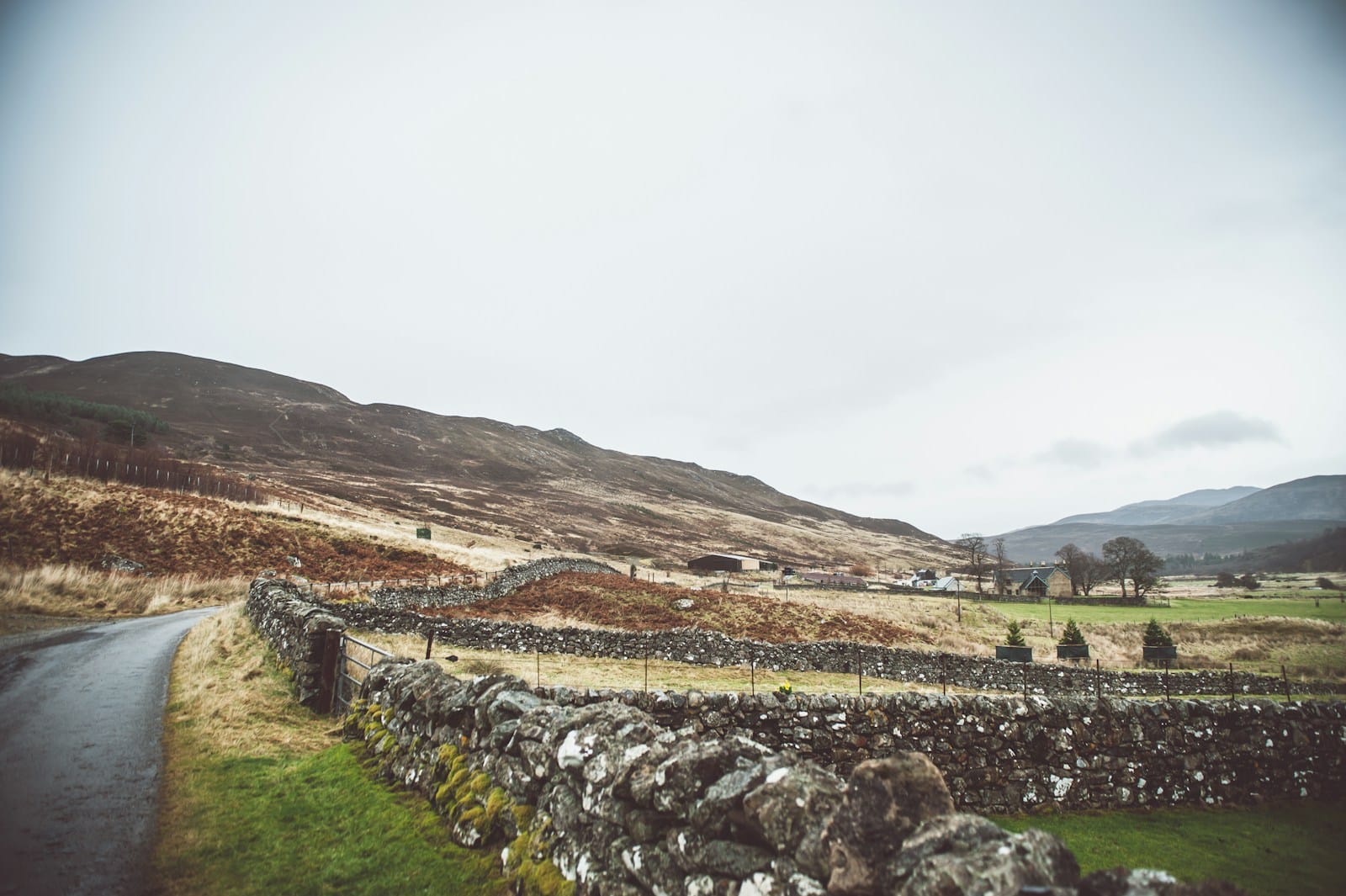
At the top of General Wade’s Old Military Road, somewhere on the empty stretch between Fort Augustus and Kingussie, the wind does something it doesn’t do in the valleys: it stops being weather and starts being a fact of the terrain, the way a gradient is. Riders who packed for “a bit of rain” are the ones stopped at the verge fumbling with cold hands for a jacket that’s folded wrong in the bottom of a pocket. Riders who packed properly are already wearing it, because they put it on twenty minutes earlier when the moorland opened up and they could see the weather coming from a long way off.
That’s the whole packing problem in Scotland, in one moment. It isn’t really about rain, or wind, or cold — it’s about a landscape so open that the weather announces itself early and changes fast, and a kit system that lets you respond to that without breaking stride.
This piece is about that system: what actually earns its place in the bag for Highlands Scotland Gravel, what you can leave at home, and why the stretch of open country between the Atlantic and the North Sea asks for a different approach than the packing problems we cover on our other routes. If you want the universal kit list first, our general guide to what to pack for a multi-day gravel tour covers that ground. This is the Scotland-specific version.
Why Scotland packs differently to anywhere else we ride
Every destination we run has its own defining packing problem. In the Western Cape it’s heat, dust and long days in the saddle. In the Alps it’s a temperature swing between valley floor and high pass, sometimes twice in a day. In Scotland, it’s neither heat nor altitude — it’s exposure. The Highlands Scotland Gravel route runs coast to coast, Fort William on the Atlantic to Montrose on the North Sea, 520 to 540 kilometres over five stages and 5,100 to 6,500 metres of climbing, almost entirely on unpaved roads, forestry tracks and old droving routes. Very little of that ground gives you shelter.
Three things drive the packing decisions here:
Genuine exposure on open moorland. The military-road stage between Fort Augustus and Kingussie and the rawer, more exposed passages near the Cairngorms on the way to Tomintoul put you on ground with no tree cover and no windbreak for long stretches. On a sheltered route, a squall passes in ten minutes and you barely notice. On open moorland, the same squall has nothing to slow it down before it reaches you.
No dry season to plan around. Scotland’s weather doesn’t sort itself into a wet half of the year and a dry half. A July stage can be as wet as a September one — the tour’s own guidance is blunt about this: pack for four seasons in a day, in any month you travel. That’s not caution for its own sake; it’s what the ground actually does.
Wet ground that holds water for a long time. Estate tracks and the older stretches of military road drain reasonably well by design — General Wade’s engineers built for exactly this, three centuries ago — but after any wet spell the softer sections stay properly soft. This is a tyre and tubeless question as much as a clothing one, and it’s why the kit list below treats the two together.
The system: five things, worn in combination
The whole solution is smaller than most riders expect. It isn’t a wardrobe — it’s five items, used in different combinations depending on where you are on the stage and what the moorland is doing that hour.
A genuinely waterproof shell, not a shower jacket. This is the single item the tour’s own route notes name first, and for good reason. It needs to keep working in hour three of a proper Highland downpour, and it needs to pack small enough to disappear into a jersey pocket so it comes out the moment the sky changes rather than after you’re already wet.
A spare pair of gloves. Wet gloves stay wet — there’s no drying them on the bike — so a second dry pair changes the character of an afternoon far more than its weight suggests. Pack lightweight gloves rather than winter ones; the point is cutting wind chill and shedding water, not insulating against genuine cold.
Arm warmers. On or off in seconds, and the best value-for-weight item in the kit. They cover the gap between a short-sleeve jersey and a full thermal on the days that start mild and turn sharp somewhere over the moor.
A light thermal or long-sleeve base layer. For the cold, still mornings at the Fort Augustus and Kingussie starts, and for layering under the shell on the most exposed sections near the Cairngorms.
Tubeless tyres, 38 mm minimum, wider genuinely better. Not clothing, but it belongs in the same conversation as everything above — the estate tracks and wet stone reward the extra volume and the puncture resistance, and a flat on a remote stretch of moorland is a worse problem here than almost anywhere else we run.
That’s genuinely the list. What changes stage to stage isn’t which of these you’re carrying — it’s all of them, every day — it’s how many you’re actually wearing or riding on at any given moment.
Stage by stage: where the exposure actually sits
The route, so you can picture the system in use rather than in the abstract. Distances and climbing are given for the Adventure route, with the Explorer route’s slightly longer alternative in brackets.
- Day 2 — Fort William to Fort Augustus (70 km, 500 m; Explorer 80 km, 600 m): small roads, gravel tracks and lochside passages along the Caledonian Canal to the southern end of Loch Ness. The gentlest introduction, but still open water most of the way — a day to have the shell accessible without necessarily needing it.
- Day 3 — Fort Augustus to Kingussie (70 km, 850 m; Explorer 80 km, 1,000 m): General Wade’s Old Military Road across one of Scotland’s most remote sections — gravel, wind across open moorland, and the feeling of being genuinely small in a vast landscape. This is the defining exposure day. Full kit on before you reach the open ground, not after.
- Day 4 — Kingussie to Tomintoul (90 km, 1,000 m; Explorer 100 km, 1,150 m): terrain shifting from wide glens to rawer, more exposed passages near the Cairngorms, finishing in Tomintoul, Scotland’s highest village. The second big exposure day, and the one where the evening’s dry layer matters most — Tomintoul feels its altitude after dark.
- Day 5 — rest day in Tomintoul: Glenlivet distillery tours and tastings, or an optional lighter gravel loop. The one genuine chance mid-week to dry out kit properly rather than packing it away damp.
- Day 6 — Tomintoul to Tarland (90 km, 800 m; Explorer 100 km, 900 m): up the River Avon through Glen Builg, where the route opens into long stretches, few people and enormous views, before descending toward the River Dee valley. Remote and exposed in its own right, though generally less wind-scoured than day three.
- Day 7 — Tarland to Montrose (110 km, 1,100 m; Explorer 120 km, 1,250 m): the long closing day, gradually east as the landscape opens toward the sea across easier gravel and small lanes. The one stage where the coastal air genuinely starts to feel different — colder and sharper as you approach the North Sea at Montrose, coast to coast complete.
The pattern across all of it: two genuinely exposed days — the military road and the approach to Tomintoul — bracketing a rest day that lets you reset properly, then a return to remote, open country on day six that catches riders who assumed the hard packing decisions ended at the Cairngorms.
Tyres and gearing: not clothing, but the same conversation
None of the layering above matters much if you’re managing a slow puncture on a wet estate track instead of watching the weather roll in. Get the bike right first.
- Minimum 38 mm tyres, wider genuinely better. Our floor across every tour, and Scotland’s mixture of estate tracks, moorland and old military road rewards the extra volume more than most.
- Tubeless, strongly recommended. The tour’s own guidance names this specifically for handling the wet estate tracks — fresh sealant, not sealant left over from last season.
- A low gear around 0.9. Roughly a 34-tooth chainring with a 36-tooth sprocket, or lower. The climbing on the military-road and Cairngorms days is sustained rather than savage, and the right gearing turns it into an aerobic effort rather than a strength one.
- A gravel bike, mechanical or e-assist, or a light MTB with suitable tyres and gearing. Road bikes and hybrids aren’t suitable for this route. Have it freshly serviced before you travel, and bring a multitool along with a spare rear derailleur hanger and a quick link — the two spares a support van can’t stock for every rider.
What you don’t need to carry
Because your bag travels hotel to hotel in the support van — you collect it at reception, not in your room — there’s no real penalty for a fuller off-bike bag. There is a penalty for extra weight on the bike, and very little of the following belongs there:
- A second full set of riding kit “just in case.” One set, used well with the layering system above, covers the range. Wet kit dries overnight in most hotels, and Tomintoul’s rest day gives you a second chance mid-week.
- Heavy winter layers. Even the exposed stretches near the Cairngorms, in the tour’s operating season, don’t call for a proper winter jacket — a genuinely waterproof shell over a thermal covers it.
- A full toolkit. The support vehicle carries tools, spares and a spare bike, and the guides help with repairs at parts cost — bring only what a van can’t stock for every rider.
- A week’s worth of nutrition. PurePower energy powder is included and refilled free at the van most days, with bars and chews available to buy. Bring your own favourites if you’re particular, not a full supply.
Off the bike: Tomintoul and the evenings
Towels and toiletries are provided at the hotels. What’s worth bringing instead:
- Something properly dry for the evenings, separate from whatever got wet on the bike. Highland hotels are used to drying kit; ask if your room doesn’t have the space for it.
- Comfortable shoes for walking. Tomintoul’s rest day and the Glenlivet distillery visit reward a pair of shoes that aren’t cycling shoes.
- Something smart-casual for the dinners, including the celebration dinner at the North Sea finish in Montrose.
What the week includes, so you know what you’re packing around
Seven hotel nights across small hotels and guesthouses on the route from Fort William to Montrose, with a rest night at Tomintoul. Seven breakfasts and three dinners, including the closing celebration dinner at the finish. English-speaking guides at a maximum of ten riders per guide, GPS routes for Garmin, Wahoo and Komoot for self-guided riding, a daily evening briefing with maps and elevation profiles, a support vehicle carrying spares and a spare bike, mechanic help at parts cost, daily luggage transfer, a Gravel-Adventure jersey, a shared photo album and lifetime RIDERS-network membership. Getting there is a shared bus transfer from Edinburgh Airport at 16:00 on the arrival day, and a return transfer leaving Montrose at 09:00 on departure morning, arriving back in Edinburgh by about 11:00 — book return flights no earlier than 13:00. The full mechanics — deposit, balance, what’s included stage by stage — are on how it works.
If you’re deciding between the Adventure and Explorer routes, our levels guide sets out what each asks in general terms, and our piece on reading the Highland weather window goes deeper into how the season itself behaves across a July departure versus the September one. If the military-road stage or Glen Builg are what’s pulling you toward this route specifically, our pieces on General Wade’s Old Military Road and Glen Builg cover that ground.
The short version
Pack for rain on every stage, not just the ones the forecast flags. Carry a genuinely waterproof shell, a spare pair of gloves, arm warmers and a light thermal every day — not just on the military-road stage. Fit wide tubeless tyres and a low gear before you fly. Use the Tomintoul rest day to dry kit out properly. And pack a real evening layer for Montrose without a second thought, because the van is carrying it, not you.
We cross the open moorland between Fort Augustus and Kingussie and the wild stretch through Glen Builg on the Highlands Scotland Gravel crossing — guided or self-guided, with the support van meeting you at lunch most days and a dry hotel room waiting at the end of every stage, whatever the weather did along the way.
Questions riders ask
How wet does gravel cycling in Scotland actually get?
Wet enough that the honest approach is to pack for rain on every stage, not just the ones the forecast flags. Scotland doesn't have a dry season — the Fort William to Montrose crossing runs west coast to east coast through open moorland and estate tracks, and a stage can turn from still to driving rain and back again inside an hour. A proper waterproof and tubeless tyres aren't optional extras here; they're the two items the tour's own route notes name first.
Do I need different kit for the Adventure route versus the Explorer route?
No — the layering system is identical; only the distances change. Adventure days run roughly 70 to 110 km, Explorer days 80 to 120 km, and both cross the same exposed sections on the same afternoons. The Explorer route simply spends longer out in whatever the weather is doing, which if anything makes the packable shell and spare gloves more valuable, not less.
Is one waterproof jacket really enough for the whole week?
For most riders, yes, provided it's genuinely packable and you use it properly. The point of a layering system is that a shell, arm warmers, a light thermal and gloves combine to cover a wide range of conditions without needing a different jacket for a different day. What changes stage to stage is how many of the five items you're wearing, not how many you're carrying — you carry all of them, every day.
What tyres and gearing does the route actually need?
Minimum 38 mm tyres, wider genuinely better, and tubeless is strongly recommended — the estate tracks and moorland sections hold water long after a wet spell, and a pinch flat on a remote stage is a worse problem here than almost anywhere else we ride. A low gear around 0.9 covers the climbing on the military-road and Cairngorms days without turning them into a strength effort.
What does the support van carry so I don't have to?
Spare parts, a spare bike, your luggage and a free refill of PurePower energy powder most days at lunch. Your bag travels hotel to hotel and you collect it at reception, not your room, which is why there's no real penalty for packing a proper evening layer — the penalty is only for extra weight on the bike.
Planning a gravel week of your own?