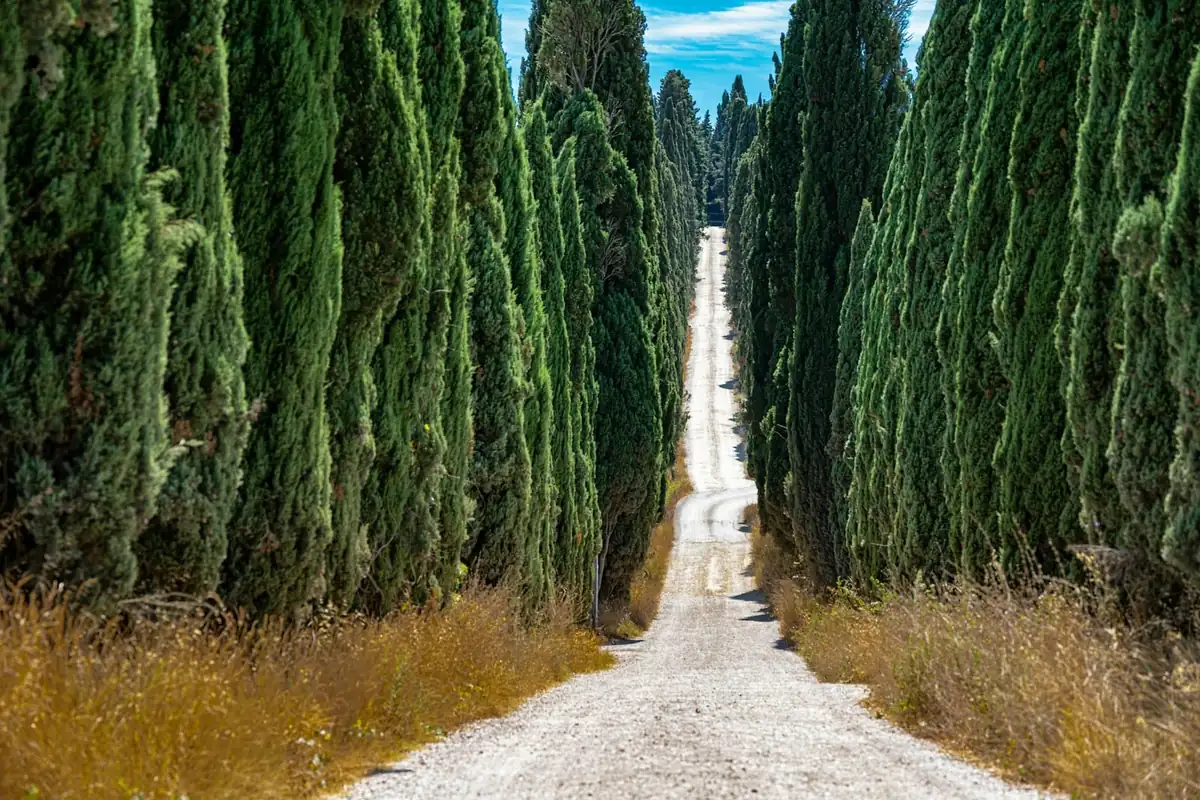
Glen Builg: Where Gravel Cycling in Scotland Turns Genuinely Wild
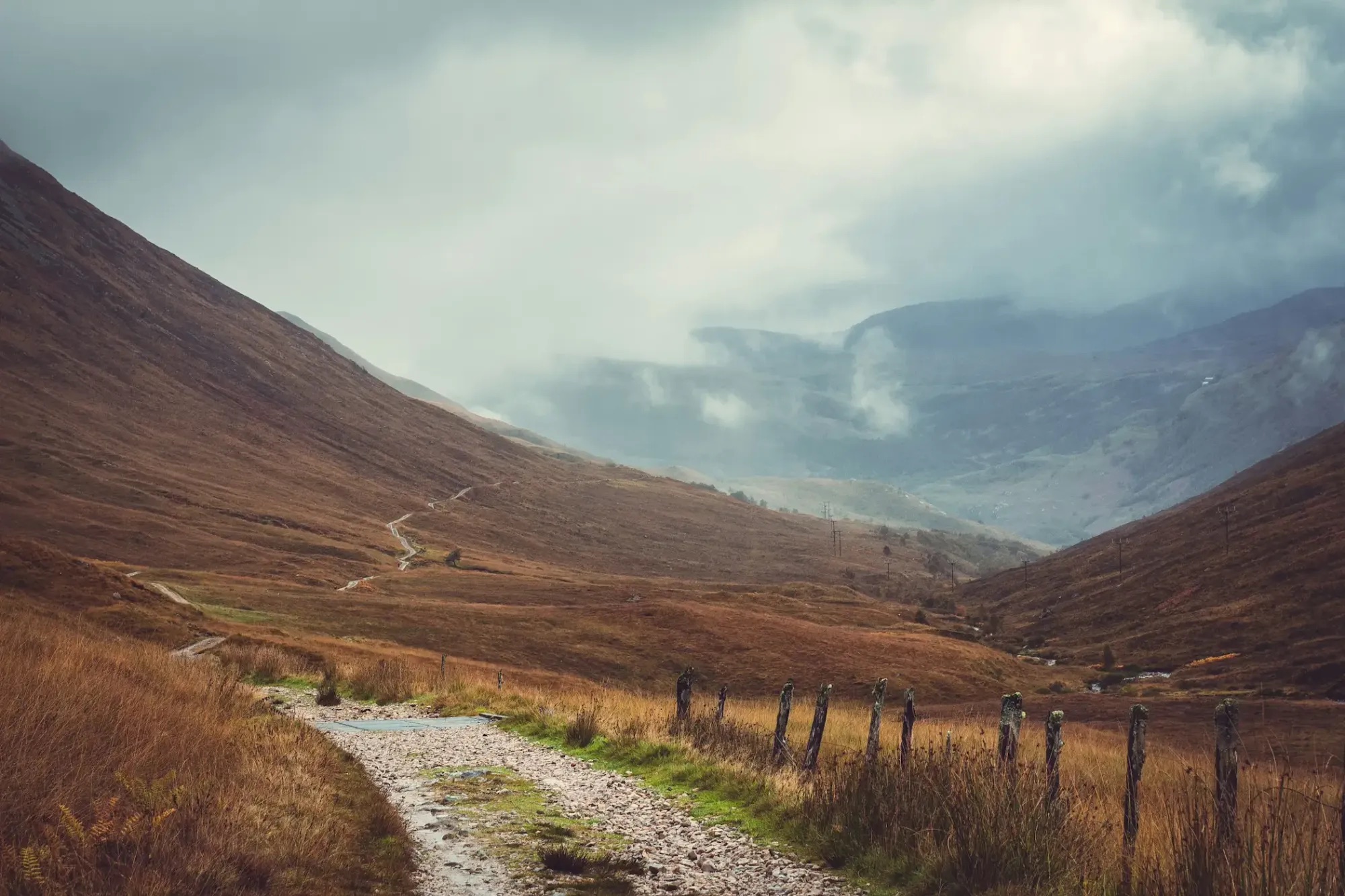
You leave Tomintoul early, and for the first few kilometres it feels like an ordinary Highland morning — a village waking up, a road with a white line on it, the river somewhere off to the right. Then the tarmac ends, the valley narrows, and the track turns north along the Avon into a glen that has no road through it and never has.
That is the whole character of the day in one transition. Glen Builg is not a landmark you photograph and move on from. It is a stretch of country you are inside for hours, and the reason riders on our Highland crossing tend to describe stage six rather than stage four when they get home.
Where it falls in the week
The Highlands Scotland Gravel route runs coast to coast: Fort William on the Atlantic to Montrose on the North Sea, 520 to 540 kilometres over five riding stages, 5,100 to 6,500 metres of climbing, almost entirely off tarmac.
Glen Builg is stage six on the itinerary and the fourth riding day — Tomintoul to Tarland, 90 kilometres and 800 metres on the Adventure route, 100 kilometres and 900 metres on the Explorer. Crucially, it comes immediately after the rest day.
That ordering is deliberate. The two stages that take the most out of people are the military road across the remote section between Fort Augustus and Kingussie, and the Cairngorms day into Tomintoul. The rest day absorbs both. Then you ride into the wildest country on the route with legs that work.
What “wild” means here
The word gets used loosely about Scotland, so it is worth being specific about what changes.
There is no through road. The glen is not a place the modern road network decided to serve. What runs through it is old track, and it goes where the river goes rather than where an engineer would prefer.
The scale reads wrong at first. Highland distances are deceptive because there is nothing familiar in the frame to measure against — no hedgerows, no telegraph poles, no farm buildings. A slope that looks like twenty minutes takes an hour. Riders consistently misjudge this on the first long sightline and then adjust.
You will not see many people. Our own route notes for this stage say long stretches, few people, enormous views, and that is close to a literal description. On a quiet weekday you might pass nobody between the top of the glen and the descent toward the Dee.
The weather is the day. With almost no shelter, wind and rain are not conditions you ride through — they are the thing you are doing. Which is why the evening briefing before this stage covers exposure specifically.
The riding itself
Technically undemanding, and that surprises people who expect wild country to mean difficult riding. There are no loose switchbacks here, no sections that ask for mountain-bike skill. What there is instead is surface — hours of coarse, honest, sometimes wet stone, with enough soft patches after rain to keep you reading the ground ahead.
Tyre choice does more for you on this stage than fitness does. Our minimum across every tour is 38 mm, wider is better, and tubeless is strongly recommended — on Scotland’s wet estate tracks that recommendation is close to a requirement. Run a little softer than instinct suggests. The full trade-offs are in our guide to gravel bike tyres for touring.
The other thing that changes the day is pacing. Ninety kilometres with only 800 metres of climbing invites you to treat it as an easy day, and it is not — it is a long day on rough ground where the surface is quietly taxing you the whole time. Riders who go out hard on the first flat section arrive at Tarland hollow.
Then the Dee, then the sea
The glen releases you toward the River Dee valley and Tarland, and the character changes again — trees, farms, the first hints of eastern Scotland. It is a genuine shift, and after hours of open ground it feels almost crowded.
What remains after that is the closing day: Tarland to Montrose, 110 kilometres with 1,100 metres on the Adventure route or 120 with 1,250 on the Explorer. The longest stage of the week, running gradually east across easy gravel, small lanes and faster connections until the landscape opens to the first sight of the North Sea. Coast to coast complete, with a celebration dinner at the finish.
Our full route guide, gravel cycling in the Scottish Highlands, covers the whole traverse. The military road stage is the other day on this route that earns its own piece.
Tomintoul, and using the rest day properly
Two nights in Scotland’s highest village, with dinner included on both. The Glenlivet distillery runs tours and tastings, and there is an optional lighter gravel loop with the guides for riders who cannot sit still.
Our advice, given what follows: take the loop if you want, but keep it genuinely light. Glen Builg is the stage where having something in reserve changes the experience from an endurance exercise into the day you came for. The distillery will not hurt your legs. A hard rest-day loop might.
What the week includes
Seven nights in small Highland hotels and guesthouses chosen for location, seven breakfasts and three dinners, luggage transfer hotel to hotel on every stage, a support vehicle carrying spares, a spare bike and a clothing bag, experienced English-speaking guides at a maximum of ten riders per guide, GPS routes for Garmin, Wahoo and Komoot, a daily evening briefing with maps and elevation profiles, mechanic help from the crew with parts at cost, complimentary PurePower energy powder, a closing dinner in Montrose, a Gravel-Adventure jersey, a shared photo album and lifetime RIDERS-network membership.
The return bus between Edinburgh Airport and Fort William is included both ways. You fly to Edinburgh and book your return no earlier than 13:00 on the final day. Full mechanics on how it works, and both daily route options are described on the levels page.
Why this is the stage that stays
Most routes have one day that does the work of selling the whole week, and it is usually the one with the famous climb on it. Scotland does not really have a famous climb. What it has is a glen with no road through it, reached on the fourth riding day of a coast-to-coast crossing, with your bag already on its way to Tarland and nothing to do but follow a river through empty country for a few hours.
We run it twice in 2026 and twice in 2027 — the 13–20 September 2026 departure is the remaining date this year, and September light through that glen is the best argument the route has.
Questions riders ask
Where is Glen Builg on the Scotland gravel route?
It falls on stage six, the day after the rest day, running from Tomintoul toward Tarland. The route heads up the River Avon out of Tomintoul and through the glen before dropping toward the River Dee valley. It is 90 km with 800 m of climbing on the Adventure route, or 100 km with 900 m on the Explorer.
How difficult is the Glen Builg stage?
Moderate on paper and demanding in character. The climbing is modest by our standards, but this is a long day on rough ground in country with very little shelter and very few people, coming after four previous stages. The challenge is remoteness and accumulated fatigue rather than gradient or technical difficulty.
Why does it come after the rest day rather than before?
Because the rest day at Tomintoul sits deliberately after the two hardest stages — the military road and the Cairngorms crossing — and Glen Builg needs legs. Riding into genuinely remote country tired is a different and worse experience than riding into it recovered. The placement is one of the more deliberate decisions on the route.
What is there in Tomintoul before the stage?
Tomintoul is Scotland's highest village and the tour's rest-day base, with two nights there. The Glenlivet distillery offers tours and tastings, there is an optional lighter gravel loop with the guides, and dinner is included on both the arrival evening and the rest day itself.
Do I need to be self-sufficient on this stage?
To a degree, yes. The support vehicle meets the group at a lunch stop but is not alongside you through the glen, and on the longer Explorer option you can be a real distance from it. Be able to fix a puncture and a chain. That is the practical bar, and it is not a high one.
Planning a gravel week of your own?