Guided vs Self-Guided Gravel Tours: Which Is Right for You
The light comes up over the Troodos hills and two riders roll out of the same hotel within ten minutes of each other. One clips in behind a guide and seven other riders, falls into the easy rhythm of a group finding its legs, and won’t think about navigation again all day. The other waits for a second coffee, checks the route loaded onto the Wahoo, and sets off alone into the cool of the morning to ride the exact same gravel — but at a pace and in a silence entirely of their own choosing. Same route. Same hotels. Same support van waiting at lunch. Two completely different days, and both of them good.
That is the choice at the heart of every tour we run: guided or self-guided. It is the question we are asked most often, and the one experienced riders weigh hardest, because it is not really a question about price or difficulty. It is a question about how you want to spend the days — in company or in solitude, following a wheel or reading a screen, on the group’s rhythm or your own. This guide lays out the honest comparison: who each suits, how navigation works in remote terrain, the trade-off between sociability and independence, what it costs, and — crucially — the long list of things that are exactly the same either way. By the end you should know which one is right for you, and feel certain that whichever you pick, the week behind you is the same fully serviced one.
The one-line version
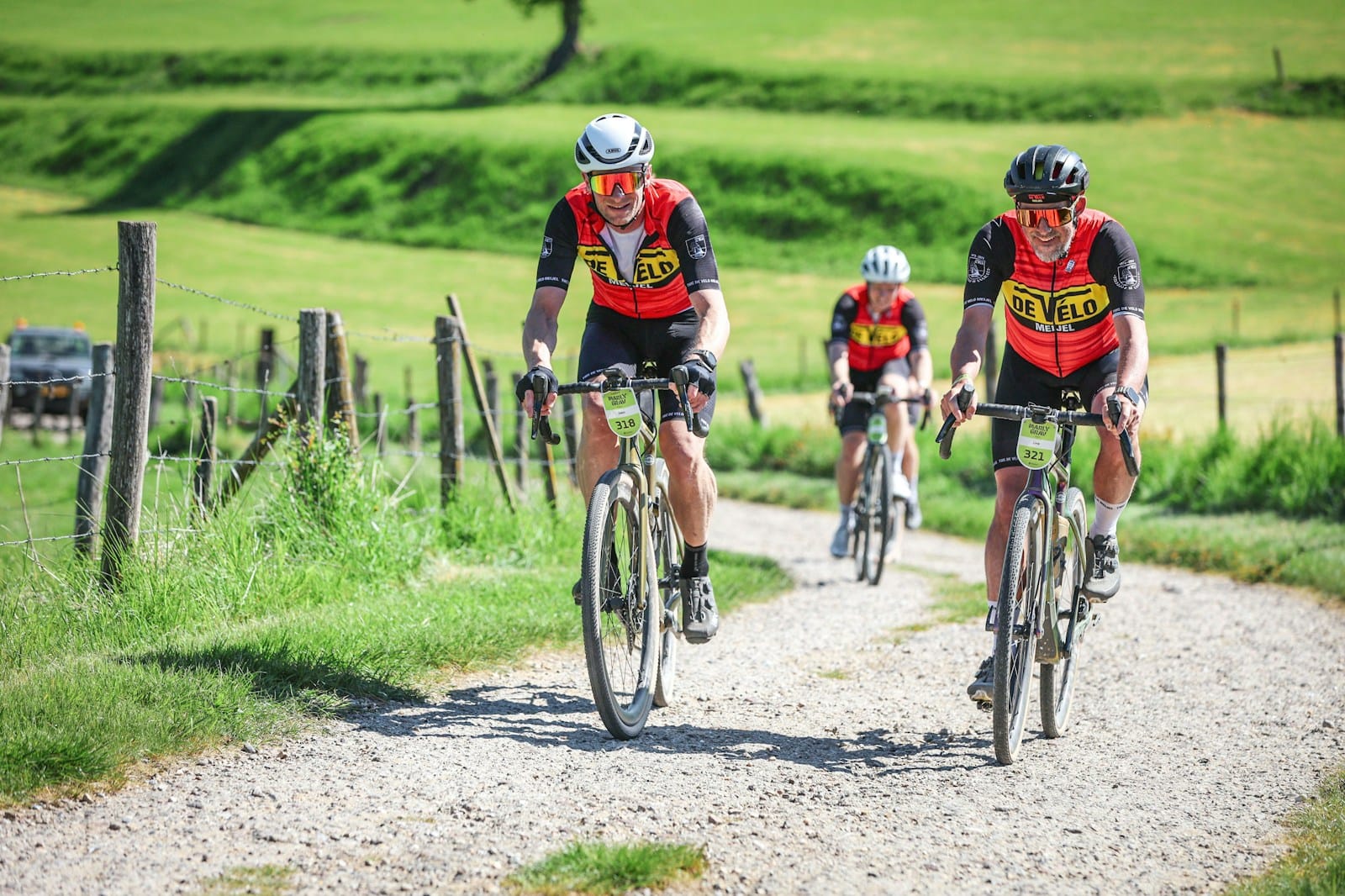
Guided means you ride with a small group — a maximum of ten riders per guide, eight to ten on the Trans Pyrenees — and an experienced guide navigates, sets a steady pace and handles anything unexpected. You are not handed the route to follow; you simply ride and the guide leads the way. Self-guided means you get the full GPS route for Garmin, Wahoo or Komoot and ride at your own pace, not tied to a group, going when you like and stopping where you please. Everything around the riding — the hand-picked hotels, the daily luggage transfer in the support van, the lunch stop, the breakfasts and dinners — is identical on both. The choice is about the character of your days, not the quality of the week.
If you read no further than that, you already have the shape of it. But the detail is where the decision actually gets made, so let’s take it apart properly.
How guided actually works
A guided tour is the more familiar picture: a small group, an experienced English-speaking guide, and a week of riding where the only thing you have to think about is the riding.
The group is genuinely small. We cap guided groups at ten riders per guide — eight to ten on the Trans Pyrenees — because a small group is the difference between a tour and a peloton. Ten is enough for company and the easy social warmth of riding with like-minded people; it is few enough that the group can regroup at the top of a climb without anyone standing around for twenty minutes, and that the guide knows each rider’s legs by day two.
The guide navigates. This is the part that surprises some people: on a guided tour you are not given the GPS file and told to follow it. The guide knows the route — has ridden it before you have — and leads the way, calling the turns, setting a sustainable pace, choosing where the group stops for a coffee or a view, and reading the day so you don’t have to. There is nothing on your handlebars to follow and nothing to get wrong. You ride, you look around, you talk to the rider next to you, and the line through the landscape simply unfolds.
That has real consequences for how a guided day feels. Your attention is free. On a sustained gravel climb you are thinking about your breathing and the scenery, not whether you missed a junction three kilometres back. In open, remote country — the moor in Scotland, the high tracks of the Troodos, a forestry maze in the Alps — you never have the small background hum of “am I still on route?” that every self-guided rider knows. The guide carries that, along with the local knowledge of where the good water is, which café is open on a Monday, and what the weather tends to do over that particular col in the afternoon.
A guide also handles the things that go wrong, because on a multi-day tour something usually does. A mechanical the roadside kit can’t fix, a rider having a hard day, a sudden change in the weather, a closed track — these are the guide’s job, not yours. For many riders, that is the whole point: a week where the responsibility for the day sits with someone else, and all you have to bring is the engine and the appetite.
Guided suits you if:
- You value company and would rather ride with a group than alone.
- You’d like to switch off the navigation entirely and just follow the wheel.
- It’s your first hotel-to-hotel supported tour and you want the gentlest introduction.
- You’re riding solo and want built-in company without organising anything.
- You like the rhythm of shared coffee stops, a guide’s local knowledge, and a group dinner with people who rode the same day.
- You’d rather not carry the mental load of decisions in remote or unfamiliar terrain.
How self-guided actually works
A self-guided gravel cycling holiday is the same week, ridden independently. You get the full GPS route — the GPX files for Garmin, Wahoo or Komoot — loaded before you travel, and each morning you ride that day’s stage at your own pace, on your own schedule, not attached to any group.
The freedom is the thing. You set off when you’re ready, not when the group is ready. You ride at exactly the pace your legs want — pushing hard on a fast estate track because you feel good, or soft-pedalling a valley because you don’t, with no one to drop and no one to chase. You stop where you want to stop: at the view that catches you, at the café that looks right, for the photograph, for the swim, for the long lunch or for none of those. If you want to ride the whole day in silence and your own thoughts, you can. If you and a partner ride at different speeds, you split up after breakfast and meet at the hotel, each having had the day you wanted.
Navigation is yours, and for a certain kind of rider that’s a pleasure rather than a chore. Reading the route, judging the junctions, watching the line on the screen tick off against the land in front of you — independent riders often like that quiet competence, the small satisfaction of finding your own way across a country. Modern GPS units make it very manageable: the route is drawn, the turns prompt, and you ride with the same confidence you’d have on a planned day at home, just in better country.
What self-guided is not is unsupported. This is the misconception worth killing. Riding independently does not mean riding alone in the deep sense. The support van still carries your luggage between hotels every day. It still meets riders most days at lunch — you roll up, change a layer, top up your bottles and refill your energy drink for free (energy bars and chews available to buy). The same hand-picked hotels are booked and waiting, your bag already there when you arrive. The same breakfasts and dinners are included. You have the route, the backup and the logistics; what you don’t have is a group to keep pace with. You’re independent, not abandoned.
Self-guided suits you if:
- You’d rather ride your own pace than anyone else’s.
- You’re comfortable and confident with a GPS computer in unfamiliar country.
- You value solitude, flexibility and the freedom to stop where you like.
- You’re riding as a couple or small group of friends who’d rather keep your own company.
- You like the quiet satisfaction of finding your own way.
- You’ve done a supported tour before, or you simply prefer independence to a group.
Navigation in remote terrain: where the choice bites hardest
For most of the decision, guided and self-guided are simply two flavours of a good week. But there is one place the difference genuinely matters, and it’s worth being honest about it: navigation in remote, exposed terrain.
Some of our routes run through country where a wrong turn is a minor nuisance — a populated valley, a well-signed forest, a region where the next village is twenty minutes away. On those, self-guided navigation is relaxed and low-stakes. But others run through genuinely empty places: the open Highland moor where two estate tracks fork identically in every direction and a low cloud can roll in within the hour; the high Troodos forest; a long, unpeopled stretch of the Pyrenees where you might not see a soul for ninety minutes. In that kind of country, navigation asks more of you.
If you ride self-guided there, you want to be the sort of rider who’s comfortable reading a GPS properly — checking the line, not just trusting the beep; carrying a charged unit and a sense of the day’s shape; happy to pause, think, and backtrack a few hundred metres if a junction looks wrong. None of that is beyond an experienced rider, and many relish it. But it is a real part of the day, and you should choose it with open eyes.
If you’d rather not carry that in remote country — if the idea of a junction on the moor in poor visibility is a worry rather than a small adventure — then guided is the answer in exactly those regions. The guide knows the line, has ridden it before, and reads the weather and the terrain so the navigation simply isn’t your problem. That’s why, on our most committing routes, plenty of very capable riders still choose guided: not because they couldn’t navigate it, but because they’d rather spend the attention on the riding and the views. There is no wrong answer here — only an honest match between the terrain, your appetite for self-reliance, and how you want the day to feel.
Sociability vs independence: the real trade-off
Strip away navigation and cost, and the choice between guided and self-guided comes down to one human question: do you want company, or do you want solitude? Both are legitimate; they just make different weeks.
A guided week is sociable by design. You ride with the same small group day after day, and a particular kind of friendship forms over a week of shared effort — the in-jokes by day three, the regroup at the top of a climb, the table at dinner where everyone relives the same descent. For solo riders especially, this is a gift: you arrive alone and ride in good company without having had to organise a single thing. For couples and friends, it folds you into a wider group while you ride. If the camaraderie of a shared objective is part of what you’re looking for, guided delivers it.
A self-guided week is independent by design. The company you keep is the company you bring — yourself, your partner, your two riding friends — and the days are yours to shape. There’s a deep pleasure in that for the right rider: the unhurried morning, the empty road, the freedom to follow your own curiosity down a side valley or simply sit by a river for half an hour because you can. You still see the support crew at lunch and you still share a hotel each night, so it isn’t isolation — but the texture of the day is solitude and self-direction rather than group rhythm.
Neither is better. We’ve had soloists thrive in a guided group and couples who’d have hated it; we’ve had gregarious riders go self-guided for the freedom and miss the company. The honest test is to picture your ideal day on a tour. If the picture has other wheels in it and a guide setting the pace, you want guided. If the picture is you and the gravel and your own decisions, you want self-guided.
What it costs
People expect a big price gap between the two. There isn’t one, and the reason is structural: the expensive parts of a supported tour are identical on both.
Think about where the money actually goes on a fully serviced, hotel-to-hotel week. It’s the hand-picked hotels, night after night. It’s the support vehicle and driver on the road every day. It’s the daily luggage transfer. It’s the breakfasts and the dinners. It’s the months of scouting and route-testing before the tour ever runs. Every one of those costs is the same whether you ride behind a guide or follow a GPX — so the bulk of the price is the same either way.
The one real difference is the guide. A guided tour carries the cost of an experienced guide riding with the group every day of the week, and that’s reflected in the price, which can sit a little higher than the self-guided equivalent. Self-guided removes that single line and is typically the slightly more economical option — though never by the margin people imagine, precisely because everything else is shared.
So the right way to think about cost is not to chase the lower number. It’s to ask what you value. If a guide on the wheel, the navigation taken off your plate and the company of a group are worth it to you, guided earns its small premium easily. If you’d rather ride independently and put that difference toward, say, an extra trip, self-guided is the sensible call. Both are the same fully serviced week; you’re choosing what to spend your money — and your attention — on. Our how it works page sets out exactly what’s included so you can compare like with like.
What’s identical either way
This is the part to hold onto, because it’s what makes the guided-versus-self-guided choice low-stakes in the way that matters. The quality of the week doesn’t change. Whichever you pick, you get:
- The same routes. Identical stages, identical distances, identical climbing. The gravel under your tyres is the same gravel. We don’t water down a route for one or sharpen it for the other.
- The same hand-picked hotels. Chosen for character and location, a different one most nights, the kind of place worth staying after a hard day. Your room is booked and your bag is in it whether you arrived with a group or alone.
- The same daily luggage transfer. Your main bag travels hotel-to-hotel in the support van. You ride with just a day bag and collect your luggage at the hotel each evening — it isn’t delivered to the room on either option, but it’s there waiting for you.
- The same support van at lunch. Most days the van meets riders mid-route. You can change kit, refill your bottles for free, and refill your energy drink free of charge (energy bars and chews are available to buy). Guided riders meet it as a group; self-guided riders meet it as they arrive — same van, same supplies.
- The same support vehicle on the road. Spares, a spare bike, a clothing bag, mechanic help and parts at cost, and a lift if a day turns out longer than your legs wanted. The safety net behind you is identical.
- The same meals. Buffet breakfasts every morning and a number of included multi-course dinners, among them the celebration dinner at the finish.
- The same extras. A Gravel-Adventure jersey, a shared photo album from the week, and lifetime membership of the RIDERS network.
- The same two levels. Both options are graded Explore (55–85 km/day, 600–1,500 m climbing) or Adventure (70–100 km/day, 1,200–2,500 m). Pace and difficulty are about the level you choose, not about guided versus self-guided. Our levels page explains the two in detail.
In other words, the decision changes the character of your days, never the standard of your week. That’s by design. We don’t run a premium guided product and a budget self-guided one; we run one fully serviced tour, two ways to ride it.
Guided vs self-guided at a glance
| Guided | Self-guided | |
|---|---|---|
| Navigation | The guide navigates; you follow the wheel, no route file to manage | You ride the full GPS route (Garmin / Wahoo / Komoot) and navigate yourself |
| Pace | The group’s steady, sustainable pace, set by the guide | Entirely your own — go when you like, as hard or easy as you feel |
| Company | A small group, max 10 riders per guide (8–10 on Trans Pyrenees) | Solo, or just the partner / friends you bring |
| Group size | Capped small for a true tour, not a peloton | No group — your own schedule |
| Best for | First supported tour, soloists wanting company, riders who’d rather not navigate | Confident GPS riders, couples and friends, independent riders who value freedom |
| Remote terrain | Guide handles the line and the weather — reassuring on the moor or high forest | You own the navigation — fine for confident riders, a real task in empty country |
| Cost | A little higher — carries a dedicated guide | Typically slightly lower — same week, minus the guide |
| Hotels | Identical hand-picked hotels | Identical hand-picked hotels |
| Luggage transfer | In the support van, collected at the hotel | In the support van, collected at the hotel |
| Support van at lunch | Meets the group; free energy-drink refill; bars/chews to buy | Meets you as you arrive; free energy-drink refill; bars/chews to buy |
| Meals, jersey, photos, RIDERS network | Included | Included |
| Levels (Explore / Adventure) | Same two pace options | Same two pace options |
So which is right for you?
Lay the honest test out plainly.
Choose guided if you want company on the road, you’d rather not navigate, it’s your first hotel-to-hotel supported tour, you’re riding solo and want built-in companionship, or you simply like the idea of switching your brain off and following a guide who knows the way. It’s the most sociable way to ride and the easiest introduction to the supported model, and it’s the safer choice on our most remote routes where the navigation genuinely asks something of you.
Choose self-guided if you value riding your own pace above all, you’re confident with a GPS in unfamiliar country, you’re travelling as a couple or small group who’d rather keep your own company, or you relish the freedom and quiet of finding your own way. It’s the independent rider’s choice, typically a touch more economical, and it suits people who’ve either done a supported week before or who simply know they ride happier on their own clock.
And if you’re genuinely torn — which is common — lean on the terrain. On a populated, easily navigated route, self-guided is low-stakes and the freedom is pure upside. On a committing, remote route, the guided option buys you peace of mind that’s worth a great deal. Either way, you’re not choosing between a good week and a compromise. You’re choosing the shape of a good week.
If you’re still weighing the bigger question — whether a supported tour is the right way to ride at all — our guide to choosing a supported gravel tour lays out the trade-offs honestly. And if you’d like to picture the days themselves, what a supported gravel week involves walks through one hour by hour, from the breakfast buffet to the bag waiting in your room.
Pick the tour — we’ll handle the rest
Here’s the part that should make the decision feel easy: you don’t have to get it perfectly right, because the week behind you is the same either way. The routes are scouted and tested, the hotels are chosen, the luggage moves in the van, and the support is there at lunch and at the hotel — guided or self-guided, that doesn’t change.
So start with the place. Pick the landscape you most want to ride through — the empty Highland moor, the high Alpine passes, the Tuscan ridgelines, the long Pyrenean traverse, the Troodos hills under a spring sun — and then choose how you’d rather ride it: in the company of a small group with a guide on the wheel, or alone on your own clock with the route on your screen. Both come with the same hotels, the same van, the same week of being properly looked after.
Have a look at the full range of tours and the 2026 and 2027 departures, and read how our tours work for the detail on the support model. When one route and one way of riding feel right, a €500-per-rider deposit holds your place — and from that point on, all you organise is the flights. Come and ride with us, guided or self-guided. We’ll carry the rest.
Questions riders ask
What is the difference between a guided and a self-guided gravel cycling holiday?
On a guided tour you ride with a small group led by an experienced guide — a maximum of ten riders per guide, eight to ten on the Trans Pyrenees — and the guide navigates, so you are never handed a route file to follow. On a self-guided gravel cycling holiday you get the full GPS route for Garmin, Wahoo or Komoot and ride at your own pace, not attached to a group. Everything else is identical: the same hand-picked hotels, the same daily luggage transfer in the support van, and the same vehicle meeting you at lunch and at the hotel.
Is a self-guided gravel tour harder than a guided one?
Not physically — the route, the distance and the climbing are the same either way. What changes is the mental load. On a self-guided tour you read the GPS, make your own decisions at junctions and manage your own day, which experienced, independent riders often enjoy. On a guided tour the guide carries all of that, so you simply ride and look around. If you are confident with a GPS computer and a day in unfamiliar country, self-guided is no harder. If you would rather switch your brain off and follow a wheel, choose guided.
Do guided and self-guided tours cost the same?
They are priced very closely, because the expensive parts — the hotels, the support vehicle, the luggage transfer, the breakfasts and dinners — are identical on both. Guided tours carry the cost of a dedicated guide riding with the group each day, so they can sit a little higher. The right way to compare is not the headline number but what you value: a guide on the wheel and the company of a group, or the freedom to ride your own rhythm. Both deliver the same fully serviced week behind you.
Can I ride a self-guided gravel holiday on my own or with one or two friends?
Yes — that is exactly who self-guided suits. You set off when you like, ride at your own pace, and stop where you please, with no group to keep up with or wait for. A couple who ride at different speeds can split up for the day and meet at the hotel each night. You still have the full support of the van at lunch and the same hotels booked for you, so riding independently never means riding unsupported.
Is the support van on a self-guided gravel tour the same as on a guided one?
Yes. The support van carries your main luggage between hotels every day — you collect your bag at the hotel rather than having it delivered to the room — and it meets riders most days at lunch, where you can change kit, refill your bottles for free and refill your energy drink free of charge — energy bars and chews are available to buy. That is identical whether you ride guided or self-guided. The difference is only that a guided group meets the van together, while self-guided riders meet it as they arrive.
Which should I choose for my first hotel-to-hotel gravel tour?
If it is your first supported, point-to-point week, guided is the gentler introduction. You ride with a small group, the guide handles the navigation and the pacing, and you learn how the supported model works with no logistics on your shoulders. Plenty of experienced riders still prefer guided for the company alone. Once you know the format and you are happy reading a GPS, self-guided opens up the freedom to ride entirely on your own terms — same routes, same support, your own rhythm.
Planning a gravel week of your own?