Why Ride With a Family-Run Gravel Tour Company
The first email you send a tour company tells you almost everything. Ask a specific question — whether the third day’s climb is rideable on 40 mm tyres, say, or how the pace really works if you’re not the fastest in the group — and the answer comes back in one of two ways. Either it’s a templated reply from someone who has never seen the road, or it’s a proper answer from someone who has ridden it, in the wet, with a group, and knows exactly where the loose section is. That difference is the whole case for riding with a small, family-run company, and it’s the thing this piece is about.
Gravel Adventure is run by two people, Tanya and Michael Sommer, with a small crew behind them. We’re a Danish cycling tour operator with roots going back to 2013, and we run fully supported, hotel-to-hotel gravel tours across Europe and South Africa. This isn’t a brochure for the tours themselves — there are tour pages for that. It’s an honest look at what “family-run” actually changes for you as a guest, where a small operator genuinely beats a big one, where it doesn’t, and how a supported trip with us compares with the alternative of planning the whole thing yourself.
If you’re an experienced rider weighing up where to spend a week — and weighing up who to trust with it — this is the inside view.
What “family-run” actually means here
“Family-run” gets used loosely. Plenty of companies use the phrase who are, in practice, a brand name over a network of subcontractors. So it’s worth being precise about what it means in our case, because the specifics are the point.
Tanya and Michael run the company together, and they run it themselves. Michael plans the routes and rides them; Tanya runs the business and handles the people side — the calls, the questions, the logistics that turn a good route into a good week. Both have been on bikes their whole adult lives, first as racers, then as guides. They’re not figureheads who appear for a photo and hand the trip to a third party. They’re the two people who still test every new tour before it goes on sale.
Behind them is a small, consistent crew: mechanics, drivers and co-guides who’ve worked together for years. A lot of them come from orienteering, which sounds like a footnote until you’ve watched someone with that background read a landscape and a map and quietly find the right line across a moor. That crew is the reason the logistics feel calm. They’ve done it before, together, and they know each other’s habits.
There’s one more piece of the story that matters for trust. Gravel Adventure didn’t appear from nowhere. It grew out of MTB-Adventure, the mother company, which has been running supported cycling trips since 2013. Tanya and Michael took the helm in 2017 and lifted the whole set-up from a passion project into a professional operation. In 2022, after years of riders asking for a gravel version — mixed surfaces, longer horizons, the freedom of riding through a landscape rather than across it — they launched Gravel Adventure as a sister brand. Same family, same crew, same standards; a newer programme on top of more than a decade of doing this. You can read the full version of that history on the about page.
So when we say family-run, we mean a company small enough that the owners scout the routes, answer the email, and are accountable for the result — with a long enough track record that “small” doesn’t mean “new at this.”
The same small crew you meet — and why that’s rare
Here’s a thing that surprises people about the wider tour industry: on a lot of trips, the company that sold you the holiday and the people on the ground are not the same outfit. A big operator aggregates departures, books local subcontractors region by region, and the guide who meets you at the airport works for someone else entirely. It can work perfectly well. But it means accountability is spread thin, and the person you raised a concern with months ago has no connection to the person now fixing your rear derailleur.
With us, the crew is the company. The people you correspond with before the trip are the people you ride with on it. There’s no handover, no gap between the promise and the delivery, because the same small group of people is responsible for both. If something about your week isn’t right, you’re not lodging a complaint into a system — you’re talking to the people who can change it that afternoon.
This continuity shows up in small ways that add up across a week:
- The guide already knows the hotel staff, so check-in is quick and the kitchen knows the group is coming in hungry and late.
- The mechanic has seen this exact climb chew through brake pads before, and has spares for it.
- The driver knows the lunch spot with the best view and the one that’s reliably out of the wind.
- When the weather turns, the call about the route is made by someone who has ridden the alternative, not by a dispatcher looking at a map.
None of this is dramatic. That’s rather the point. A good supported week is defined by the absence of friction — bags moved, vehicle in reach, decisions made well before you’d have to worry about them. That quiet competence is much easier to deliver when the same people do it, season after season, than when a trip is assembled from parts.
Routes scouted and ridden by the owners
The single most important promise we make is also the simplest to state: if we haven’t ridden it, you can’t book it. Every route on the calendar has been scouted and ridden in full by one of us before it goes on sale. Not driven. Not pieced together from a heatmap and a few GPX files off the internet. Ridden, on a loaded gravel bike, the way you’ll ride it.
This matters more on gravel than almost anywhere else, because gravel is where the map lies most often. A line that looks like a clean forestry road on a satellite image can be a hike-a-bike bog. A “track” can be private, or gated, or washed out. The gradient a planning tool reports can be averaged into nonsense over a steep pitch. The only way to know whether a day actually works — whether it’s rideable, whether the surfaces suit the tyres people will bring, whether the hard climb lands before or after lunch, whether the hotel at the end is somewhere you’d want to be after six hours in the saddle — is to ride it. So we do.
Riding the route ourselves is also what lets us answer your questions honestly. When someone asks whether the Pyrenees traverse is harder than the Alps, or whether the Algarve is a gentler week than Tuscany, the answer comes from legs, not from a spec sheet. That’s the kind of question worth asking before you book, and the kind a route designer who has actually been there can answer in a sentence. It’s also why the practical pages on this site — how it works, the tour pages, the Journal — read like they were written by someone who has been on the road, because they were.
There’s a discipline in this that a big catalogue struggles to keep. An operator running dozens of trips across many regions, sold through resellers, simply cannot have personally ridden each one recently. We run a focused set of routes precisely so that we can. It’s a smaller programme by design, and the design is the value.
Direct communication, no booking fees, real accountability
When you book with a small family company, you book directly. That has three consequences worth spelling out, because they’re the practical, unglamorous reasons a supported trip with us tends to cost you less hassle and often less money than the alternatives.
Direct communication. You email us; we reply. You book a free 30-minute call; you talk to Tanya or Michael, or someone who rides with them — not a sales desk, not a chatbot, not a partner agency three time zones away. Before you’ve paid anything, you can ask the awkward questions: am I fit enough, will I be the slow one, is this week too much, is it too little. We’d genuinely rather have that conversation than take a deposit from someone the tour doesn’t suit. A week away is a real commitment of time and money, and the honest version of customer service is helping you decide well, even if the answer is “not this one.”
No booking fees. Because you’re booking directly with the operator, there’s no platform sitting in the middle taking a cut. A €500-per-rider deposit secures a place, the balance is due 60 days before departure (tours within 60 days are paid in full), and the price you see already includes the substance of the trip: hand-picked hotels, daily luggage transfer in the support van, the support vehicle on the road, breakfasts and some dinners, a Gravel-Adventure jersey, a shared photo album and lifetime membership of the RIDERS network. You arrange your own flights. Beyond that, there’s no marketplace markup and no drip of surprise line items at checkout.
Real accountability. This is the one that’s hard to put a number on but easy to feel. When the owners’ names are on the company, the reputation is personal. There’s no diffusion of responsibility, no “that’s handled by our supplier.” If a tour falls short, it falls short on us, and we know it — which is exactly why the standards hold. A small operator can’t hide behind scale. We don’t want to.
The RIDERS community — the part you can’t book
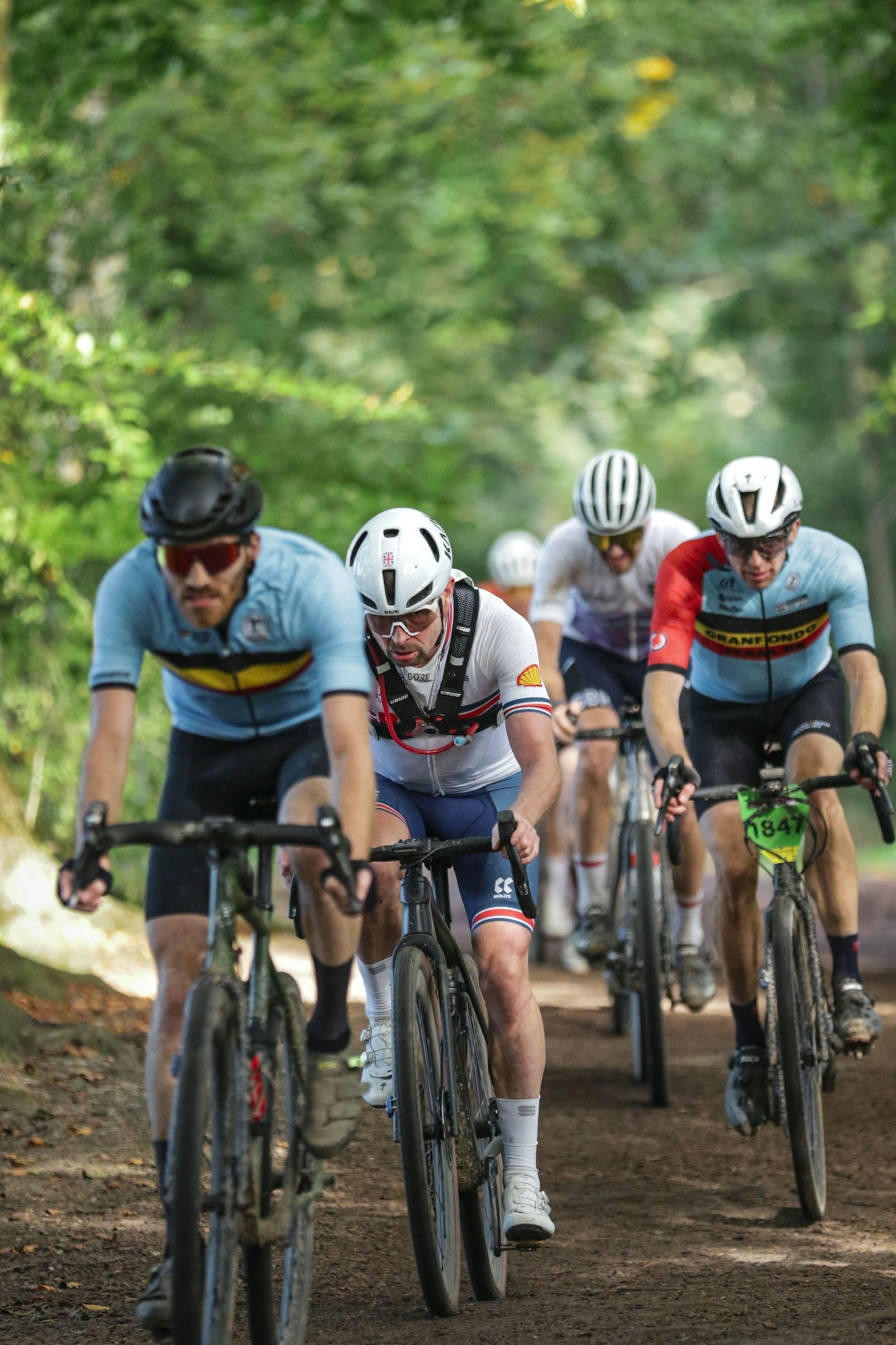
There’s a piece of riding with a small, continuous company that doesn’t fit on a price list, and it’s one of the things guests mention most often afterwards. Because the crew stays the same and the groups stay small, the people you ride with tend to stay in your life. Every guest joins the RIDERS network for life — the loose community of people who’ve ridden with us, across the years and the regions.
It matters more than it sounds. Gravel riders are often a self-selecting bunch: people who’d rather be out in big country than racing a bunch sprint, who’ll happily ride six hours into a headwind for the satisfaction of arriving somewhere remote under their own steam. Put a small group of them together for a week, with no one disappearing off the back and no one being patronised, and something forms that a large, anonymous departure rarely manages. People come back. They come back for a different region, often with someone they met on the last trip. A surprising number of our departures include riders who first met on a previous one.
That’s not a feature we engineered. It’s a by-product of doing it small. You can’t really sell community — you can only create the conditions for it, and small groups with a consistent crew are those conditions. A coach-sized operation, however well run, is working against the grain of it.
Honestly: family-run versus the big operators
It would be easy, and dishonest, to claim a small company wins on every axis. It doesn’t, and you’re an experienced enough buyer to know it. So here’s the even-handed version.
Where the big operators genuinely win. Scale buys things. A large operator can offer more departure dates, more destinations, and a deeper bench if a guide falls ill the night before. They often have slicker booking systems and 24-hour phone lines. If your priority is maximum choice of dates and the reassurance of a big brand’s logistics, that’s a real strength, and we won’t pretend otherwise.
Where the small company wins. Everything that depends on the route being right and the people being consistent. Owner-scouted routes. The same crew from first email to final dinner. Small groups that keep the pace and the hotels honest. Direct, unfiltered communication. Accountability with a name on it. The community that grows when groups are small and the faces don’t change. These aren’t things a big operator chooses not to offer — they’re things scale makes structurally hard.
The honest summary: if you want the widest possible catalogue and don’t mind that the trip is assembled from subcontracted parts, a large operator may suit you. If you care more about the quality and rightness of the specific week — the route, the crew, the size of the group, knowing who’s accountable — a focused family company is built for exactly that. We know which kind of rider we’re for, and we’re comfortable not being for everyone. If you want to dig into how to weigh operators against each other, we wrote a fuller guide on how to choose a supported gravel tour.
Family-run versus doing it yourself
The other real alternative isn’t a big operator at all — it’s planning the whole thing yourself. Plenty of the riders who book with us are entirely capable of doing that, and have, many times. So this comparison deserves the same honesty.
Where DIY wins. Total freedom and the lowest cash cost. You pick the exact route, the exact dates, the exact hotels (or campsites). You stop where you like. There’s a deep satisfaction in self-supported travel that a supported trip, by definition, doesn’t replicate. If the planning and the self-reliance are part of the appeal — if the logistics are a feature, not a chore — then DIY is the right call, and you don’t need us.
Where supported wins. Everything the planning hides until you’re committed. Scouting a multi-day gravel route across an unfamiliar region is a real project: vetting tracks that may not be rideable, booking hotels that may not welcome muddy bikes, working out luggage, arranging a bailout if a day goes wrong. We’ve already done that work, and absorbed the failed recces so you don’t ride them. On the trip itself, the difference is the support vehicle: your bag is in the next hotel, the van is on the road most days with spares and a spare bike, and a mechanical at kilometre 80 is a short wait rather than a long walk. That’s what lets you ride hard all week and still be fresh enough to enjoy the place, rather than rationing yourself against the risk of being stranded.
There’s also the quiet value of having ridden it before. We know where the day gets hard, where the views are worth a stop, where the wind comes from in the afternoon. A first-time visit, however well planned, is discovering all of that in real time — which is wonderful, and also occasionally costly. If you’d like the full picture of what a supported week actually involves day to day, we set it out in detail in what a supported gravel tour is.
Guided or self-guided — the same crew, your choice of independence
One thing worth being clear about, because it surprises people who assume “small operator” means “one rigid way of doing things”: you choose how independent your week is, and the support is identical either way.
Guided means an experienced guide rides with the group and handles the navigation — capped at ten riders per guide (eight on Trans Pyrenees). You ride with the group, the guide knows the route, and you’re not handed a GPS file to follow. It suits riders who want the social side, the local knowledge, and the freedom of not thinking about junctions.
Self-guided means you get the full GPS route for Garmin, Wahoo or Komoot and ride at your own pace, not attached to a group. Same hotels, same daily luggage transfer, same support vehicle behind you. It suits riders who want their own rhythm, their own stops, their own day — with the logistics still carried.
Both run off the same routes, the same crew, the same hotels. The choice is purely about how much company you want on the road, and you can take a different view on a different trip. The levels of each tour — graded Explore or Adventure — tell you how hard the riding is; guided-versus-self-guided tells you how you’d like to ride it.
What a supported week with us includes
To keep this concrete, here’s what’s actually carried in the price on every tour — the operating model, stated plainly, because specifics are what trust is built on:
- Hand-picked hotels, chosen because they’re worth staying in after a hard day, not because they’re nearest the route.
- Daily luggage transfer in the support van — your main bag travels between hotels and you collect it at the hotel each evening.
- A support vehicle on the road most days, carrying spares, a spare bike and a clothing bag, with mechanic help and parts available at cost.
- A daily lunch stop at the van, where you can change kit and refill the PurePower energy drink for free — energy bars and chews are available to buy.
- Breakfasts and some dinners, including the gathering points of the week.
- English-speaking guides, and the choice of guided or self-guided.
- A Gravel-Adventure jersey, a shared photo album of the week, and lifetime RIDERS-network membership.
You arrange your own flights. We arrange everything between landing and leaving. The full mechanics are on the how it works page, and the specific distances, climbing and prices live on each tour’s own page.
So — is a family-run company right for you?
Probably yes, if what you most want from a week is for the route to be genuinely good, the group to be small, the logistics to be invisible, and the people responsible to be reachable and accountable. Probably not, if your priority is the widest possible choice of dates and destinations and you don’t mind a trip assembled from subcontracted parts, or if the planning and self-reliance of a DIY trip are exactly the part you’re after.
We’re a small Danish cycling tour operator running a focused set of gravel adventure tours across Europe and South Africa, the way the same two people and the same crew have run supported cycling trips since 2013. We’d rather be the right company for some riders than a passable one for everyone.
If that sounds like your kind of week, the honest next step isn’t a deposit — it’s a conversation. Have a look through the current tours, and when one of them catches you, book a free 30-minute call or write to info@gravel-adventure.com. You’ll be talking to the people who scouted the route, who’ll tell you straight whether it suits you. That’s rather the whole point of riding with a family.
Questions riders ask
Who actually runs the tours?
Tanya and Michael Sommer run Gravel Adventure together, and they run it day to day rather than from a head office. Michael plans and rides the routes; Tanya runs the company and handles the people side. Both have spent their adult lives on bikes — first racing, then guiding, now testing every new tour before it goes on the calendar. They're backed by a small crew of mechanics, drivers and co-guides who've worked with them for years, many from orienteering backgrounds, so the people you correspond with before the trip are the same people you ride with on it.
Is Gravel Adventure the same company as MTB-Adventure?
It's the same family and the same crew. MTB-Adventure is the mother company, running supported cycling trips since 2013; Tanya and Michael took the helm in 2017 and launched Gravel Adventure as a sister brand in 2022, after years of gravel riders asking for the mixed-surface, hotel-to-hotel version. The operating standards, the support model and most of the team carry straight across. So while the gravel programme is newer, the company behind it has more than a decade of running multi-day cycling tours.
How big are the groups?
Small, on purpose. Guided departures run a maximum of ten riders per guide — eight on Trans Pyrenees — so the pace stays right and nobody disappears off the back. Self-guided riders aren't attached to a group at all: you get the full GPS route and ride your own rhythm, with the same hotels, the same luggage transfer and the same support vehicle. We keep groups deliberately small because it's the single thing that most affects the quality of a week, and a big operator filling a coach can't offer it.
What if something goes wrong on the road?
There's a support vehicle on the road most days, carrying spares, a spare bike, a clothing bag and tools, with mechanic help and parts available at cost. The van meets the group most days at lunch, so a mechanical or a hard afternoon is a short wait rather than a stranded one, and you can refill the PurePower energy drink for free while you're there (energy bars and chews are available to buy). Because the crew is small and consistent, the person sorting it out knows the route, knows the hotels, and can make a decision on the spot rather than calling it in.
Are there booking fees or hidden extras?
No booking fees. A €500-per-rider deposit secures a place and the balance is due 60 days before departure (tours starting within 60 days are paid in full). The tour price already includes the hotels, daily luggage transfer, the support vehicle, breakfasts and some dinners, a Gravel-Adventure jersey, the shared photo album and lifetime RIDERS-network membership. You arrange your own flights; beyond that there's no platform markup and no surprise line items, because you're booking directly with the people who run the trip.
Can I talk to a real person before I commit?
Yes, and we'd rather you did. You can book a free 30-minute call or simply write to info@gravel-adventure.com, and you'll be talking to the people who scouted the route — not a call centre reading a script. Most riders have questions about fitness, pace, guided versus self-guided, or whether a particular week suits them, and those are exactly the conversations we're set up to have honestly before anyone pays a deposit.
Planning a gravel week of your own?